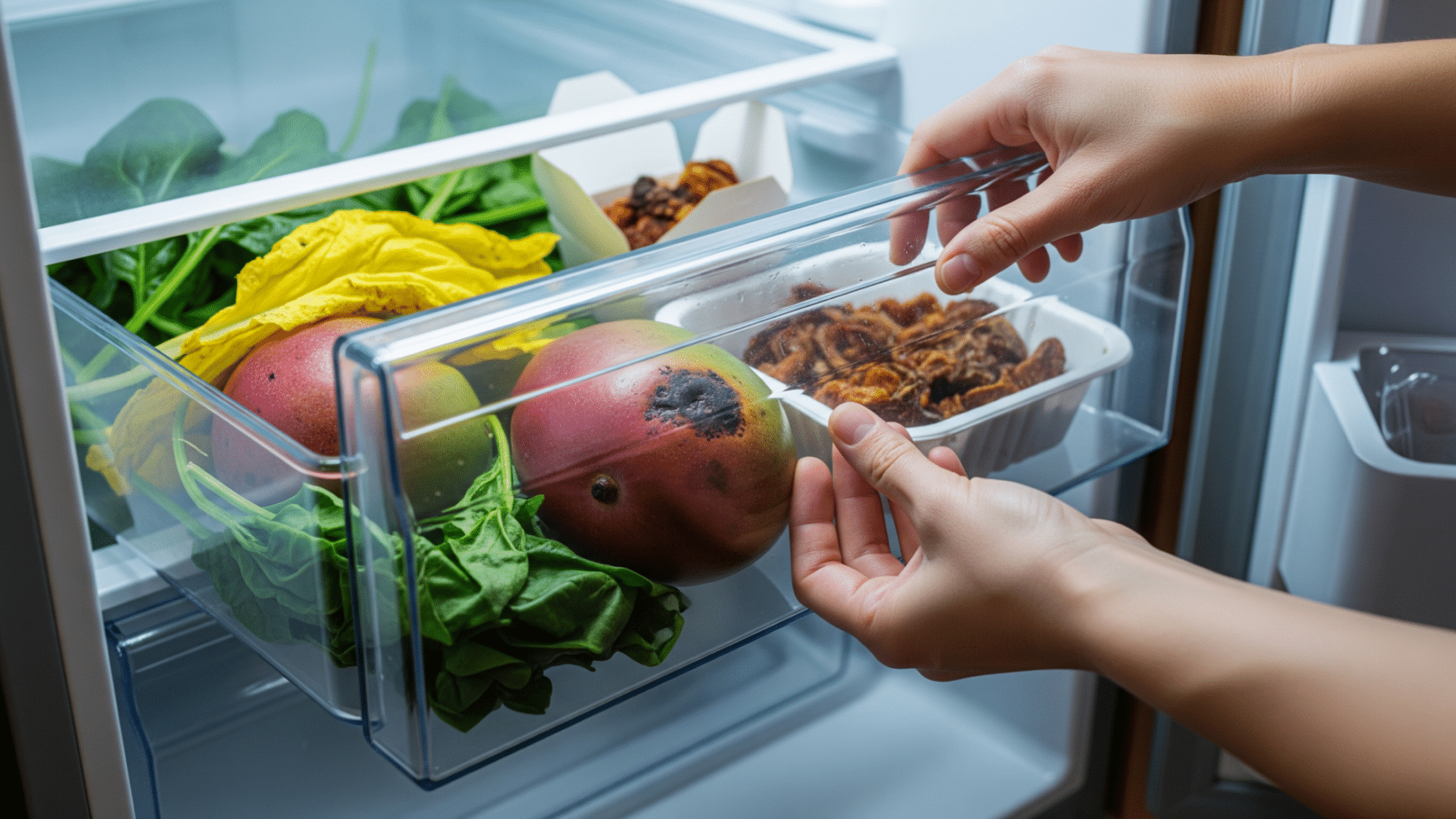
Every week, most American households run the same ritual: a drawer of forgotten vegetables, a takeout container that got one more day than it deserved, a bunch of herbs that never made it into anything.
It feels like a small thing.
It is not.
The number that lived in every American’s pantry without anyone knowing its name
For more than a decade, the most commonly quoted figure on household food waste was $1,500 a year for a family of four.
That number was real when it was calculated.
It was based on 2010 grocery prices, published in a 2014 USDA analysis, and it had been cited in news stories, school curricula, and public health campaigns ever since.
Food prices did not stay at 2010 levels.
Food prices have risen sharply since that original calculation, and the cost of what Americans throw away has gone up right along with them.
That gap between the old number and reality was sitting in kitchens across the country, unacknowledged, for over a decade.
What researchers kept noticing when they looked at the receipt, not just the trash
The problem with estimating food waste is that most people think it happens to someone else.
Studies consistently show that consumers believe they discard far less than they actually do.
The losses aren’t dramatic.
A half-eaten takeout container tossed after a few days feels like a minor waste, and a bag of spinach that liquefies in the back of the fridge barely registers.
It’s also not limited to the refrigerator.
The average U.S. consumer wastes food both at home and in food service establishments.
Every restaurant visit where something gets left on the plate, every summer dining-out trip where the entree never quite gets finished, that all counts.
And the math accumulates fast.
How the old figure became the wrong one as grocery aisles changed around it
The most commonly cited statistic, that food waste costs a family of four $1,500 per year, is based on a U.S. Department of Agriculture analysis of 2010 price data.
The prices of many food categories have increased significantly since that time; the Bureau of Labor Statistics reported in September 2025 that grocery prices were up 29% since early 2020 alone.
As a result, when consumers waste food today, they are wasting more money than they were in 2010.
The figure was not revised for 11 years.
Meanwhile, the cost of food remained high in 2025, which means the cost of wasting it did too.
Americans were living with a decade-old placeholder while the real bill kept climbing, week after week, inside their own refrigerators.
With cost pressure tightening household budgets, it’s no coincidence that nearly half of Americans already say cost is eating into their discretionary life. The grocery waste hiding in every fridge is part of that same squeeze.
The EPA ran the updated numbers, and the real figure is nearly double what most people think
That figure, released in an April 2025 U.S. Environmental Protection Agency report, nearly doubles the previous federal estimate of $1,500, a number that had been cited for over a decade but was based on 2010 grocery prices.
The report finds the food waste cost to each U.S. consumer to be $728 per year.
For a household of four, the annual cost is $2,913, with an average weekly cost of $56.
That is $56 a week in groceries that get purchased, stored, and thrown away without ever being eaten.
For an average American household of four, $2,913 represents over 11% of the annual food budget.
The EPA’s report, titled “Estimating the Cost of Food Waste to American Consumers,” was prepared specifically to update the federal picture and show Americans the real savings available if habits changed.
And the $728 per-person figure may itself be conservative, because EPA’s number uses only retail food prices, and food purchased at restaurants is usually more expensive than groceries.
Why the updated figure could actually change what ends up in the cart
There is evidence that the math is already starting to land.
A recent ReFED and YouGov survey found that, to cope with high food prices, Americans are adopting better food management practices that also lead to less waste, such as meal planning and cooking what still needs to be used up.
ReFED’s 2026 data estimates that American households generated 950,000 fewer tons of surplus food in 2024, a real and measurable shift.
That is a real behavioral shift, driven not by guilt or ideology but by the simple recognition that throwing food away is throwing money away.
Cutting that figure by even a third would save a family of four roughly $1,000 annually.
That is money that gets carried home from the store, placed in the refrigerator, and currently never reaches a plate.
The spinach, the mango, the takeout box, they were always a budget line. Now there’s a federal number on them.
