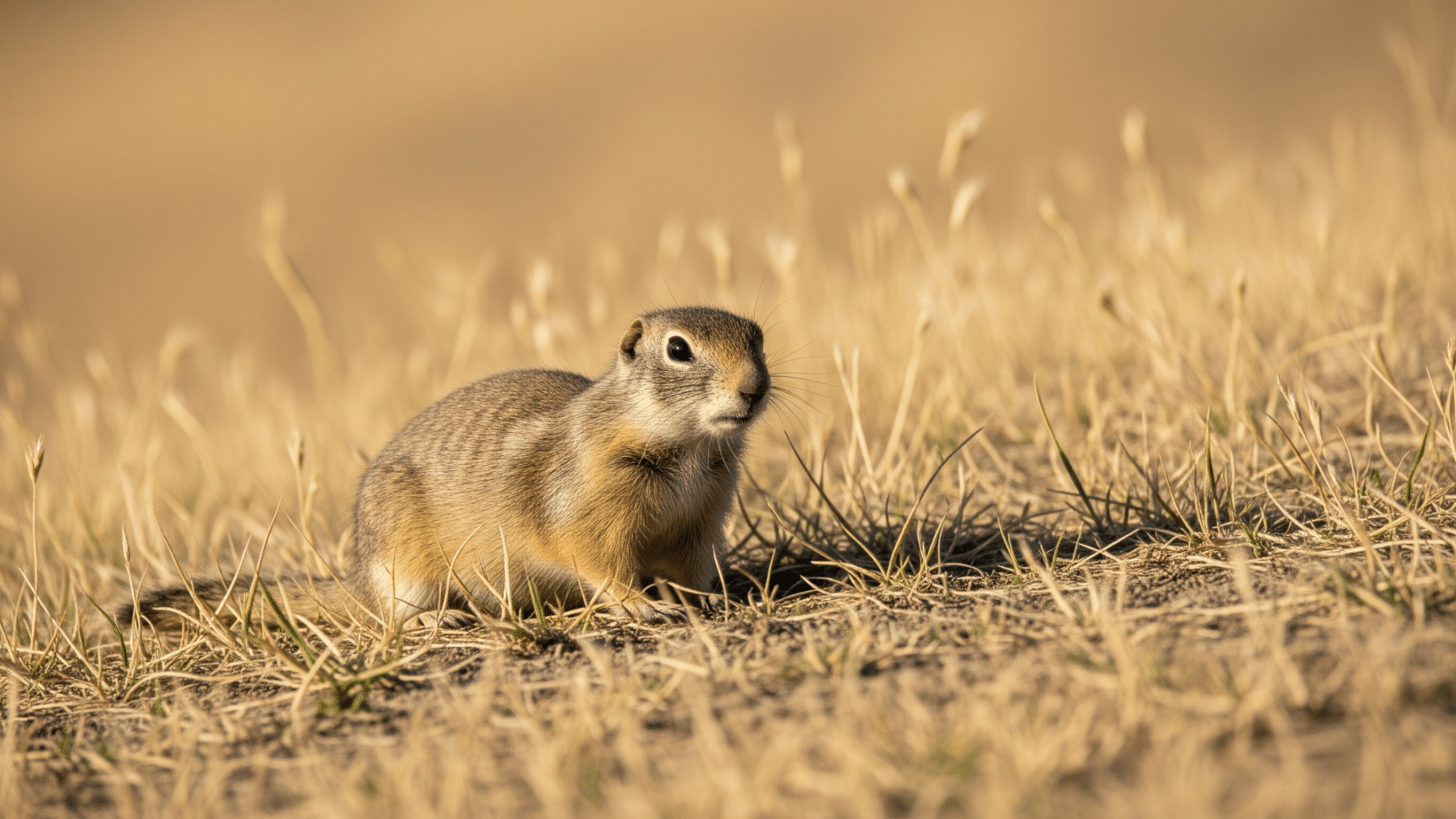
Picture the squirrel outside your window right now. Maybe it is raiding a bird feeder. Maybe it is burying something near the fence. You have watched that scene a thousand times and thought you understood it.
You almost certainly did not.
A team of researchers just spent 12 consecutive summers watching one of America’s most familiar animals.
What they found in that final season made a trained wildlife scientist say she could barely believe her eyes.
A Bay Area park became an unlikely classroom for a long study nobody expected to end this way
The observations took place in 2024, the 12th year of the Long-term Behavioral Ecology of California Ground Squirrels Project, conducted at Briones Regional Park in Contra Costa County.
Contra Costa County sits in the hills east of San Francisco, a place of golden grass and oak trees. Families walk past ground squirrels there every weekend.
The research team had spent more than a decade cataloguing everything those squirrels did.
Foraging. Social dynamics. Alarm calls. A slow, patient accumulation of data across eleven ordinary summers.
Then came summer twelve.
Something shifted in the park that June and the field notes started filling with words the researchers had never written before
In 2024, parts of Northern California experienced vole population spikes, and the research team noticed more voles at the study site than in any of the previous years of their long-term study.
Voles are small, mouse-like rodents. They dart through grass. They are prey animals, the kind of creature that owls and foxes eat.
Nobody on the team was watching for a predator story.
They were watching squirrels, animals long understood to eat nuts, seeds and green plants.
That assumption, held by scientists and field guides for generations, was about to collapse in front of a camera.
That kind of quiet confidence in a well-worn belief is something researchers in other fields recognize too. Scientists tracking how the mind wanders made a similarly unexpected discovery when they stopped assuming they already knew the answer.
Observers started seeing the same impossible scene repeat, day after day, until the video evidence was undeniable
The initial discovery was made by undergraduate researchers, who returned from the field site in Briones Regional Park with videos of the squirrels’ behavior to show their incredulous supervisors. Postdoctoral researcher Sonja Wild recalled watching that footage and saying “I could barely believe my eyes,” adding that “from then, we saw that behavior almost every day. Once we started looking, we saw it everywhere.”
Her team set up formal observation windows each morning, watching multiple groups of squirrels across the site so nothing could slip past them.
Through videos, photos and direct observations at the regional park, the authors documented California ground squirrels of all ages and genders hunting, eating and competing over vole prey between June 10 and July 30.
The squirrels’ carnivorous summer behavior peaked during the first two weeks of July, coinciding with an explosion in vole numbers at the park reported by citizen scientists on iNaturalist.
That surge suggests the squirrels’ hunting behavior emerged alongside a temporary spike in the availability of prey.
Even veteran wildlife experts were stunned.
Not just curious onlookers, but scientists who had spent years studying these animals had no inkling of this omnivorous behavior.
The reveal: the squirrel in your yard is a secret hunter, and a peer-reviewed study just proved it on camera for the first time in science
A new study provides the first evidence that California ground squirrels hunt, kill and eat voles. Led by the University of Wisconsin-Eau Claire and the University of California, Davis, it is the first to chronicle widespread carnivorous behavior among California ground squirrels, published in the Journal of Ethology.
The study suggests that what was considered a granivorous species is actually an opportunistic omnivore, more flexible in its diet than previously assumed.
The number that stunned everyone: out of 74 observed interactions with voles between June and July, 42 percent involved active hunting of these small rodents by ground squirrels.
Nearly half of every encounter ended with a squirrel as a predator.
In 2024, the peak in vole abundance was roughly seven times greater than the ten-year average, which appears to be what triggered the behavior at scale.
Lead author Jennifer E. Smith called it “shocking,” saying “we had never seen this behavior before.”
You can read the full study in the Journal of Ethology and see the UC Davis press release at UC Davis News.
What this means for how we understand the animals that share our neighborhoods every single day
The finding does more than rewrite a field guide entry.
It shows how animals can shift behavior rapidly when conditions change, a trait that may matter enormously as habitats keep shifting.
The researchers noted that “the fact that California ground squirrels are behaviorally flexible and can respond to changes in food availability might help them persist in environments rapidly changing due to the presence of humans.”
Researchers said many questions remain unanswered, including how widespread the hunting behavior is among squirrels, whether and how it is passed down from parent to pup, and how it affects ecological processes.
The team plans to return to Briones to keep watching. Twelve summers in, the animal they thought they knew best turned out to be the one that surprised them most.
It is a useful reminder that the creatures we overlook most confidently are often the ones hiding the biggest secrets. Studies into other everyday habits, from how Americans build and lose social connections to how wildlife behaves in shared spaces, keep arriving at the same conclusion: familiarity is not the same thing as understanding.
