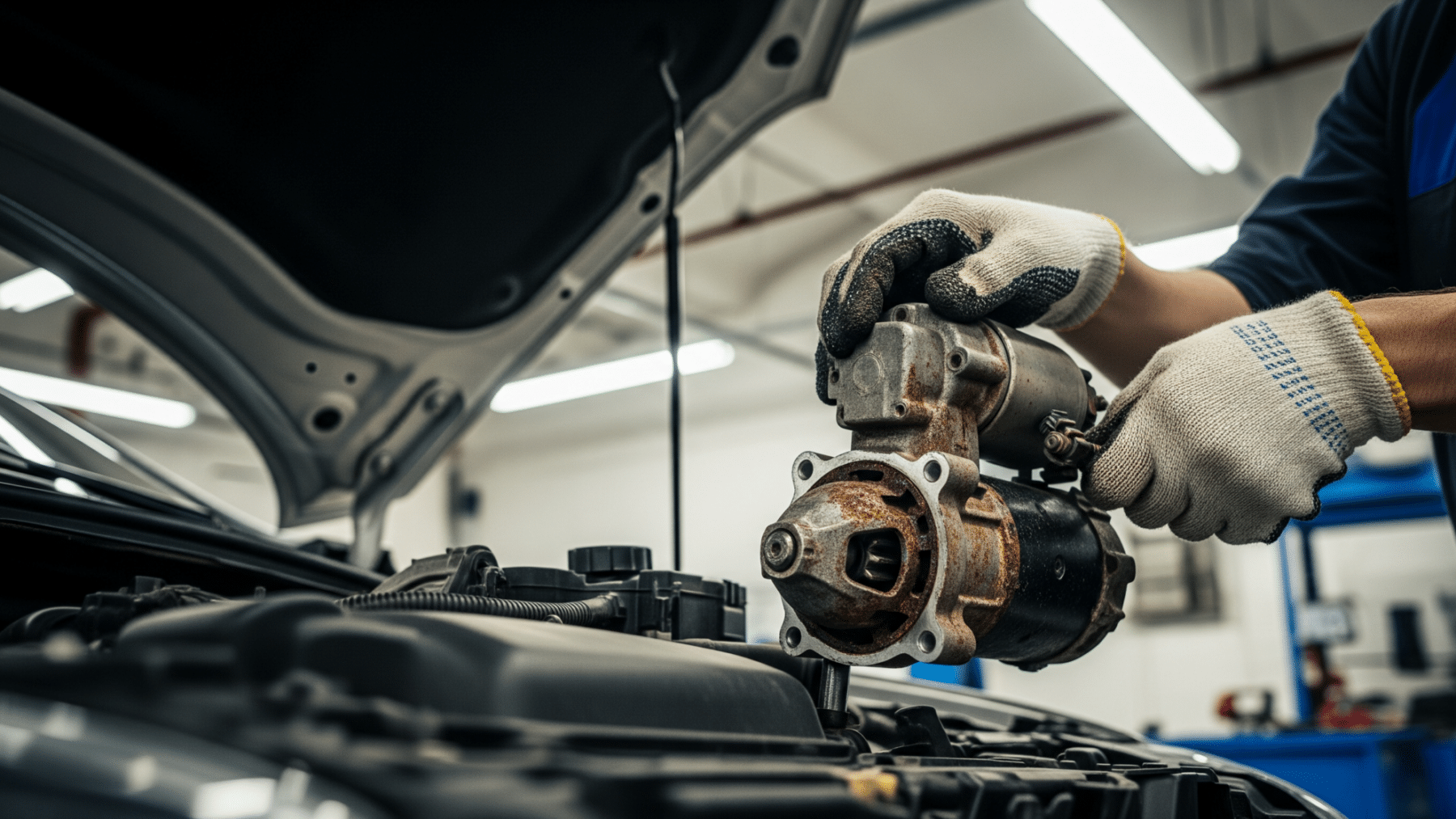
The National Highway Traffic Safety Administration has logged a recall covering 29,119 BMW plug-in hybrid sedans after the automaker determined that the engine starter relay may corrode, leading to a short-circuit, potential overheating, and a fire risk serious enough to trigger a park-outside advisory for affected owners.
What NHTSA’s filing says
The recall, assigned NHTSA campaign ID 26V441, covers BMW of North America vehicles in which the engine starter may corrode and overheat. NHTSA’s filing advises owners to park outside, and the action affects 29,119 units. The recall covers certain 2016, 2018 BMW 330e iPerformance, 2018, 2020 BMW 530e iPerformance, 2018, 2020 BMW 530e xDrive iPerformance, and 2017, 2019 BMW 740Le xDrive iPerformance models.
According to NHTSA, water can come into contact with the engine starter’s electrical relay, leading to corrosion over time. Corrosion inside the starter relay could affect the electrical connection within the relay and the ability to start the engine. In certain cases, corrosion inside the starter relay could also lead to a short-circuit and possible overheating of the starter.
A park-outside directive is among the more serious precautionary instructions NHTSA can issue alongside a recall notice, typically reserved for defects that carry a meaningful risk of vehicle fire while the car is stationary.
An earlier wave of this multi-year campaign, NHTSA campaign 25V636, filed in September 2025, expanded the recall to approximately 196,355 vehicles across a broader set of models. A third wave followed in February 2026: NHTSA campaign 26V056 added 87,394 vehicles after BMW’s own bench testing identified a separate but mechanically related failure pathway. The July 14, 2026 action brings a fourth U.S. vehicle population into the broader starter relay recall campaign: 29,119 iPerformance plug-in hybrid models.
The park-outside advisory explained
When NHTSA instructs owners to park outside and away from structures, it signals that the agency considers the fire risk credible enough to warrant action before a remedy is available.
NHTSA states that in an extreme case, the problem could cause a thermal event during vehicle operation or when the vehicle is parked and the ignition is off.
Owners of affected vehicles are advised to follow that guidance until dealers complete the repair.
The affected models are the 2016, 2018 330e iPerformance, the 2018, 2020 530e and 530e xDrive iPerformance, and the 2017, 2019 740Le xDrive iPerformance. All models impacted by this recall use the older four-cylinder plug-in hybrid system, and all affected models are sedans, ranging from the compact 3 Series to the full-size 7 Series. Owners can verify whether their vehicle is covered by entering their 17-digit VIN at NHTSA.gov/recalls or by contacting BMW customer service directly. Owner notification letters are expected to be mailed August 28, 2026, and VINs involved in this recall will become searchable on NHTSA.gov beginning August 28, 2026. As with all federally mandated recall repairs, the fix will be performed at no charge to the owner.
Starter relay failures and fire risk
The issue, BMW said in its recall filings with NHTSA, is that there could be corrosion in the starter relay. Water ingress can lead to corrosion within the relay, which may affect the electrical connection and the ability of the combustion engine to start. In some cases, the corrosion can cause the relay to overheat and create a short circuit.
The recall notice states that corrosion inside the starter relay could cause a short-circuit and potentially overheat the starter, and the problem could arise when the vehicle is running or parked with the ignition off.
The iPerformance models did not appear in earlier recall waves because they use a distinct starting system. BMW said in filings that it discovered this issue when it continued to monitor vehicles and service reports after the original recall.
The BMW recall comes during a period of heightened federal scrutiny of vehicle fire risks. An earlier July 2026 action affecting Kia’s 462,869 Telluride SUVs was also rooted in fire concerns, in that case tied to seat motor wiring. Separately, Ford’s recent recall of 741,195 F-150, Explorer, and Expedition vehicles illustrated how a single mechanical defect can span hundreds of thousands of vehicles across multiple nameplates.
What BMW owners should do now
Owners who believe their vehicle may fall under NHTSA campaign 26V441 should avoid parking in enclosed spaces until they have confirmed their vehicle’s status and received the dealer remedy. NHTSA’s online VIN look-up tool is available around the clock, and owners can also call the agency’s vehicle safety hotline at 1-888-327-4236.
Owners can also contact BMW customer service at 1-800-525-7417 for more information about this recall. Owners whose vehicles are well out of warranty and who had a remedy fix done at their own expense may be eligible for reimbursement; those owners can contact BMW customer service for more information.
To resolve the issue, dealers will replace the engine starter free of charge. Owner notification is planned to begin and end on August 28, 2026, consistent with the agency’s standard timeline requiring manufacturers to mail notices within 60 days of a recall decision.
Until then, the park-outside advisory from NHTSA remains in effect for all 29,119 affected vehicles.
