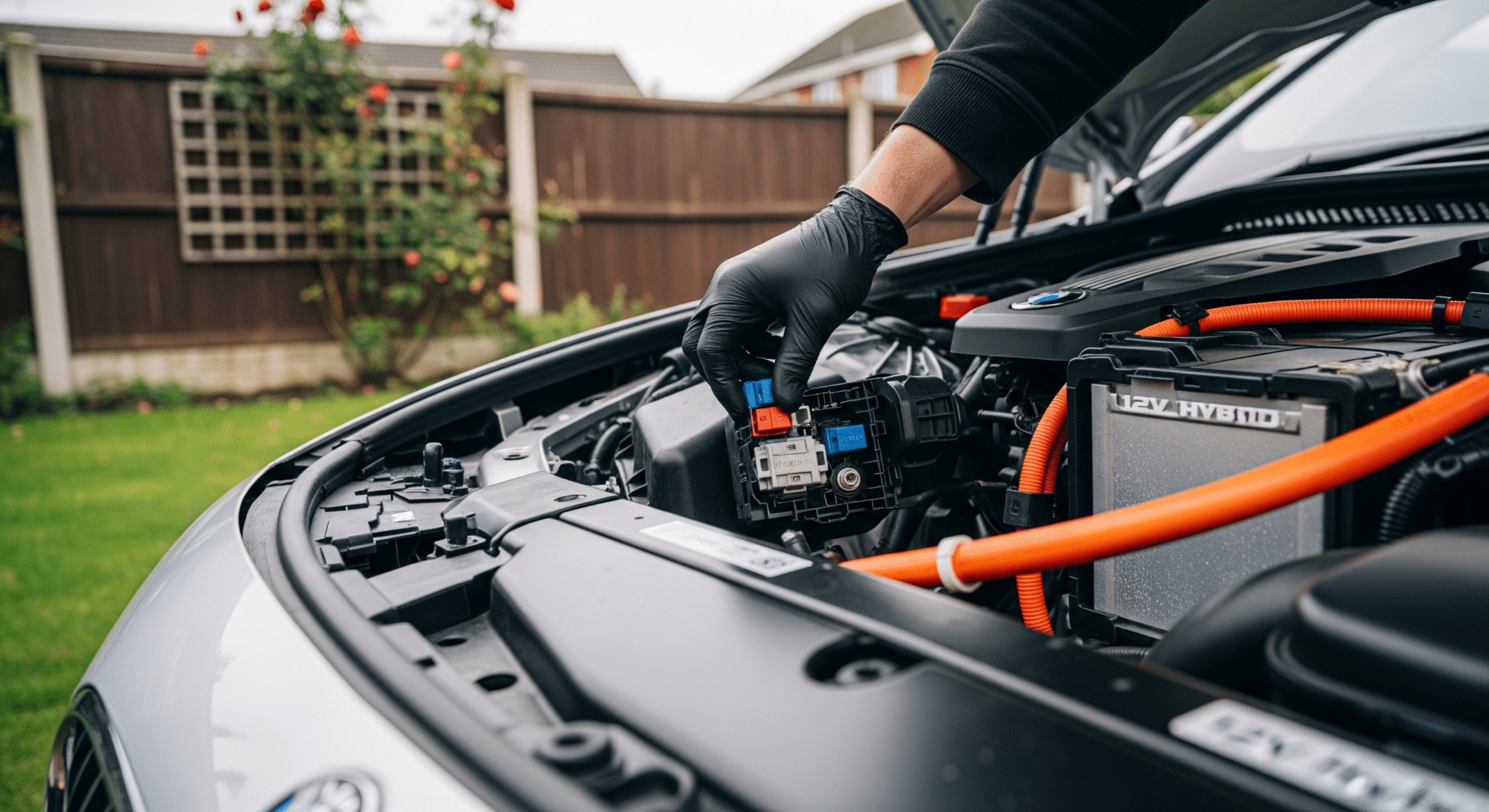
BMW is recalling 29,119 plug-in hybrid vehicles in the United States due to a potential fire risk linked to the engine starter system. The National Highway Traffic Safety Administration posted the recall on July 14, 2026, and is urging affected owners to park outside immediately until the repair is complete.
Which vehicles are affected
The recall specifically affects the 2016, 2018 BMW 330e iPerformance, 2018, 2020 BMW 530e iPerformance, 2018, 2020 BMW 530e xDrive iPerformance, and 2017, 2019 BMW 740Le xDrive iPerformance.
All models impacted by this recall use the older four-cylinder plug-in hybrid system, which had an EPA-rated all-electric range of up to 21 miles in the 5 Series. All affected models are sedans, ranging from the compact 3 Series to the full-size 7 Series.
What causes the fire risk
According to NHTSA, water can come into contact with the engine starter’s electrical relay, leading to corrosion over time. Corrosion inside the starter relay of these sedans could lead to a short circuit, which could cause the starter to overheat, potentially leading to a fire in extreme cases.
NHTSA states that “in an extreme case, this could cause a thermal event during vehicle operation or when the vehicle is parked and the ignition is off.” Recalls on PHEV vehicles for a possible fire risk have become increasingly common, but this defect has nothing to do with the hybrid system itself. The issue does not involve the vehicles’ high-voltage battery systems; instead, BMW identified a potential problem with the electrical relay integrated into the engine starter, a component found on nearly every internal combustion engine.
In early 2026, BMW tested 150 starters returned from in-service vehicles and learned of two additional field incidents before making the determination to issue a recall. The recall was issued after a field incident in November involving a 2019 BMW 5 Series and a field incident in May involving a 2017 BMW 3 Series. BMW has not reported any crashes or injuries related to the issue. The company said it believes fewer than 0.1% of vehicles will potentially experience the problem.
An expanding recall campaign
In September 2025, NHTSA campaign 25V636 expanded the recall to approximately 196,355 vehicles across a broader set of models, including 2019, 2022 Z4, 330i, X3, X4, 530i, 430i, 230i, and roughly 1,469 Toyota Supra units manufactured by BMW. A third wave followed in February 2026: NHTSA campaign 26V056 added 87,394 vehicles after BMW’s own bench testing identified a separate but mechanically related failure pathway, a buildup of metallic material in the relay chamber caused by internal abrasion.
The July 14, 2026 action brings a fourth U.S. vehicle population into the campaign: 29,119 iPerformance plug-in hybrid models.
The iPerformance models did not appear in earlier recall waves because they use a distinct starting system. BMW said in filings that it discovered this issue when it continued to monitor vehicles and service reports after the original recall.
This pattern is consistent with wider EV and PHEV safety scrutiny across the industry, similar to earlier Hyundai and Kia battery fire recalls and the Ford Mustang Mach-E recall that preceded it.
What owners should do now
Owners of the affected 29,119 iPerformance vehicles should park outside and away from structures, garages, carports, underground lots, and any building, until the starter replacement has been completed. The fix is a redesigned starter, installed free of charge. Owners who already paid to replace a failed starter out of pocket can seek reimbursement through BMW customer service.
Notification letters go out August 28, and that is also when the VIN lookup tool on BMW’s site and NHTSA’s recalls page will begin returning results for the recalled cars. Until then, owners of a 330e, 530e, or 740Le xDrive from these model years will not be able to confirm their status online.
Owners can contact BMW at 800-525-7417 or the National Highway Traffic Safety Administration vehicle safety hotline at 888-327-4236. Owners do not need to wait for a notification letter to take the outdoor parking precaution or to call BMW directly about their vehicle’s status.
