Something unusual happened on the California grid on the evening of July 9, 2026.
The sun had gone down. Solar panels across the state had gone dark. And yet the grid held steady, not because a gas plant fired up, but because a fleet of batteries switched on at a scale nobody had ever seen before.
The number that came out of that evening is now ricocheting through the energy industry, and the reason it lands so hard for ordinary households has almost nothing to do with California.
The grid’s hardest hour used to belong to gas peakers
For decades, the late-evening demand spike was the grid’s most expensive problem.
When the sun sets and air conditioners keep running, grid operators have had to call on gas peaker plants, some of the oldest, dirtiest and most expensive generators in the country, to keep the lights on.
Those plants are fast to start, but they charge a premium for that speed.
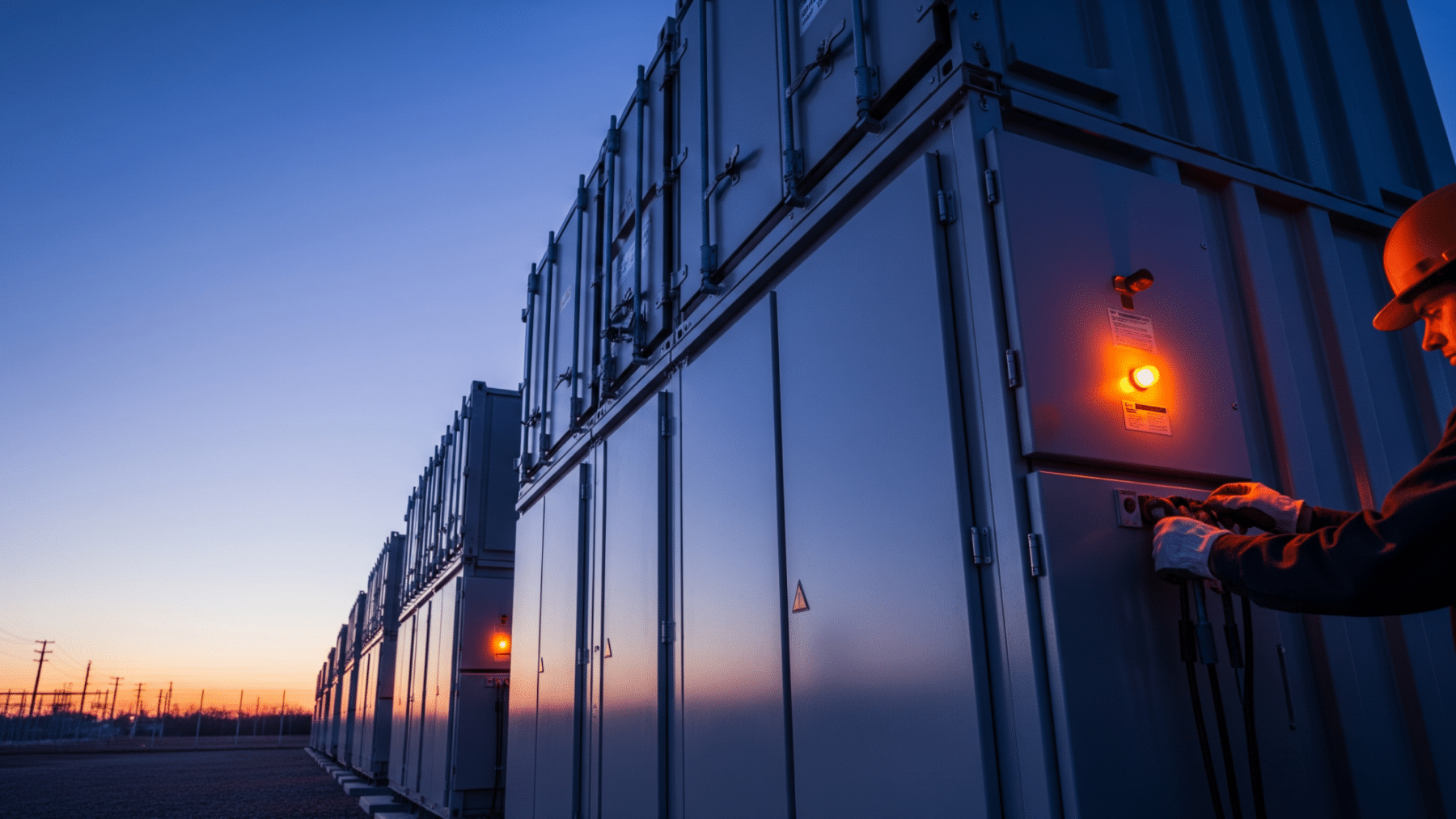
Evening hours are historically the hardest moment for the grid, but batteries are stepping up to meet peak demand and spread the solar savings deeper into the evening.
That dynamic has been shifting for a few years. What happened this July showed just how far the shift has gone.
A record that had been quietly building for months
The first quarter of 2026 had already been a historic one for storage.
The U.S. installed a record 9.7 GWh of battery energy storage in the first quarter of 2026, up 32% year over year, the highest-ever first-quarter energy storage deployment in U.S. history, the Solar Energy Industries Association reported in a May 21 release.
That momentum kept compounding. One key factor behind the U.S. battery boom is the preservation of the federal investment tax credit for qualifying energy storage systems, which the Inflation Reduction Act first authorized in 2022, a credit that can offset 30% or more of deployment costs.
The One Big Beautiful Bill Act preserved the energy storage ITC even as it accelerated the expiration of corresponding investment and production tax credits for wind and solar systems.
More batteries on the grid meant more firepower for exactly the moment that arrived on July 9th.
How a single evening became a stress test for the whole country
A heat event pushed late-afternoon demand across the California grid unusually high.
After sunset, solar output dropped to zero within minutes. The question was whether the grid’s battery fleet, years in the making, could absorb the load without gas peakers carrying the full weight.
Approximately 48% of utility-scale storage capacity on the grid is co-located with solar arrays, a strategy designed to mitigate curtailment and shift peak production to meet evening demand.
That co-location strategy meant the batteries were already charged and sitting ready when the sun went down.
Grid operators had the capacity. The only question was whether the record books would move.
Nearly 13 gigawatts, all at once, from batteries alone
On the evening of July 9th, California’s battery fleet discharged a record 12.99 gigawatts of power, more power than New York City consumes on a hot summer day. At peak, batteries covered 36% of energy demand across the CAISO region.
That figure comes directly from SEIA’s six-record summary published in July 2026 and confirmed by California Independent System Operator data.
Just one day later, on July 10, CAISO set another record, with solar generation reaching 23 GW and supplying 72% of afternoon electricity demand.
Two records in two consecutive days, storage on the 9th, solar on the 10th, on the same grid.
The payoff for ratepayers is real: every hour that batteries displace a gas peaker is an hour that the most expensive generator on the grid stays offline. Those costs flow directly into the transmission and capacity charges that show up as line items most households never read but pay every month.
What the 12.99 gigawatt moment means for grids far beyond California
In Texas, batteries have been setting their own records on ERCOT, the grid serving most of the state, as the Lone Star State’s storage fleet, which stood at roughly 14 GW as of March 2026, nearly double what it was in early 2025, steps in to cover the same post-sunset demand gap that California batteries solved on July 9th.
More capacity means more evenings like July 9th, and more pressure on the gas peaker economics that have kept electricity prices elevated during peak hours for a generation.
The cost of that shifting balance is already visible in rate cases working through state regulators, including the kind of transmission cost disputes now landing on household bills across major U.S. grids.
Nationally, solar generated more electricity than coal for the first time in U.S. history in May 2026 , according to SEIA, continuing a trend that has reshaped the generation mix across multiple regional grids including CAISO.
The July 9th record did not come from a single giant installation or a moonshot project. It came from thousands of batteries added one project at a time over several years, quietly stacking up capacity until the evening arrived when the number finally crossed into history.
That is how grid records tend to work, and why the next one is probably closer than anyone expects.
