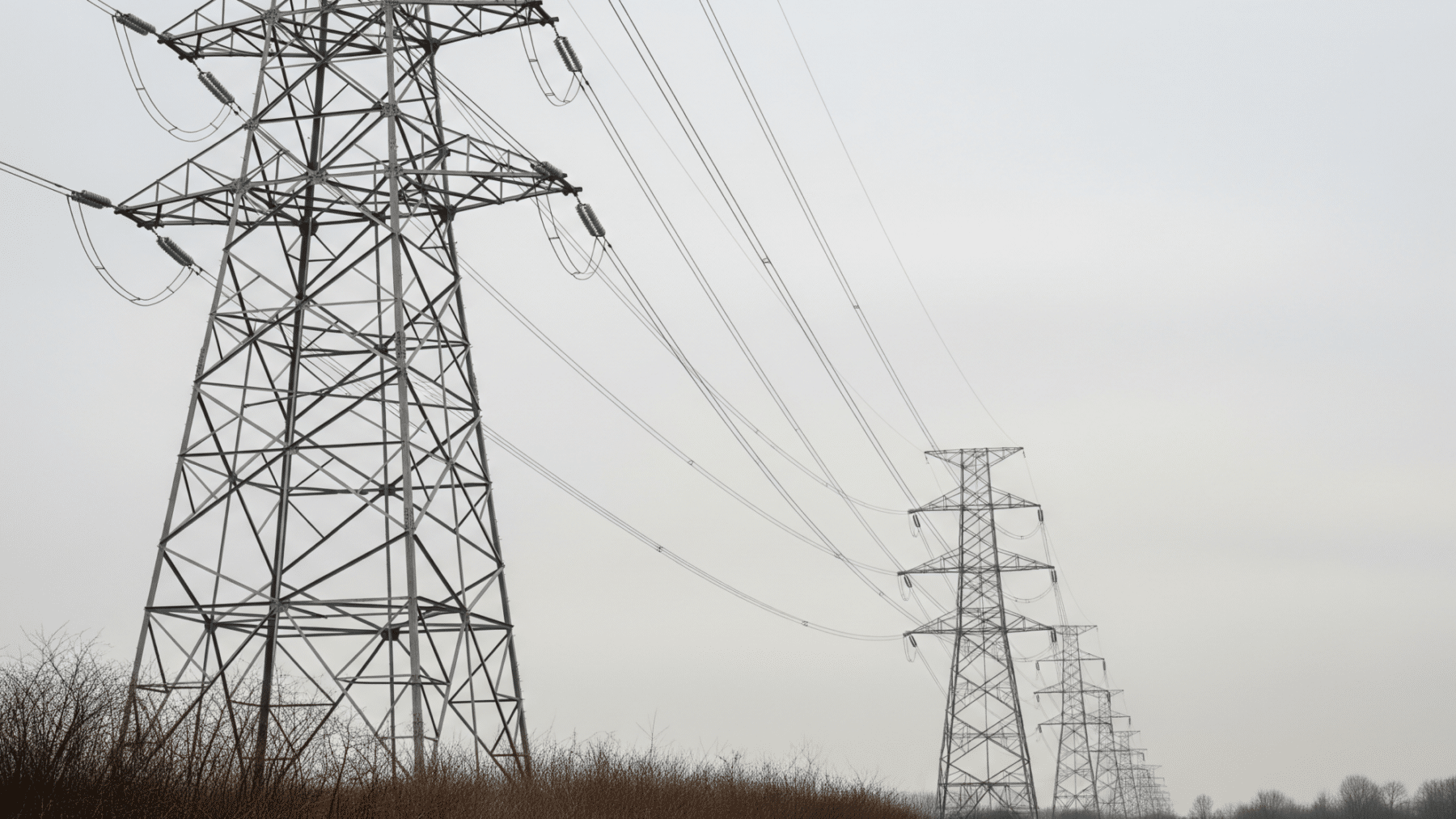
The U.S. Department of Energy’s Office of Electricity has released a draft of its 2026 National Transmission Needs Study, warning that the country’s power grid faces a pressing and widening capacity problem driven by a wave of new demand that transmission infrastructure has not yet caught up with.
What the study found
The U.S. Department of Energy’s Office of Electricity on July 9 released a draft of the 2026 National Transmission Needs Study for a 60-day public comment period.
Required by Section 216(a) of the Federal Power Act, as amended by the Infrastructure Investment and Jobs Act, the study, formally known as the National Electric Transmission Congestion Study, identifies high-impact needs and provides information about current and anticipated future capacity constraints and congestion on the nation’s electric transmission grid.
The study shows that there is a pressing need for additional electric transmission infrastructure due to load growth from data centers, expanding domestic manufacturing, large industrial loads, and a growing economy.
Electric vehicle charging is a recognized contributor to that demand curve, as utilities and grid planners account for millions of additional EVs drawing power from a system already under strain.
The draft study concludes that significant transmission expansion will be needed as electricity demand increases due to data center development, domestic manufacturing, large industrial loads, and broader economic growth.
DOE’s own congressional report on EV grid impacts noted that meeting growing energy demand from EV charging will require investments in infrastructure and approaches that take advantage of demand and supply flexibility. It also noted that EVs and the grid can have a symbiotic relationship, since EVs have flexibility in terms of where and how long they use energy to charge.
Record transmission portfolios already in motion
Many Regional Transmission Operators and Independent System Operators are approving their largest transmission portfolios in anticipation of the driving need for increased transmission. Regions like MISO, Southwest Power Pool, PJM Interconnection, and ERCOT have recently approved some of their largest-ever portfolios. MISO’s MTEP24 transmission plan made history as the largest transmission portfolio ever undertaken in the United States, covering 488 projects stretching more than 5,000 miles across 15 states. The MISO Board approved the plan on December 12, 2024.
That planning boom reflects the scale of the challenge. In addition to reliability concerns, RTOs, ISOs, utilities, and other planning entities are seeing future transmission needs primarily driven by load growth.
Interregional transmission is increasingly recognized for its contributions to increasing reliability, grid resilience, and meeting demand growth in at-risk areas.
The strain on distribution infrastructure is equally acute, as utilities grapple with managing EV charger interconnection queues alongside other distributed loads. The federal government has addressed this in part through a program providing funding to distribution utilities to pilot innovative software solutions for renewable energy and EV charging interconnection queue management.
EV charging as a managed grid asset
Grid planners and regulators are increasingly treating EV chargers not just as loads to be accommodated but as tools that can help stabilize the system.
The transition to EVs will require the coupling of the transportation sector and the electric grid, a relationship DOE refers to as vehicle-grid integration, or VGI. VGI allows EVs to function as a highly controllable load and mobile storage device capable of performing advanced grid services that provide value to vehicle owners and new markets for aggregation.
That opportunity depends heavily on smart charging architecture. Time-of-use pricing, managed EV charging, and vehicle-to-grid systems will be essential for synchronizing EV demand with grid capacity. They also help align consumption with renewable energy output and improve overall grid flexibility.
DOE’s STEP Prize initiative is pushing complementary storage technologies toward commercial-scale manufacturing, reinforcing the broader grid modernization push.
The study’s publication also lands as federal EV charging infrastructure programs remain in flux. As of late 2025, fewer than 400 charging ports had actually been built from the NEVI program, despite billions in apportioned funds.
The NEVI program, introduced in 2021 as part of the Infrastructure Investment and Jobs Act, is a five-year, $5 billion effort to build out EV charging infrastructure along major corridors across the country. The program has faced a series of federal roadblocks, including a suspension in February 2025 and a congressional funding rescission in January 2026 that clawed back almost $504 million from 30 states and territories that had not obligated all of their funding from the program’s first fiscal year. Separately, the Consolidated Appropriations Act, 2026 transferred some unobligated NEVI program funds for other purposes. Earlier GCN reporting on vehicle-grid integration found that utilities increasingly want the existing fleet of EVs to function as flexible grid assets, making the transmission study’s call for smarter load management directly relevant to that strategy.
Next steps and public comment
DOE is inviting feedback on the draft report from local communities, Tribal Nations, states, and regional reliability entities, as well as the general public, through a public comment period and in-person roundtables being held across the country during the summer of 2026.
The public comment period runs through September 8, 2026; comments must be submitted to [email protected] by midnight EST on that date.
The Needs Study is intended to support better transmission planning and investment decisions, help identify opportunities to lower system costs, and contribute to a more affordable, reliable, and secure electric grid for American consumers.
The agency will incorporate comments received into the final study as appropriate.
