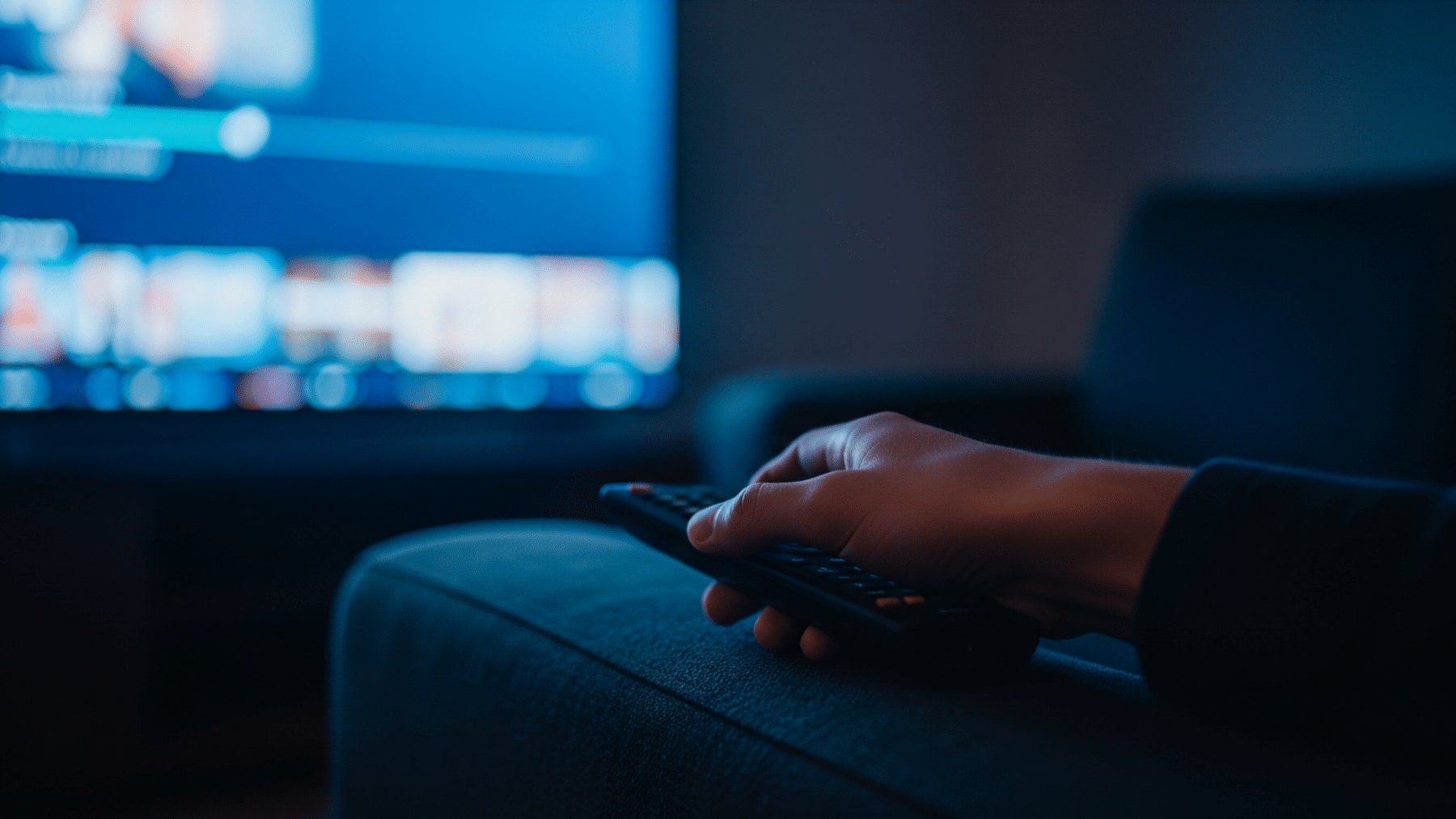
You finish an episode. The credits begin to roll. Then a thin bar of color starts sliding across a button in the corner of the screen, and before you have consciously decided anything, the next episode is already playing.
That sweep of color is not cosmetic. It is doing a very specific job, and a study published in 2025 measured exactly how well it works.
The feature most people never think about, and how it got into every streaming app
Autoplay, a feature that automatically begins the next episode or movie without user input, has become a staple of modern streaming platforms.
Three interface features that drive user engagement by nudging users to continue watching are recommendations, autopreview, and autoplay.
These features are widely implemented across major video streaming platforms including Netflix, Disney+, Prime Video, and Hulu.
For most viewers, it just feels like convenience. Research suggests it is considerably more calculated than that.
What the screen is actually doing in those final seconds of a show
When a piece of content on Netflix approaches its end, users may return to the menu, opt to continue watching the credits to stop the next episode from automatically playing, or do nothing, at which point the next episode will automatically play after about 5 seconds.
A color wipe across the Next Episode button operates as a visual countdown timer for when the next episode will automatically begin.
That color bar is the entire mechanism. Five seconds. A sweep of color. No pause. No question.
Prior work has equated autoplay to boarding a bus over which passengers have limited agency to determine where the stops are or when to get off.
As users continue to rely on autoplay, they can lose their sense of time, inadvertently extending viewing sessions due to the loss of stopping cues and interaction friction.
Why removing a single button’s animation changed how researchers think about screen time
These features automate platform processes that would traditionally be operated by the user, thereby interfering with users’ decision-making as the platform preselects and even plays content without explicit request or consent.
By removing natural stopping cues like page breaks or loading pauses, infinite scroll and autoplay eliminate the tiny moments that might remind us to stop.
Psychologists call these “decision points”: brief pauses where our brains can evaluate whether to continue.
Those decision points, it turns out, are not trivial. They are the entire ballgame, and researchers decided to measure them precisely.
This connects to a broader pattern of how teenagers are reorganizing their social lives around screens, and how younger generations are growing up inside these engineered environments from an early age.
The 21-minute number that researchers put on one tiny design choice
Researchers at the University of Chicago’s Department of Computer Science conducted an experimental study with 76 Netflix users in the US to analyze the impact of autoplay, a specific attention capture feature, on key viewing metrics.
The study followed 76 participants who already reported moderate to heavy Netflix use.
Half the group turned off autoplay, while the control group left it on.
The result was not subtle.
Disabling autoplay resulted in, on average, 21 fewer minutes watched per day and approximately 17-minute shorter sessions.
That is a significant reduction, driven almost entirely by the reappearance of friction: the moment when a viewer has to physically pick up the remote and press a button.
The study argues that platforms like Netflix are designed to minimize friction so that opportunities for consumers to deviate from passive viewing are few and far between, and that the five-second autoplay countdown provides little time for viewers to reconsider their original intentions.
The full study was published in the Proceedings of the ACM on Human-Computer Interaction by researchers from the University of Chicago’s Department of Computer Science.
What happens when viewers get the decision points back, and what the industry may have to do next
Participants who watched content with autoplay enabled experienced increased overall watching time and moved between pieces of content more quickly.
In contrast, participants with autoplay disabled showed increased downtime between consecutive viewings, allowing more time for making conscious decisions.
When asked if they would keep autoplay off after the study, participants were divided. Some said they would turn it back on because it made watching easier, especially when relaxing.
However, a portion of participants decided to keep autoplay off after realizing how much more control they had over their viewing time.
That finding matters. It suggests that informed viewers do make different choices, they just rarely get the information in the first place.
The study suggests that platforms could offer more customized autoplay settings: rather than a rigid five-second window, users could be given the option to configure a longer countdown duration, giving themselves adequate time to make a conscious decision about whether to continue.
Until that option exists by default, the color wipe keeps sweeping, five seconds at a time, episode after episode, adding up to 21 minutes a day that most viewers never realize they handed over.
