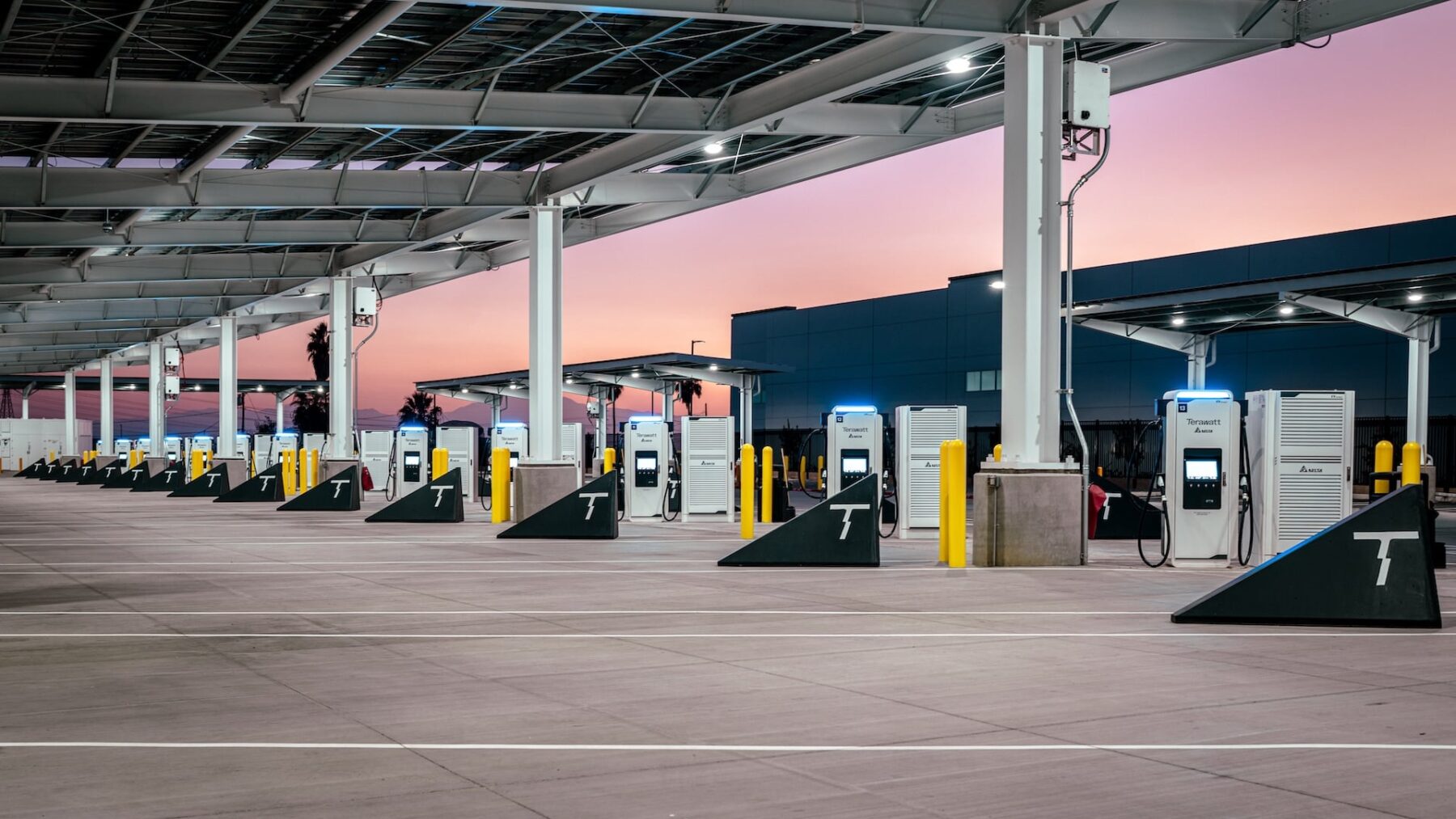
Terawatt Infrastructure opened four new heavy duty charging depots in South San Francisco, Nashville, Miami and Dallas this week, adding nearly 22 megawatts of dedicated power for commercial and autonomous vehicle fleets.
The company said in a November 12 announcement that new sites in South San Francisco, Nashville, Miami, and Dallas add nearly 22 MW of dedicated charging capacity for leading commercial electric fleets , together delivering 22 megawatts (MW) of dedicated charging capacity, enough to charge more than 3,000 vehicles per day , underscoring how fast-growing fleet electrification is pushing new, concentrated blocks of demand onto local power grids.
Four sites, four utility hookups
The South San Francisco site, located near San Francisco International Airport, delivers 6.6 megawatts and supports one fleet’s Bay Area operations.
A 4.5 megawatt site near Nashville International Airport supports local fleet operations , and a 3.5 megawatt site in Miami’s Design District/Wynwood area, opening this quarter, will support Miami operations for a commercial fleet operator . The largest site, near Dallas/Fort Worth International Airport, offers 7 megawatts of power, supports a commercial fleet operator and will go live this quarter.
Terawatt has overseen development and construction on these charging depots, including entitlements, utility interconnection, and site design, and will also manage all ongoing charger operations and maintenance, leveraging its proprietary Charge Management Software (CMS) and energy management tools alongside its 24/7 operations and maintenance system.
The announcement does not name the fleets using the four depots.
PG&E says it cut months off the timeline
The South San Francisco project drew its own writeup from the local utility. Pacific Gas and Electric said in a blog post that the site will bring nearly 7 megawatts of new charging capacity online, enough to charge up to 1,000 vehicles a day.
PG&E said 10 months from property acquisition to full energization , with 5 months shaved off the project timeline .
Jason Glickman, executive vice president, Strategy and Growth at PG&E , said “Fleet electrification is growing quickly, and our job is to make sure the grid is ready to support it safely, reliably and efficiently,” adding that “By accelerating this project with customers like Terawatt, we’re able to plan for large-scale charging needs, streamline interconnections, and get the infrastructure in place to support their growth.”
Terawatt said it completed the buildout ahead of schedule and reduced costs by six figures through innovative site-energization methods and close collaboration with Pacific Gas & Electric Company (PG&E).
The coordination mirrors moves elsewhere on the grid, where utilities have increasingly leaned on software and rate design, rather than brute-force wire upgrades, to absorb new EV demand without straining peak hours, a pattern seen in Con Edison’s residential charging program and in Maryland’s automated charging expansion.
A fast-growing depot network
Terawatt’s network has delivered more than 93 million miles of clean driving range for commercial EV and AV fleets and has safely dispensed more than 30 million kWh of clean electricity , according to the company.
The four new sites join Terawatt’s network of nearly 30 depots in active construction or development across 16 U.S. markets , with additional sites in planning.
Terawatt is the leading full-stack infrastructure platform powering AV and EV fleets. Serving the largest industry fleet operators, including Waymo and Flexdrive by Lyft, Terawatt acquires, develops, and operates purpose-built depots for autonomous vehicles, heavy-duty logistics, and commercial electric fleets, delivering faster site deployment, a lower cost-per-mile, and commercial-scale operational reliability.
The San Francisco based company has positioned itself as a turnkey alternative to fleets building and managing their own charging infrastructure, handling real estate, utility negotiations, construction and maintenance under a single contract.
Why grid planners are watching
Each depot represents a concentrated, around-the-clock load landing on a single utility meter, a very different profile from scattered residential EV charging.
Megawatt-scale fleet sites can rival the demand of a small industrial customer, which is why utilities like PG&E are increasingly building dedicated engineering and permitting tracks for fleet depot interconnections rather than treating them as routine commercial hookups.
As more logistics, delivery and autonomous vehicle operators shift to electric fleets, the pattern playing out in these four cities, utilities racing to speed up interconnection timelines for high-power depots, is likely to repeat in other metro grids working through their own queues of large, single-site EV charging loads.
