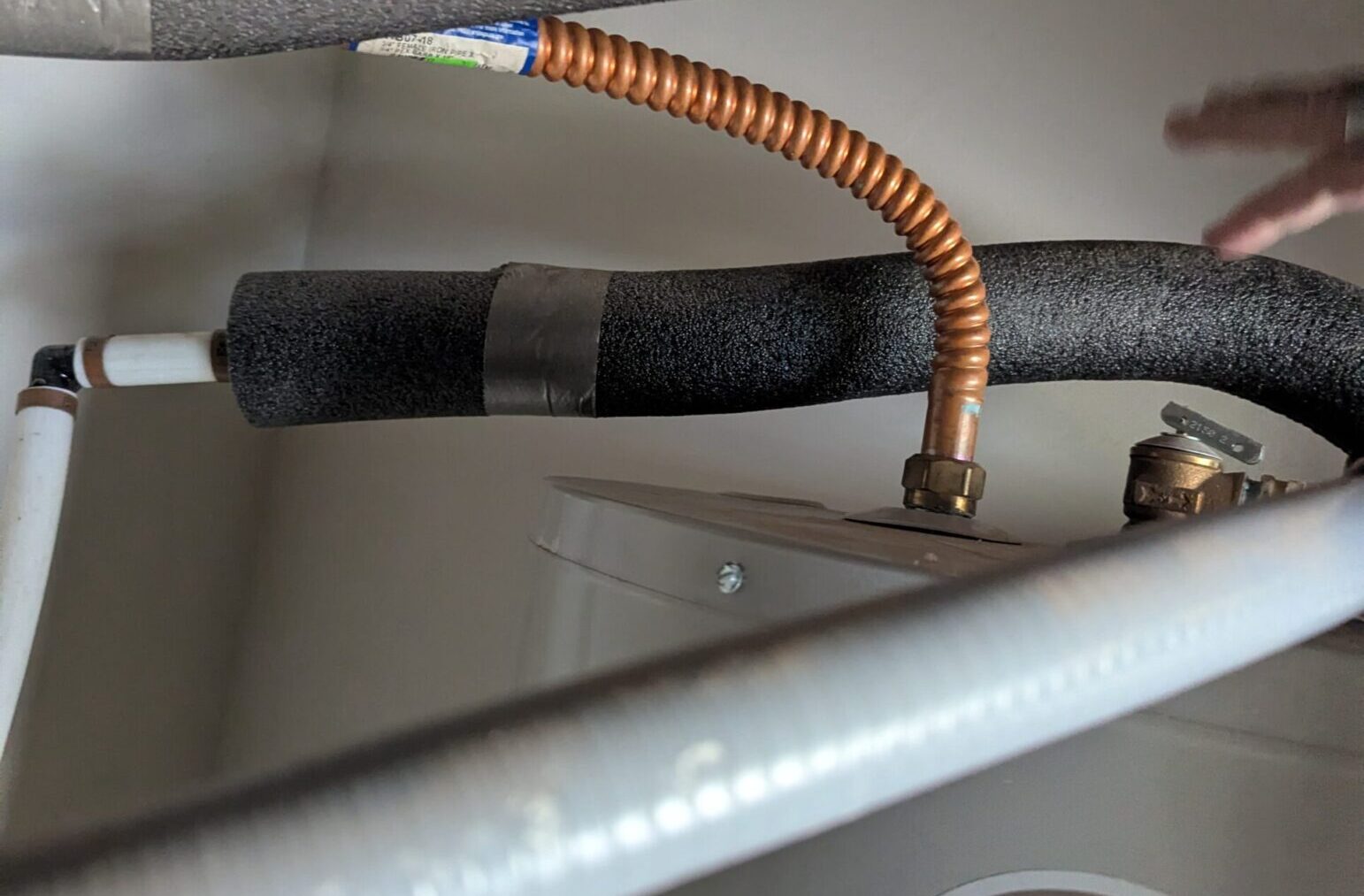
A water heater in a basement sits quiet most of June, its burner long gone, a thin copper coil wrapped around its tank instead.
That coil is supposed to be the free lunch of geothermal heating.
It promises hot water with no separate bill, no extra fuel, no moving parts of its own.
Homeowners who bought that pitch are now comparing notes online.
Some say the tank runs barely lukewarm for months at a stretch.
So what actually controls when the coil works and when it goes cold?
Why a desuperheater only makes hot water when something else is already running
A desuperheater is not a water heater in its own right. For water heating, you can add a desuperheater to a geothermal heat pump system, and it is an auxiliary heat exchanger that uses superheated gases from the heat pump’s compressor to heat water.
That detail is the entire catch. The device has no independent heat source, so it only produces hot water as a byproduct of a compressor cycle running for some other reason entirely.
In a January cold snap, the hot water supply can feel almost limitless, since in heating mode it makes hot water at the heat pump’s efficiency rather than for free. The backup element barely kicks on, and the physics behind it is real rather than a sales trick.
But a well insulated house barely needs heating or cooling in spring and fall. That is exactly when compressor runtime drops, and hot water output drops with it, even as showers and dishwashers run on the same daily schedule. Therefore, when the geothermal heat pump runs frequently during the summer, it can provide significant water heating capacity, while during the fall, winter, and spring, when the desuperheater isn’t producing as much excess heat, the facility will need to rely more on traditional water heating methods.
What that looks like inside an actual house through four seasons
Picture a three bedroom colonial with a desuperheater feeding a standard 50 gallon storage tank, a setup similar to systems described across geothermal installation guides. During peak winter, the coil alone can supply a meaningful share of the home’s hot water needs, trimming the backup element’s workload.
Then spring arrives. The heat pump shifts into shorter, less frequent cycles, so the tank temperature drifts down between them, and the backup element quietly starts picking up the slack.
Installers who size a desuperheater on winter runtime alone are really describing a best case scenario that holds for a few months, not twelve.
Cooling season flips the pattern again, since the unit also captures heat while running in air conditioning mode. Other ground source resources describe the same swing, noting that most ground-source heat pumps have a desuperheater that can supply a meaningful share of domestic hot water once the compressor is cycling often.
Where the efficiency numbers actually come from
The underlying technology is well documented by federal building guidance, which describes geothermal systems drawing on stable underground temperatures, with a desuperheater offering supplemental water heating as a secondary function.
That framing matters. A desuperheater is supplemental to a home’s domestic hot water system, since it cannot meet all of a household’s hot water needs on its own, yet buyers who hear the word free often skip past the word supplemental at the kitchen table.
Industry efficiency claims for the broader system are strong and well supported. Multiple federal and industry sources describe geothermal heat pumps running at roughly 300 to 500 percent efficiency, though that figure covers the whole heating and cooling system, not the add-on coil alone.
None of that data is in dispute. What is missing is a seasonal output breakdown that would let a buyer weigh a realistic spring estimate against the winter number used to close the sale.
Where the promise breaks down and who notices first
The households most likely to notice the gap are the ones who downsized their backup water heater, assuming the coil would carry most of the load year round. Owner discussions on HVAC forums describe exactly that scenario, with some installers noting that a properly sized geothermal field, using modern refrigerant, can leave less wasted heat behind for the desuperheater to capture.
Even so, this is not a defect. A desuperheater does precisely what the thermodynamics allow, which is the whole reason the feature exists in the first place.
Because the shortfall only shows up part of the year, many owners never connect a lukewarm shower in the shoulder seasons to a design limit buried in the sales pitch. That is less a scandal than a gap in how the pitch gets made.
Buyers weighing a new system alongside other upgrades, from the heat pump itself to pairing storage the way utility scale battery projects now do, can ask installers for a month by month estimate instead of one winter figure.
What buyers can reasonably expect once the seasons turn
The fair summary is that a desuperheater remains a genuine bonus, not a false promise, so long as a household treats it as a seasonal top up rather than a standalone water heater. Winter savings are real and can be substantial for an all electric home.
Spring and fall tell a different story. The backup element works harder, and the electric bill shows it.
Owners who plan around the full year, not just the coldest month a salesperson mentioned, report far less disappointment later. That gap between a winter pitch and spring reality is small next to the overall savings a geothermal system delivers, and it simply surfaces after the first full year in the house.
