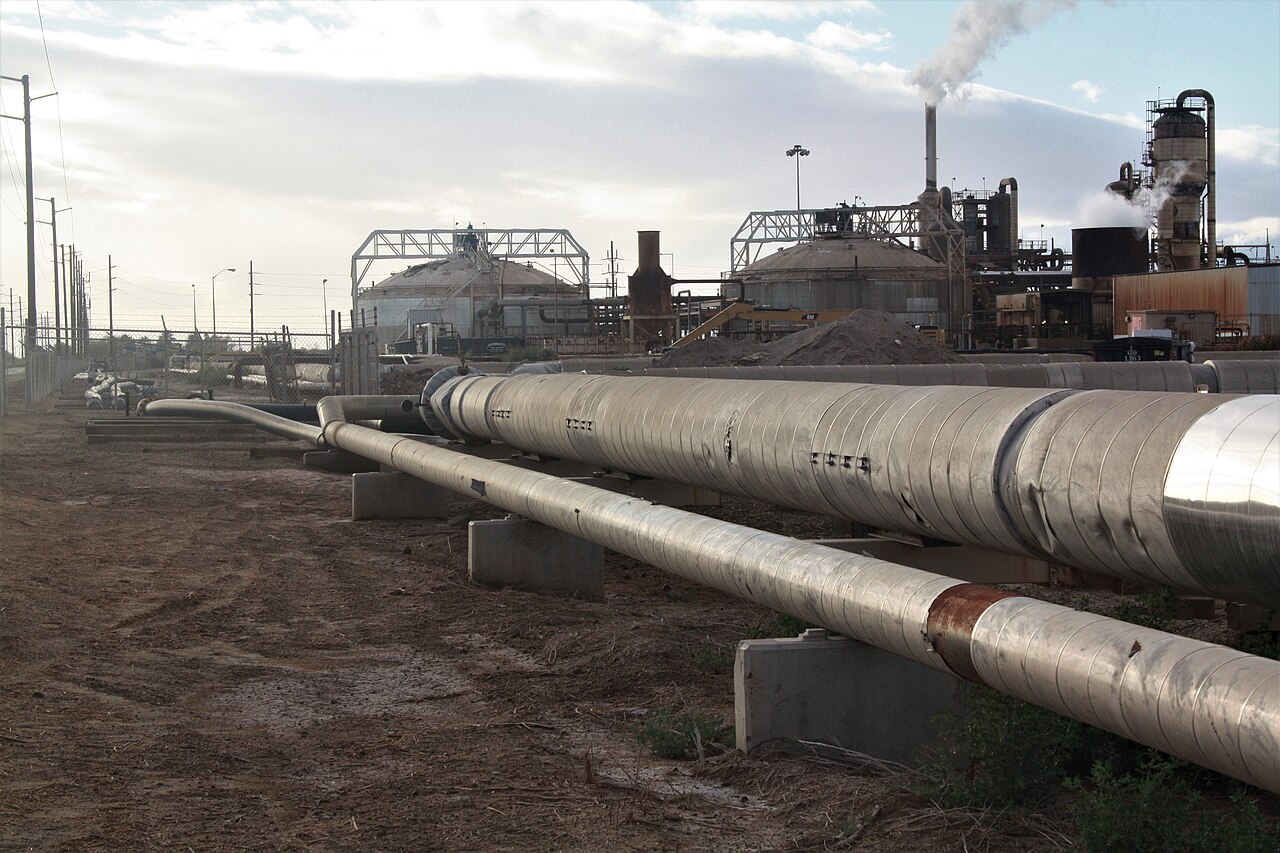
Fervo Energy’s Cape Station geothermal plant in southwestern Utah is projected to reach 4.3 gigawatts of peak capacity, yet none of that power is currently contracted to serve Utah customers.
Instead, the electricity is being sold to Google and California utilities, according to a report from the Deseret News.
Google and California claim the early capacity
Fervo Energy on Sept. 1 announced a 396-megawatt power purchase agreement with Google to enable the continued development of the Cape Station enhanced geothermal systems (EGS) GeoCluster, expected to come online in 2028. The deal covers the Cape Station EGS GeoCluster in Beaver County, Utah.
Most of the plant’s early output is already spoken for elsewhere.
California’s contracts include Phase 1 (100 megawatts of power) and much of Phase 2 (400 megawatts of power) of Cape Station’s early capacity, a combined 500 megawatts. Those California agreements include Southern California Edison, Shell Energy and community choice aggregators, with the development fully contracted through power purchase agreements with Southern California Edison, Shell Energy, and community choice aggregators.
Utah is third in the nation in installed geothermal capacity, though it only makes up about 3.2%. California and Nevada hold over 90% of the nation’s capacity. Utah is becoming a proving ground for enhanced geothermal systems, yet none of the Cape Station output has been earmarked for the state hosting the wells.
Fervo’s deal with Google carries room to grow. As part of the PPA, Fervo will offer Google an option to expand its offtake by approximately 600 MW, for a total of nearly 1 GW, by June 2030.
Fervo predicts Cape Station can deliver 4.3 gigawatts at peak, with roughly 3.4 gigawatts still unclaimed after existing Google and California contracts are fulfilled. The leftover 3.4 gigawatts (after Google and California contracts are fulfilled) is equivalent to running three full-scale legacy coal plants at maximum output.
First power already flowing to the grid
Fervo Energy announced that Cape Station, its flagship geothermal development in Beaver County, Utah, achieved First Power on September 24, 2026, marking the first time a utility-scale enhanced geothermal development has reached this milestone anywhere in the world. The milestone covered an initial 33-megawatt GeoBlock, part of Cape Station Phase I, an approximately 100 MW installation comprising three 33-megawatt GeoBlocks.
Cape Station synchronised to the grid on September 24th and declared commercial operation just six days later on September 30th, one day before its contractual commercial operation date (COD). Revenue is now being generated under Fervo’s power purchase agreement. Fervo’s press release announcing the milestone said the project supplies carbon-free electricity under contract to buyers including Shell Energy.
Fervo uses horizontal drilling techniques adapted from the oil and gas industry, allowing multiple wells to be drilled from a single pad and unlocking geothermal resources that were previously inaccessible with traditional technology. Fervo uses techniques adapted from oil field fracking to draw heat from high-temperature layers of rock deep underground. Unlike conventional geothermal, which relies on naturally occurring hydrothermal reservoirs, enhanced geothermal systems engineer a fluid pathway through hot dry rock, then circulate water through it to capture heat and generate power around the clock regardless of weather.
The approach has drawn comparisons to the drilling techniques used in oil and gas extraction, a background Fervo’s leadership shares.
Federal funding targets wider deployment
The Department of Energy has been pushing to expand the geothermal sector beyond flagship projects like Cape Station. The Energy Department announced more than $99 million for 21 projects selected to advance geothermal energy development across the United States, with projects conducting field-scale tests of next-generation geothermal technologies and exploration drilling.
DOE officials see geothermal as a growing share of the nation’s power mix. A recent analysis from the U.S. Department of Energy indicates that enhanced geothermal technology could provide more than 90 GW of firm and flexible electricity to the grid by 2050, the equivalent of powering over 65 million homes.
That federal optimism echoes a broader buildout the DOE has highlighted, noting the country still leads the world in installed geothermal capacity but has far more untapped potential.
The agency has also moved to institutionalize the research behind projects like Cape Station, including funding the Department of Energy’s Frontier Observatory for Research in Geothermal Energy (FORGE) near Milford, Utah, to help advance geothermal technology and connect research to industry deployment.
Why the allocation matters
The Cape Station case illustrates a pattern playing out across the clean energy sector, where tech companies and out-of-state utilities often secure long-term contracts for new generation years before local ratepayers see any benefit.
Utah regulators and lawmakers have not announced a dedicated allocation of Cape Station power for in-state use, even as the project matures from pilot to commercial scale.
The dynamic mirrors other recent utility rate fights, including California’s Imperial Irrigation District locking in geothermal power for its own customers and a Massachusetts pilot connecting homes to a shared geothermal loop, both of which kept new geothermal capacity closer to the communities hosting the infrastructure.
Fervo has not announced a timeline for offering Cape Station power directly to Utah utilities.
