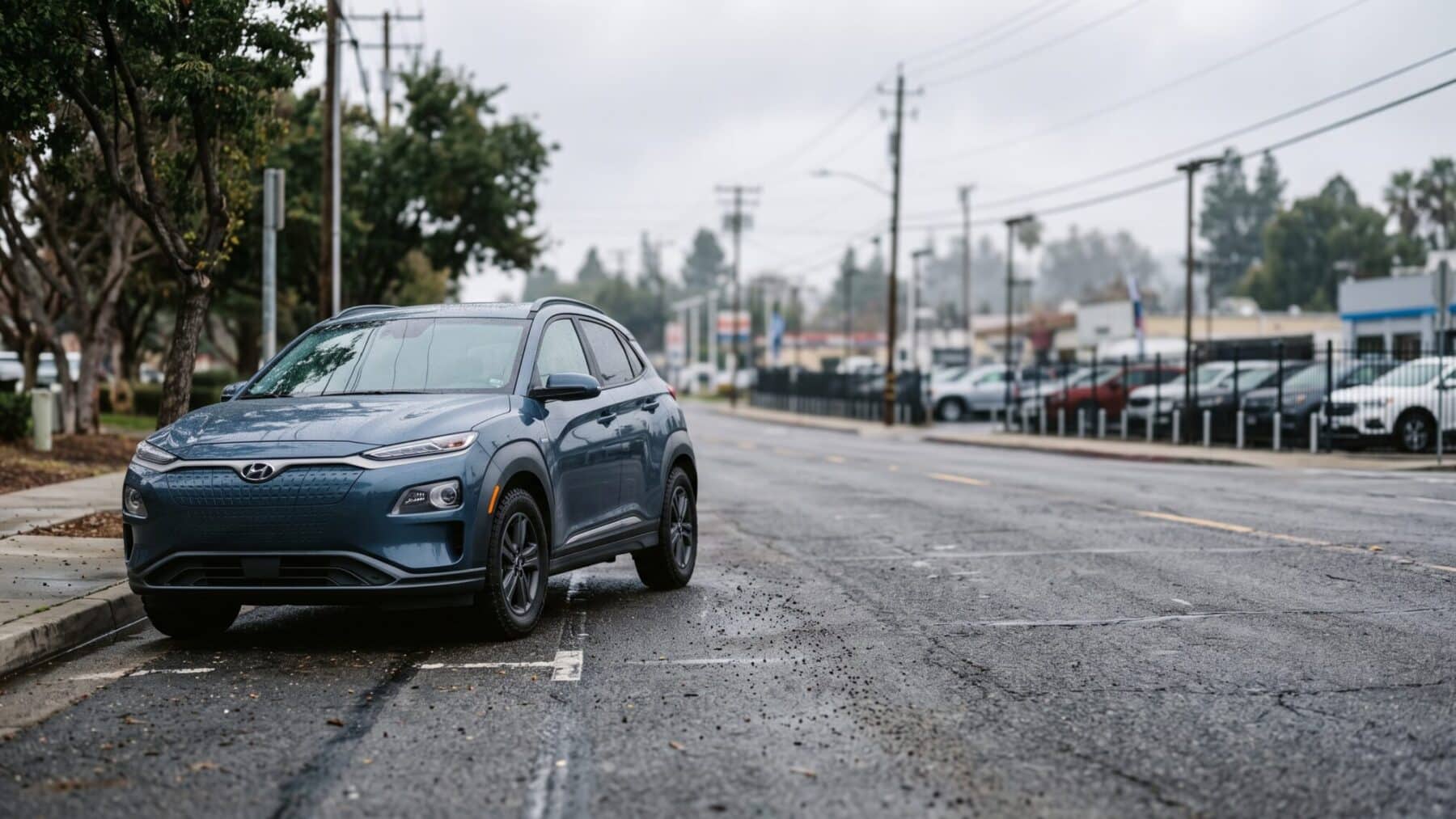
Walk into a showroom today and the price tag stops you cold.
A compact electric SUV, not a stripped-down penalty box, sits on the floor at under thirty thousand dollars. It offers more than three hundred miles of range, with no federal credit left to claim.
How does that math actually work?
Why the price lands this low without government help
The answer starts on the factory floor in northern Mexico. Kia and Mexican officials confirmed a $649 million program centered on the existing Pesquería plant in Nuevo León, with the compact electric SUV rolling off a newly retooled line starting August 4, 2026. That places it inside USMCA territory, keeping logistics costs well below what a transoceanic shipment from South Korea would add.
The platform underneath is already paid for. Like the Hyundai IONIQ 5 and IONIQ 9, and Kia’s other electric vehicles, the EV3 is based on the E-GMP platform, the same dedicated electric architecture supporting larger, more expensive models across the Hyundai Motor Group lineup, so engineering costs spread across far more units than a standalone platform would allow.
Battery chemistry contributes to the cost equation. Unlike the EV6 and EV9, the EV3 features a lower-voltage, 400-volt battery system to lower costs. Both the standard and long-range packs use nickel-manganese-cobalt cells, but the shared platform and manufacturing scale keep the per-kilowatt-hour cost inside a budget that rivals spending more on premium chemistry have not matched at this price point.
What the car actually delivers for that money
Five trims run from the base Light to the GT: Light, Wind, Land, GT-Line, and GT. The standard-range Light, powered by a 58.3 kWh battery, has an EPA-estimated driving range of 221 miles. Move up one trim and the picture changes sharply: the long-range EV3 FWD with the 81.4 kWh battery has an EPA-estimated range of up to 321 miles.
According to Kia, the EV3 with the standard 58.3 kWh battery can charge from 10% to 80% in 29 minutes using DC fast charging. The long-range pack completes the same charge window in 31 minutes. All-wheel drive is optional on Wind and Land trims and standard on the GT-Line and GT, delivering a combined 261 horsepower. The EV3 GT is slightly more powerful, with up to 288 horsepower.
Inside, the electric SUV features standard wireless Apple CarPlay and Android Auto. All trims also include one-pedal driving, Smart Cruise Control, and vehicle-to-load power export. That last feature, the ability to power devices directly from the battery pack, is included as standard across the entire range. It typically costs hundreds of dollars extra on rival vehicles.
The hard evidence behind the market shift
Kia America confirmed pricing on August 12, with the EV3 starting at $29,890 MSRP plus a $1,495 destination fee. Analysts had initially expected the car to start around the $35,000 mark, but Kia surprised the market by setting the entry-level price at $31,385 all-in. That gap of more than five thousand dollars below the forecast floor is not a rounding error; it is a deliberate positioning move in a market where EV rebates have fallen sharply and buyers are paying more out of pocket than at any point in recent memory.
The broader context makes the timing pointed. EV sales fell sharply year over year in early 2026, though demand has since shown signs of stabilizing. After launching in the latter half of 2024, the compact electric SUV quickly became a top-selling EV in Europe, the UK, South Korea, and other global markets. The Korean automaker group has posted strong US sales momentum, with hybrid sales surging. That momentum frees up capital to take a pricing risk on the all-electric side that a weaker manufacturer could not afford. For buyers considering an Illinois-built rival starting well above this price point, the contrast is stark.
Kia’s head of US product planning told automotive journalists at the pricing announcement that the company deliberately chose not to wait for policy clarity, saying the automaker was confident the cost structure could stand on its own.
Where the math gets complicated
The entry-level battery is the most important caveat. Two hundred twenty-one miles of range on the base trim is workable for daily commuting but tight for road trips. Reaching the 81.4 kWh long-range pack means stepping to the Wind trim, adding roughly five thousand dollars to the starting price.
Most buyers chasing the sub-thirty-thousand-dollar figure will need to spend more to get the range that makes the car genuinely versatile.
The absence of a federal credit sharpens that calculation. The credit is no longer available to buyers of this vehicle. The base trim’s battery cells are sourced from a manufacturer classified as a foreign entity of concern under Treasury Department rules, which would have created eligibility problems under the old framework anyway.
Competition at the affordable end is also thinning. A confirmed production run at a rival factory ends when that plant transitions to a different model, leaving the sub-thirty-thousand-dollar market without its current price leader sometime in 2027. Moving early at an aggressive price is a calculated bet on holding that ground before it empties.
What buyers and the industry can expect next
An even more affordable electric model is expected at US dealerships later in the year, starting around $35,000, as the automaker builds one of the most expansive electric lineups in the world. That staggered approach is designed to hold showroom traffic across multiple price points simultaneously rather than concentrating all attention on a single launch.
EV share has softened following the elimination of federal credits. Yet hybrid share of retail sales continues to climb, suggesting buyers who want electrified powertrains have not disappeared. They have simply migrated toward whichever option still pencils out financially.
A $29,890 electric SUV with 321 miles of range is the strongest argument yet that fully electric can pencil out again without Washington’s help. The real test begins the moment buyers walk off the lot.
