Electric vehicle maker Lucid is recalling 27,185 of its flagship Air luxury sedans in the US because an exterior lighting circuit could overheat and increase the risk of a fire, the National Highway Traffic Safety Administration confirmed on Friday. The action is Lucid’s largest recall to date, encompassing more vehicles than the company delivered throughout 2025, when it handed over 15,841 cars.
What the defect involves
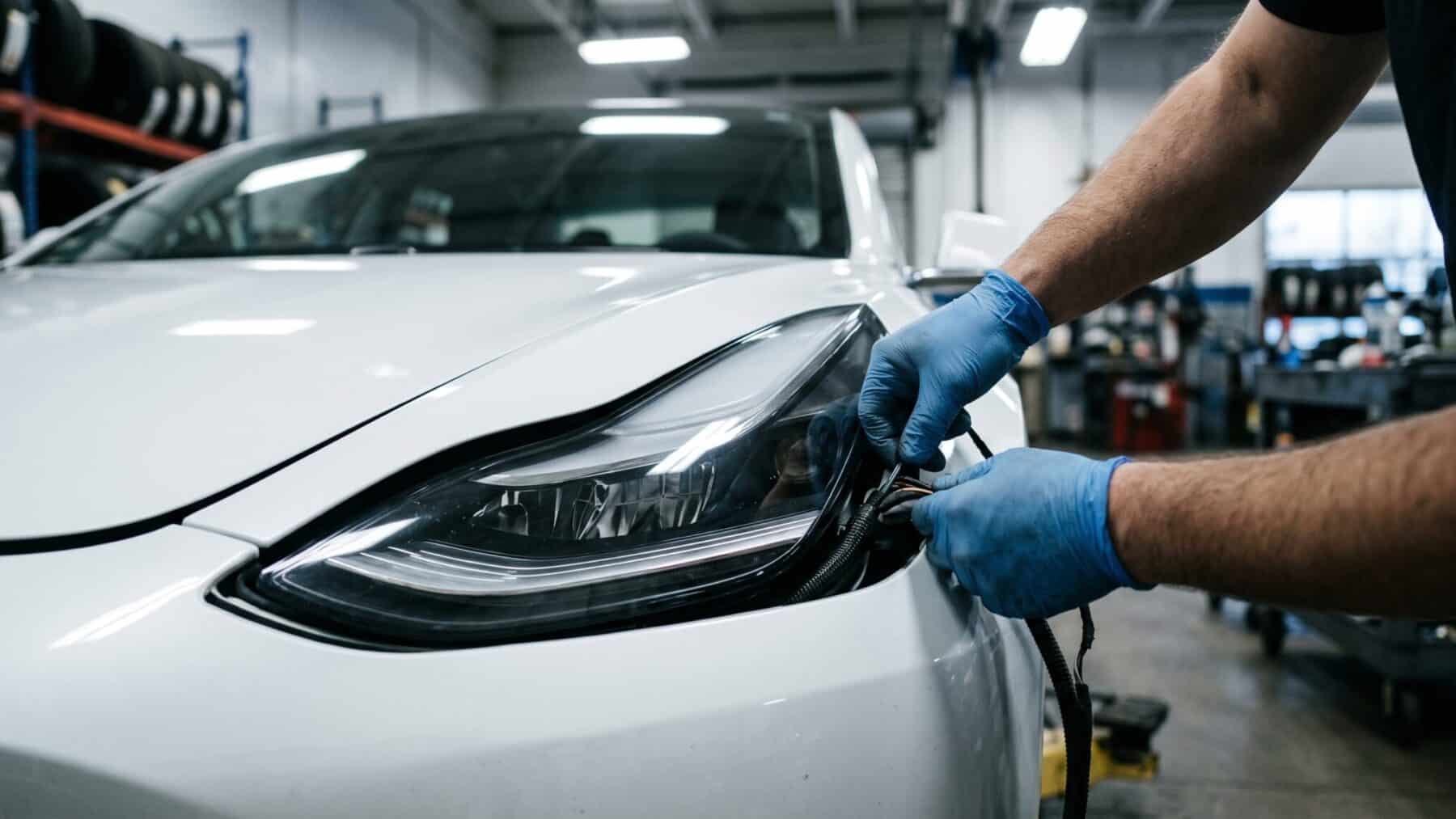
Lucid Motors has recalled 27,185 Air sedans built across the 2022 and 2026 model years over a fire risk tied to the car’s exterior lighting circuit. According to an NHTSA filing, flawed software logic governing the eFuse that should protect the low-voltage circuits powering the car’s exterior lights is malfunctioning, causing the low-voltage exterior lighting circuit to provide insufficient overcurrent protection. When this happens the circuit continues to exceed amperage thresholds, which may cause the circuit to overheat and increase the risk of a vehicle fire. Exterior lighting can also stop working if the problem occurs; NHTSA warns that losing the center brake light or front lighting could reduce visibility and increase the risk of a crash.
The flaw sits in what Lucid calls an eFuse, a software-controlled substitute for a physical fuse. Faulty logic failed to cut power at the right threshold, letting the circuit stay energized past its rated capacity, according to Lucid’s own filing with the National Highway Traffic Safety Administration.
Most cars backed by an old-school electrical system have a traditional fuse that “pops” or fails open when a circuit has too much current flowing through it. Lucid instead uses a software-controlled eFuse that is responsible for detecting and protecting against overcurrent events.
The recall covers Air sedans produced between October 11, 2021, and July 27, 2026. Because of the risk of a fire, the NHTSA recall notice states that “owners are advised to park their vehicle outside and away from structures until the recall remedy is completed.”
A problem years in the making
In June 2023, the automaker discovered a fire in a company-owned 2023 Lucid Air that started in the front left corner of the vehicle, and worked with a third-party expert to determine the cause. The NHTSA recall report states: “No definitive root cause was established, but the expert was unable to eliminate the front combination lamp as a potential cause.”
An overheating circuit for the center high-mounted stop lamp was tagged as the source of smoke incidents, and Lucid also identified 33 additional warranty reports relating to CHMSL wire harness damage. Further investigation identified gaps in the electrical overcurrent protection for certain low-voltage exterior lighting circuits.
The Product Safety Working Group referred the issue to the Product Safety Executive Council, which on August 13, 2026 determined that there was a safety-related defect. The remedy version of the software was released via over-the-air update in July 2026. At the time of the Part 573 filing, 20,719 customers had already updated their software to version 2.10.0 or later , meaning the recall was largely paperwork catching up to an update already deployed.
OTA fix already deployed to most owners
The software update enhanced protection by lowering the eFuse amperage and disabled retry logic that could allow a faulted circuit to be re-energized more than once within the same key cycle. After software version 2.10.0 was released, Lucid evaluated whether the lower amperage provided adequate protection and determined that it was effective. By the time NHTSA’s paperwork surfaced, 20,719 of the 27,185 affected cars, about 76%, had already received the update , leaving 6,466 vehicles that had not been remedied when the recall filing was prepared. Those owners will be notified by mail.
Owner notification letters are expected to be mailed October 16, 2026. Owners may contact Lucid at 1-888-995-8243 or the NHTSA vehicle safety hotline at 1-888-327-4236, or by visiting nhtsa.gov.
The software-only remedy stands in contrast to traditional recalls, which typically require a dealer visit and a physical parts replacement. Because Lucid built the lighting circuit’s current threshold into code rather than hardware, the company was able to issue a corrected calibration wirelessly.
That method is now common among EV makers, but regulators still require it to be logged as a formal recall when a safety defect is confirmed. The recall was filed with NHTSA as campaign 26V540000; Lucid’s internal reference number for the campaign is SR-26-06-0.
Lucid’s recall history and broader context
The company recalled more than 10,000 vehicles in January over a rearview camera display issue and another 2,039 in May over a loss of drive power, both resolved through over-the-air updates rather than dealer visits, according to Reuters reporting.
The Air sedan is Lucid’s highest-volume product, and the company has faced ongoing financial pressure as it attempts to scale production beyond the premium segment. Lucid assembles its vehicles in factories in Saudi Arabia , and is backed by Saudi Arabia’s Public Investment Fund.
The August 28 action is a reminder that software-defined vehicle systems carry their own class of failure modes. As GCN has reported on the broader EV market, EV rebates and pricing shifted in July, tightening competitive pressure on luxury EV players like Lucid.
Owners of other electric models facing active EV recalls are reminded that NHTSA’s online lookup tool allows any owner to check open campaigns by vehicle identification number at nhtsa.gov.
