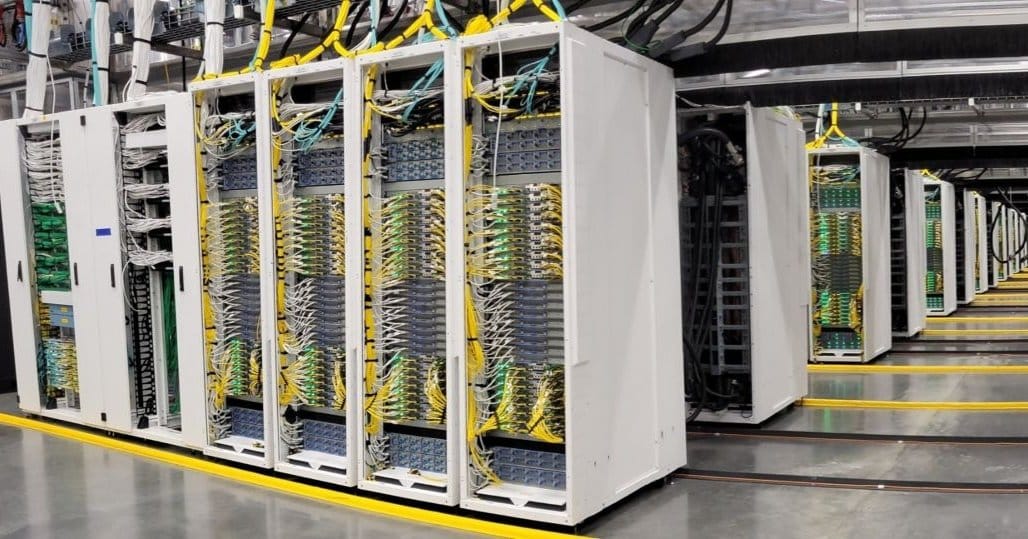
NVIDIA said it has run the largest detailed simulation yet of a fault-tolerant quantum computer, modeling a 104-qubit processor on JUPITER, Europe’s first exascale supercomputer.
The company announced the result on October 19, 2026, ahead of its GTC Berlin conference, with the work carried out at the Jülich Supercomputing Centre in Germany.
The company said the run validated magic state cultivation, an error-correction approach it says could cut the physical qubits needed for fault-tolerant computing by 90 percent compared with older methods.
What the simulation showed
Running on a system of NVIDIA GH200 superchips at Jülich Supercomputing Centre, the 104-qubit simulation is the largest comprehensive simulation of a fault-tolerant quantum computing system to date, with no prior simulations modeling quantum processors in such full detail. The project used 8,192 NVIDIA GH200 Grace Hopper Superchips inside JUPITER to model how the processor would behave under realistic hardware noise, rather than the idealized, error-free conditions used in earlier work.
The work differs from earlier Jülich research that simulated 50 qubits under ideal, noiseless conditions. Last year, JUPITER simulated a full 50-qubit universal quantum computer under ideal, noiseless conditions, surpassing the previous 48-qubit record established by Jülich researchers in 2019 on Japan’s K computer.
The new run models the disturbances that real quantum processors encounter during computation, giving researchers a way to test whether a design will hold up before committing to expensive hardware fabrication.
Why magic state cultivation matters
Magic states are specific quantum resources that fault-tolerant machines must continually produce to perform universal computation.
Traditional distillation protocols consume 90% to 95% of a quantum computer’s entire physical qubit budget just to produce the T-states needed for universal computation; cultivation replaces that overhead with a smaller, localized code-switching technique, dramatically shrinking the hardware footprint required to build a useful machine.
The simulation modeled the physical execution of magic state cultivation under realistic hardware noise, validating a fault-tolerant protocol that reduces physical qubit overhead by up to 90% compared to traditional cascade distillation factories.
NVIDIA says that gap matters because current quantum hardware remains limited in qubit count, making any technique that lowers overhead central to reaching machines useful for real-world problems.
From weeks to days
Development for the JUPITER project began on an NVIDIA GB200 NVL72 system at the NVIDIA Accelerated Quantum Research Center, where the team scaled tests from 4 GPUs to hundreds before committing workloads to JUPITER’s full 8,192-GPU configuration. That staged approach compressed what had been weeks of simulation work into days, according to NVIDIA’s blog post.
Jensen Huang, NVIDIA’s founder and chief executive, framed the result as evidence that classical supercomputers remain essential partners to quantum hardware development.
“Useful quantum computing will require fantastically complex, fault-tolerant systems, and understanding how they behave at scale is essential to building them,” said Jensen Huang, founder and CEO of NVIDIA. “Our results from Jülich show how quantum processors and GPU supercomputers can work together to tackle research that would otherwise be out of reach, accelerating the discovery of transformative quantum applications.”
A busy week for fault-tolerant research
NVIDIA’s announcement arrived days after another fault-tolerance milestone. Google Quantum AI published results in Science on Oct. 16 describing the first physical hardware implementation of magic state cultivation, on its Willow superconducting processor, with a 40-fold error reduction. The team reported producing states known as T-states with a logical fidelity of 99.99%, which is a measure of how closely a protected quantum state matches its intended form. Unlike NVIDIA’s classical-computer simulation, Google’s experiment prepared magic states on its own Willow superconducting quantum processor.
NVIDIA said the applications it expects to eventually benefit from fault-tolerant machines include drug discovery, financial modeling and materials science, framing large-scale simulation as a way to guide chip design decisions before manufacturers commit to building physical hardware.
The announcement is the latest sign that major chipmakers are treating quantum error correction as a software and simulation problem as much as a hardware one, a trend also visible in cloud providers’ broader buildout of AI infrastructure, including linked data centers now powering AI training and tools such as AI assistants inside office software.
