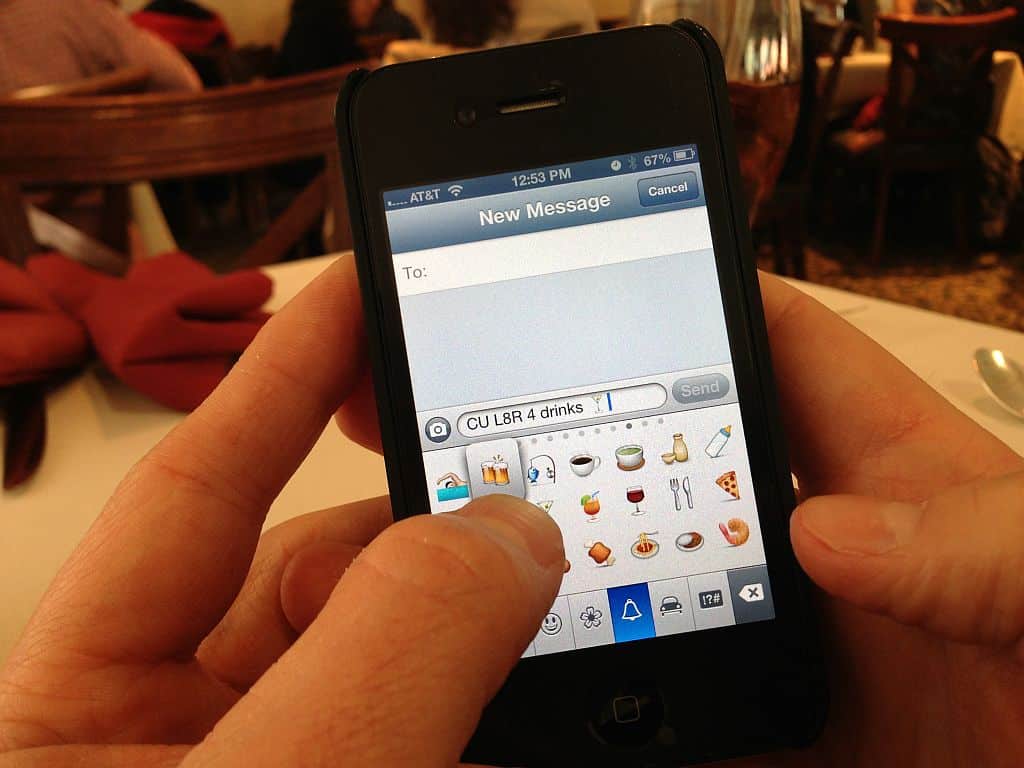
A phone buzzes on the kitchen counter, and a thumb reaches for it without even looking up.
No call, no video, just a line of text.
That small reflex happens inside millions of households every single day.
It looks like nothing.
But a new national count of exactly how adults stay close to each other shows that reflex is doing more work than anyone assumed, and it is not spread evenly.
Why texting became the default wiring for adult friendship
The mechanism is simple once you see it: texting requires no shared calendar, no ringing phone, no pressure to perform. A friend can read it on a commute, answer it in a meeting, or let it sit for three hours without the relationship feeling broken. That low friction design is exactly why it beat out every other channel.
Among US adults who have at least one close friend, 61% send text messages at least once a day or a few times a week, making it the single most common way people maintain a close friendship. Phone calls, video chats, in person visits and social media all trail behind that same simple message thread.
So the habit is not a lazy shortcut around real friendship, it is closer to low maintenance plumbing. It keeps a bond alive during the exact stretches, a work deadline, a move, a new baby, when a phone call would never happen at all. That is the quiet engineering behind why a short text outlasts almost everything else.
Inside the actual mix of contact, not just the headline number
Texting sits at the top, but it is not alone. In the same survey, 39% interact with friends on social media, 35% talk to them by phone or video chat, and 29% see a close friend in person at least a few times a week. That stacking is itself the system: most people are not choosing one channel, they are running two or three in parallel.
Picture it like a set of overlapping nets. A text catches the daily check in. A phone call catches the harder conversation. An in person visit catches the moments that need a shared room.
None of them replace the others, which is why 74% of adults with close friends connect with at least one in this way a few times a week. That overall habit shows up across generations in slightly different proportions, with texting especially dominant among adults under 30, echoing the same instinct a quarter of Americans already show when describing where their friendships actually began.
The hard numbers and the gender gap researchers did not expect
The data comes from a nationally representative survey of 6,204 adults conducted in early to mid September by Pew Research Center, one of the largest single snapshots of American friendship habits taken in years. Researchers did not just ask whether people have friends, they asked exactly how often each specific channel got used, a full breakdown laid out in Pew’s report on social connection.
What surprised the team running it was not that men have fewer friends, since men don’t report that they feel lonely more often or have fewer close friends compared with women. The gap instead sits in upkeep.
Across texting, social media and phone or video calls, men consistently reported less frequent contact than women with the one close friend they named, though men were actually slightly more likely than women to see a friend in person. Pew’s own analysis frames it as a difference in reach rather than warmth: women are more likely than men to lean on a wider circle, including friends, mothers and other family members, when they need support, while men and women turn to a spouse or partner at about the same rate. So the channel itself is not gendered, but the maintenance schedule clearly is.
Where the pattern breaks down and who it leaves out
Even so, this is not a story about one gender failing at friendship. Similar shares of men and women under 30 regularly text and interact on social media with friends, which means the gap widens later, not at the starting line.
Something about adult life, careers, parenting, geographic distance, appears to erode contact unevenly as decades pass. The same report found something else worth sitting with.
About eight in ten adults say they have at least one close friend, not counting family members, so the raw supply of friendship is not the bottleneck for most Americans. The bottleneck is whether anyone actually picks up the phone, or more precisely, whether anyone types the message. That distinction matters because a single tiny addition to a plain text has already been shown to change how caring a friend seems to the person reading it, which suggests these texts carry real emotional weight.
What the numbers mean for anyone holding a friendship together by thumb
None of this means texting is a weaker substitute for real friendship. It is closer to the opposite: it is the connective tissue that lets a bond survive years when two people cannot reliably be in the same room.
What the gap really points to is habit, not capacity. Men and women both have the same tool sitting in their pocket, and both treat it as the top channel for staying close to a friend, a pattern similar to how Americans spend less time with friends overall without reporting more loneliness.
The open question researchers are still chasing is why that habit erodes faster for one group than the other as life gets busier.
For now, the plainest takeaway is almost mundane: the thread that keeps a friendship alive is rarely a big gesture. It is the short, low stakes message sent on an ordinary afternoon, repeated often enough that nobody has to ask whether the friendship is still there.
