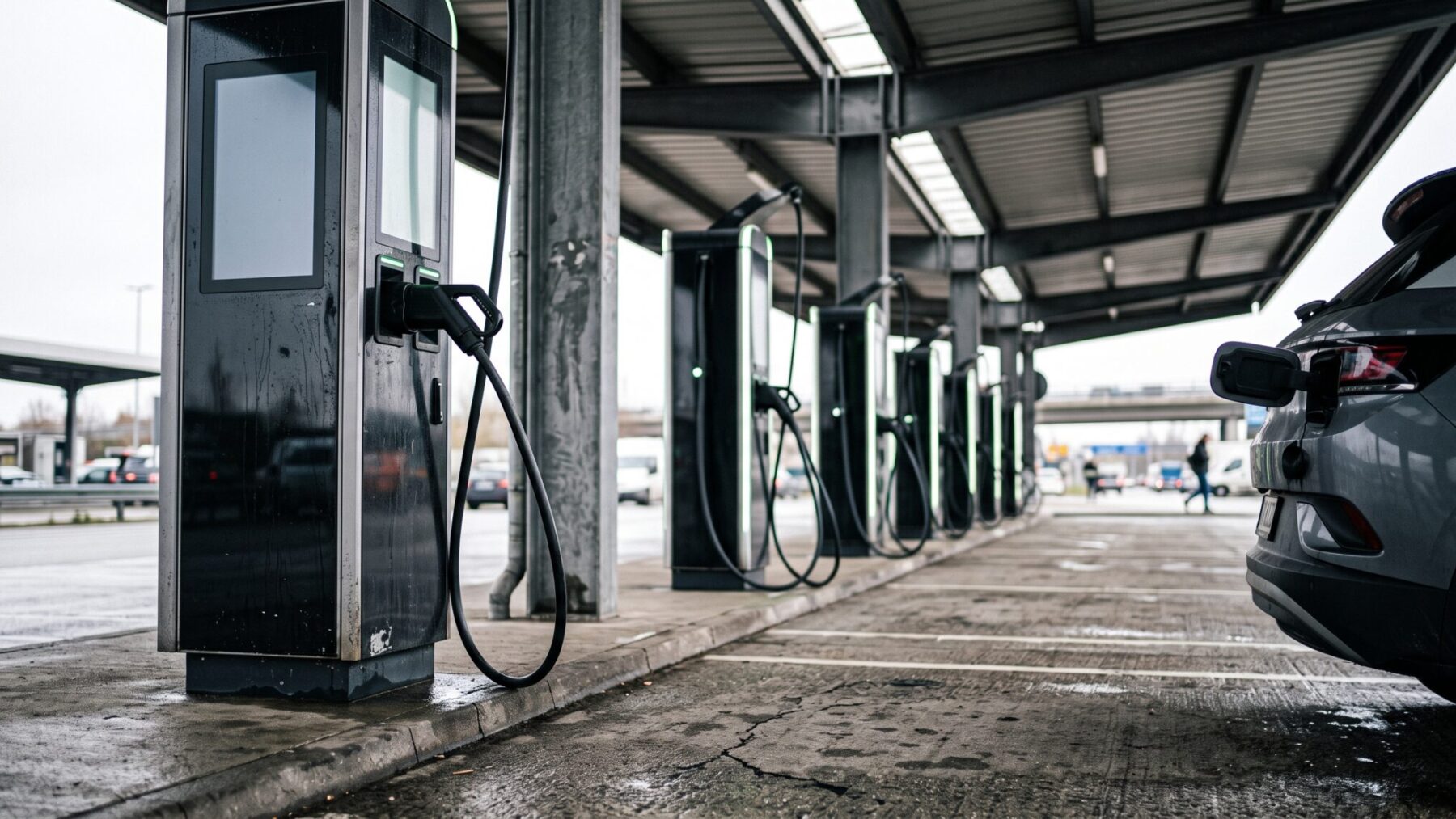
Picture the moment every EV driver has dreaded: pulling off the highway, battery low, only to find a charger that will not start.
That scene is becoming rarer. A major annual survey of American EV owners, released this month, measured genuine, documented improvement across every dimension of the public fast-charging experience. One number sits at the center of it all. What, exactly, changed inside the charger to make it happen?
Why fast chargers are completing the sessions they promise
A DC fast charger is not a simple plug. It opens a two-way digital conversation with the car before a single electron moves, negotiating the maximum safe power level, the battery’s current state, and the thermal headroom available. Early public networks used proprietary communication layers that broke down when software in the car and software in the charger disagreed, stalling sessions mid-negotiation.
Newer stations run the international protocol known as ISO 15118, the same standard baked into the North American Charging Standard connector now adopted by virtually every major automaker. SAE International formalized it as SAE J3400. That common language means the handshake between car and charger rarely fails before charging even begins.
Bigger power levels matter too. When a charger can push 150 or 350 kilowatts, a session that drops to half power still gets a driver back on the road. On older 50-kilowatt hardware, any fault ends the visit entirely.
What the network looks like on the ground today
Stand at almost any major US highway interchange and the infrastructure picture has changed sharply. The United States currently has 250,406 public charging ports across 80,543 charging locations, according to Department of Energy data, including more than 180,000 Level 2 chargers and over 73,000 DC fast chargers.
The combined number of public ports surpassed 200,000 in March 2026, then climbed to 250,000 in the months that followed. Adding roughly 50,000 ports in a matter of months reflects a pace of construction the industry could not sustain even three years ago.
The connector picture is shifting just as fast. Non-Tesla NACS connector deployments have expanded rapidly as automaker after automaker has adopted the standard, meaning the largest fast-charging network in the country, built originally for one brand, is now physically wired to accept almost every EV on the road.
The record and where the data come from
Released on August 12, the JD Power 2026 US Electric Vehicle Experience Public Charging Study found that non-charging visits, instances where EV owners arrive but are unable to charge, have fallen to the lowest level ever recorded in six consecutive years of the study.
The share of public charging failures reached an all-time low of 12 percent, compared to 14 percent a year ago and 19 percent two years ago. The odds of a wasted trip have been cut by more than a third in two years.
Customer satisfaction with DC fast chargers increased 12 points compared to last year, reaching 666 on a 1,000-point scale. Charger availability saw the largest single gain, up 27 points, followed by location safety and cost, each up 18 points. The study drew on responses from 6,594 EV owners and was fielded from January through June 2026.
Where the gains do not yet reach
The headline improvement conceals a real split. Satisfaction with public Level 2 chargers declined 12 points to 595, driven by lower scores for ease of payment and ease of charging. Level 2 hardware, found in parking garages, workplaces and apartment lots, is often the only option for drivers who cannot charge at home.
Location type tells its own story. DC fast-charger satisfaction was highest at hotels, scoring 692, and lowest at dealerships, scoring 570. A gap of 122 points means the people selling EVs are running some of the worst-rated charging experiences in the country.
A funding gap runs beneath all of this. The federal NEVI program committed five billion dollars to public charging, yet fewer than 400 ports had been installed under federal programs by early 2026, despite funding being available since the law was signed in 2021.
The private sector has built faster, and the rural corridors that federal money was meant to serve remain the thinnest parts of the map.
What a 12 percent failure rate means for the road ahead
Twelve percent is a record, and it is still one failed trip in every eight. For context, a gas pump that refused to dispense on one in eight visits would be shut down. JD Power data consistently shows that public charging reliability remains the top reason new-vehicle shoppers reject EVs.
That makes the drop from 19 percent to 12 percent the most commercially important number in the report. The structural conditions for continued improvement are real: three OEM-backed DC fast-charger networks that are award-eligible for the first time perform well in the study, with their biggest advantages above the segment average in reliability and charging experience.
Automakers building their own networks have a direct financial reason to keep hardware running, a motive that third-party operators historically lacked. That alignment of incentive and infrastructure is new, and it is measurable in the data.
For commercial fleets running electric vans across US cities, a drop from 19 percent to 12 percent in failed charges is not a statistic but a saved day’s work. The direction is clear. The distance left to travel is too.
