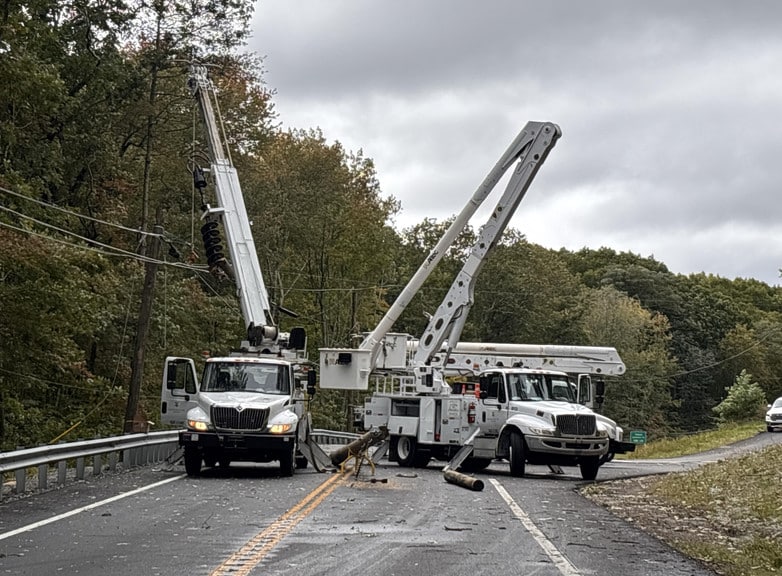
A bucket truck idles under sodium lights while a crew splices a snapped line back together at two in the morning.
Storms like that one struck Connecticut 43 separate times over six years, each one opening a new round of cleanup bills for the state’s largest utility.
Each storm meant overtime, hotel rooms, and out of state crews flown in on short notice.
None of those bills showed up on anyone’s power bill right away.
Instead they piled up quietly on the utility’s own books, waiting for permission to be charged back.
So why did regulators just slash that bill, and refuse to pay part of it at all?
Why storm bills sit for years before anyone pays them
Utilities are not allowed to simply tack storm cleanup costs onto next month’s bill. Instead, big one time expenses like emergency crew travel, hotel and food costs, and tree removal contracts get parked in an accounting bucket called a regulatory asset, which sits on the company’s balance sheet until a commission reviews it line by line.
So the utility fronts the cash itself, often by borrowing against its own credit, and waits months or years for a verdict. The longer a case drags on, the more a utility argues it deserves to be repaid for the financing cost of carrying that debt on its books the whole time.
That argument is exactly where this fight began. Eversource wanted not just its repair bills covered but years of accrued interest on top of them, treating the delay itself as a cost that customers should shoulder.
The scene inside a storm cost case that ran for years
The underlying docket opened in March 2024 and grew through multiple rounds of filings before regulators finally closed it out, each new filing adding fresh storms, fresh invoices, and fresh disputes over what counted as reasonable spending. Eversource’s team told PURA it had submitted seven substantive filings covering 53 catastrophic storm and pre-staging events, with a combined $980 million in deferred costs plus $397 million in requested retrospective carrying charges.
Add it up and the total ask crossed $1.38 billion as carrying charges accumulated during the proceeding. That figure was large enough that the state’s Office of Consumer Counsel spent years combing through it line by line, flagging everything from vendor oversight gaps to what one filing called excessive food, lodging, and transit spending during restoration efforts.
Connecticut customers had already paid something toward these costs along the way. The final approved amount was further reduced by approximately $91 million already paid by customers for storms, $2.1 million in mutual aid revenue, and $100 million in a ratepayer funded credit authorized in an April 22, 2026, decision, shrinking the final number before carrying charges even entered the conversation.
What regulators actually approved, and what they refused to pay
The Public Utilities Regulatory Authority issued its final decision on July 29, 2026, approving approximately $861 million in deferred storm costs for Eversource while rejecting the company’s attempt to charge ratepayers hundreds of millions of dollars in retrospective carrying charges, well below the roughly $980 million Eversource had sought for repairs alone. Connecticut Attorney General William Tong called it a victory for the state’s ratepayers and said he’ll keep scrutinizing every dollar Eversource requests.
After additional credits and already collected amounts were subtracted, PURA ruled $667.8 million of the $1.376 billion request for storm-related costs from Eversource are eligible for recovery from ratepayers, plus whatever carrying charges accrue going forward from the decision date. That is a steep discount from the original request, and it came only after regulators scrutinized thousands of invoice lines submitted across the multiyear docket.
The sharpest cut fell on the interest claim itself. Regulators rejected the utility’s request to recover $396.7 million in carrying charges that accrued before the agency completed its prudence review, ruling that carrying charges may begin accruing only after the agency approved the costs, not from the moment they were spent, a distinction that reshapes how future storm dockets will likely be argued.
Where the fight is far from settled
Even a final decision did not end the dispute. Eversource filed a lawsuit in Superior Court claiming that PURA ignored state law and its own precedent by rejecting the company’s request to be paid interest on the costs it incurred responding to storms, while also disputing certain disallowed expenses it still considers legitimate.
That matters because the same utility is simultaneously carrying storm costs from more recent years that have not yet gone through this same review. Commissioners acknowledged those future bills could add up to millions more in disputes stacking behind this one.
So the company faces a choice familiar to utilities nationwide, seen in disputes from pipe spending in Maryland to storm bond fights in Oklahoma. Regulators here chose to make the company absorb more of that financing risk itself, rather than passing every dollar of delay onto household bills.
What this means for the next storm season
Several commissioners used the storm cost decision to call for a new, more predictable framework for future storm cost recovery, rather than letting six years of bills pile into one enormous, bitterly contested case. That single change could shrink both the dollar figures at stake and the delay customers face waiting for an answer.
Because the dispute took so long to resolve, both sides effectively paid a price. The utility absorbed financing costs it will not recover for that retrospective period, while customers waited years not knowing how much would eventually land on their statements, a gap regulators now say future dockets should close faster.
