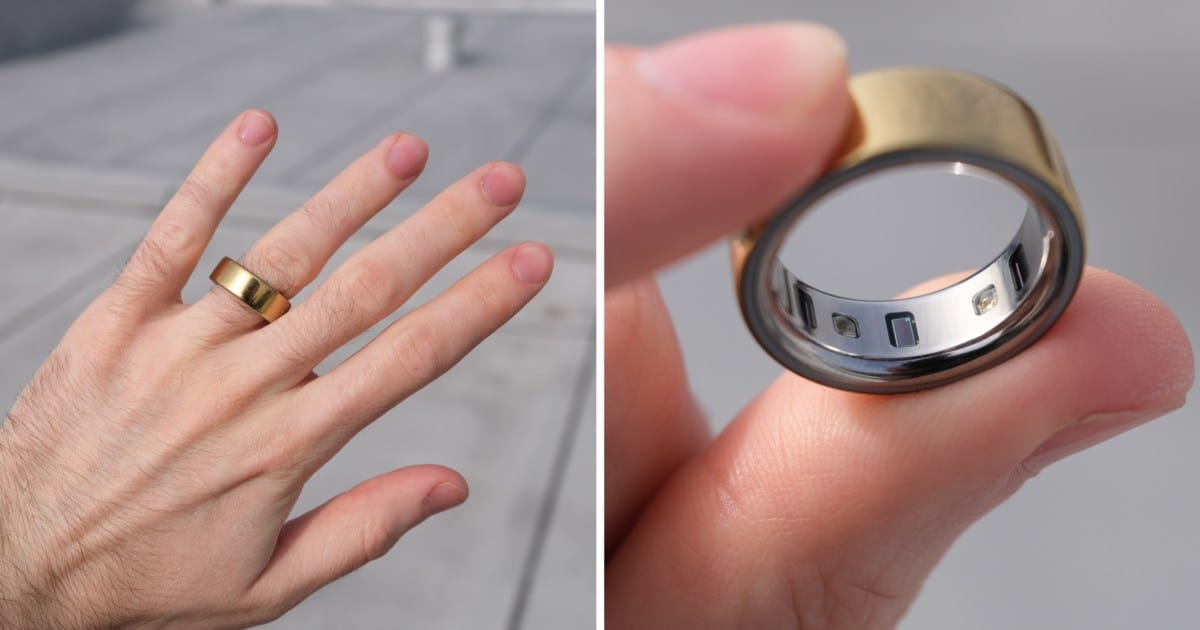
A small titanium ring arrives in elegant packaging, promising to track sleep, recovery, and overnight body temperature.
The sticker price reads $349. You tap through the setup screen. Then a subscription prompt appears. Then another, a year later, and the year after that.
How does a piece of hardware become a recurring monthly bill, and what exactly disappears if you refuse to pay?
Why the hardware is designed to be incomplete without the fee
The mechanism is deliberate and structural. The ring’s sensors collect raw data around the clock, including heart rate, skin temperature, blood oxygen, and sleep stages, then upload all of it to a cloud platform. But the platform does not hand that data back in a usable form.
The scoring engine, the trend graphs, and the detailed breakdowns that translate raw numbers into something actionable live entirely on the subscription side of a paywall. Without a paid membership, the app retains three daily scores, Sleep, Readiness, and Activity, as single numbers. Everything behind them is locked: the sleep-stage breakdown, HRV and temperature trends, tags, and reports. The granular analysis that made you want the ring sits behind the fee.
So the hardware captures everything and shares almost nothing in depth. That split is not a bug or an oversight. It is how the business model was built.
The Gen 3 launched in late 2021 at $299, and, controversially, introduced the monthly membership for the first time; earlier generations had no subscription at all. The Ring 4 arrived in late 2024 with a redesigned sensor array at the same $349 base price as the Gen 3 Horizon round edition, and kept the same subscription structure. No lifetime membership option exists for new buyers; the only paths are monthly or annual billing.
What the ring actually costs once the box is open
The hardware price is only the opening bid. The current flagship ring, the Oura Ring 4, ranges in price from $349 to $499. Membership runs $5.99 USD per month or $69.99 USD per year. A buyer who picks the base model and pays annually clears about $419 in year one. Over three years, the total runs roughly $559, sixty percent more than the price on the listing page.
And the ring is not alone. A popular screenless fitness band from another maker bundles hardware into its membership, with plans ranging from $199 to $359 per year, billed annually. That band uses a membership model rather than selling hardware outright: when you join, you get a device included with your subscription, and the membership covers ongoing access to the app and analytics. The device itself is not sold separately from the membership. So the buyer never owns the device outright.
A competing smart ring, the Samsung Galaxy Ring, sits at $399 with no ongoing subscription. Most buyers do not realize that choice exists until after they have already unboxed the more aggressively marketed brand.
The evidence on what disappears when you cancel
Consumer tech reviewers have documented the same pattern in other categories: an advertised price draws the purchase, and the real cost only becomes clear later. With smart rings the gap is unusually concrete. Without a membership, the app provides basic step counts and general daily summaries. The detailed sleep breakdown, HRV trends, Readiness Score, AI-powered recommendations, and most health metrics require an active membership.
Reviewers at multiple tech outlets have noted this prominently. All detailed scoring, insights, and trend analysis are locked without a paid plan. The membership is required to see the breakdowns behind your readiness score, sleep score, and activity score, and to access long-term trends.
The five-year math is starker still. Keep a ring for five years at $5.99 a month and you will spend roughly twice the hardware price on subscription fees alone. Almost none of the marketing materials lead with that figure. The subscription total appears, if at all, in a footnote well below the headline price.
Where the model runs into real limits
The subscription structure creates a dependency that goes beyond monthly billing. Because the platform that interprets your data is a cloud service controlled by the manufacturer, the value of the hardware is tied entirely to that company’s continued operation. The warranty covers manufacturing defects for one year in the US; it does not cover loss, and smart rings carry no repair program, they are sealed units, and when the battery eventually degrades after a few years of charge cycles, replacement is the only path.
This sits alongside a broader pattern consumers already know well. Research on recurring charges finds that Americans consistently underestimate the compound cost of small fees over time. A monthly charge of just under six dollars feels inconsequential at sign-up. Across five years it adds up to around $360 on top of hardware that cost $349 to $499.
Yet canceling feels like losing something already paid for, which is precisely why the model persists. The hobbyist wellness market is particularly susceptible because buyers are motivated by self-improvement goals rather than price comparison.
What buyers can do before and after they purchase
The most actionable step is running the three-year total before placing an order. Adding hardware cost to the annual membership fee over a realistic ownership period gives a number no marketing page will volunteer. Subscription-free alternatives exist at similar sensor quality for anyone whose priority is owning the data outright.
For buyers already inside the ecosystem, historical data is retained even if the subscription lapses, the ring still records all of it; you simply cannot see the detail. The membership can be reactivated at any time. That means pausing the subscription during months when the data is less actively used is a genuine option, even if the app does not surface it prominently. The sensor keeps logging. The trend graphs wait.
The deeper shift may be competitive rather than individual. The no-subscription tier of the market now includes options that charge once and give full access, treating the hardware as the finished product. As those alternatives earn independent accuracy reviews, the pressure on subscription-gated models to justify their ongoing fee will only grow. For now, the catch remains invisible at the moment most people decide to buy.
