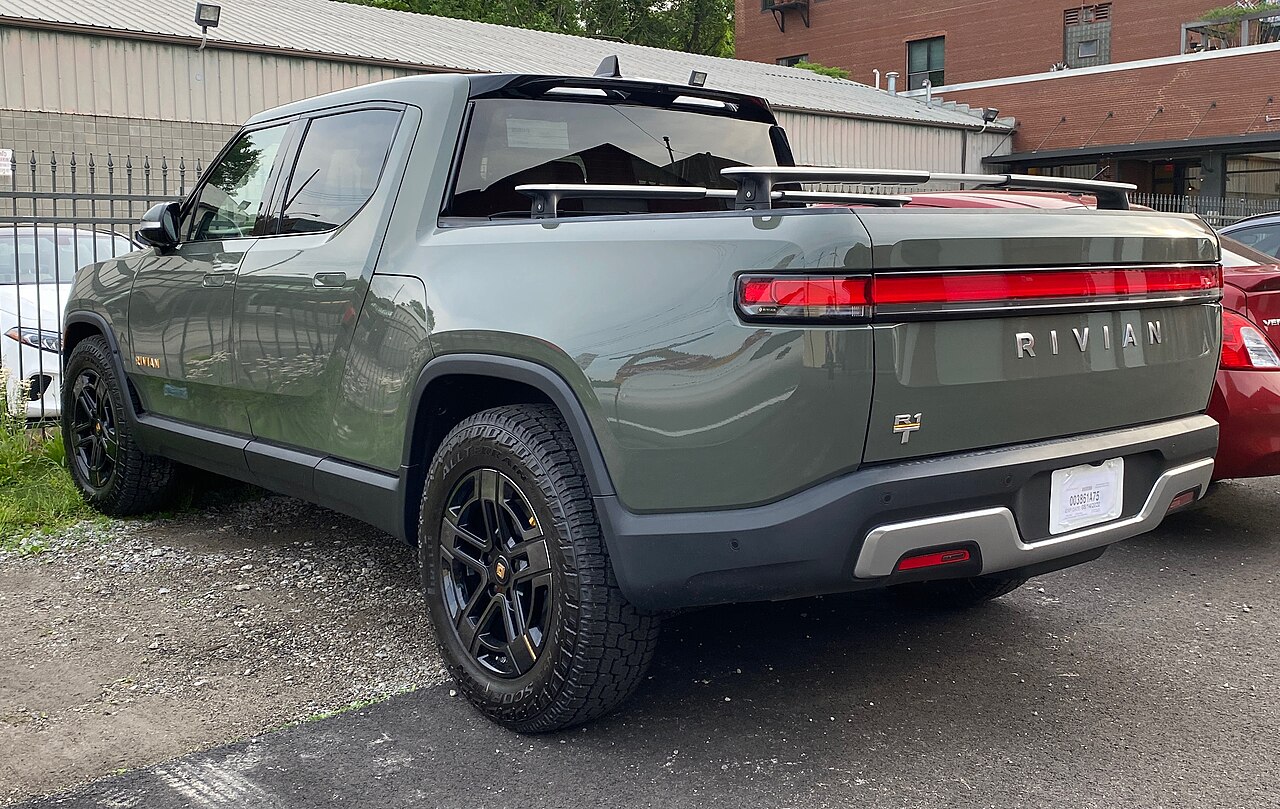
Electric-vehicle maker Rivian is recalling more than 98,800 examples of its R1S, R1T and R2 EVs over an issue with the rearview camera. The action, which Rivian submitted to the National Highway Traffic Safety Administration on September 16 and the agency published on September 23, covers 2022, 2027 R1S, 2022, 2026 R1T, and 2027 R2 vehicles. It is the company’s single largest recall by vehicle count.
What triggered the recall
Rivian has determined that on certain R1T, R1S and R2 vehicles, in rare instances while stability control is off and after returning to the vehicle, a safety alert prompt on the center display may overlap the camera view when placed in reverse until the vehicle moves.
Because the rearview image may be overridden prior to vehicle movement, it may not fulfill FMVSS/CMVSS 111 regarding rear visibility requirements.
Rivian discovered the problem during internal testing and investigated it from July through September, determining on September 10 that it could not rule out a potential violation of federal rear visibility requirements. The suspect period began on August 23, 2021, when Rivian started to build vehicles with potentially affected software and ended on August 10, 2026, when Rivian stopped building vehicles with the potentially affected software.
According to the filing, the fault requires a very specific set of operations in a specific order. The problem can happen in rare cases when stability control is turned off in certain drive modes.
If a driver leaves the vehicle and returns, they may receive a safety alert on the center display indicating that stability control is off. If the driver then shifts into reverse without responding to that prompt, the notification can cover the rearview camera image until the vehicle starts moving. The camera image can also reappear if the driver selects the camera page on the center display.
Which vehicles are affected
Recalled vehicles include 62,259 R1S SUVs from model years 2022 to 2027, 34,088 R1T pickups from model years 2022 to 2026 and 2,481 R2 SUVs from model year 2027.
Affected R1S units were built between March 30, 2022 and August 6, 2026, and R1T units between August 23, 2021 and July 6, 2026. R2 units came off the line between April 23 and August 10, 2026.
It is the first recall to include the R2 and Rivian’s largest by vehicle count, with its previous largest covering 34,824 electric delivery vans in December 2025.
The R2’s inclusion is significant because the recall arrives as Rivian tries to scale its lower-priced R2. The first vehicle available to order is the R2 Performance with Launch Package starting at $57,990, with an additional R2 Standard version slated to arrive in Summer 2027 starting at $44,990. Rivian began deliveries of R2 vehicles to external customers on June 9, 2026.
The over-the-air fix
A software update to correct the condition is available for all potentially affected vehicles at no cost to customers. More than 95 percent of impacted vehicles have already installed the software update.
The corrected software versions are in the 2026.31 series: 2026.31.00 for R1T and R1S Gen 1, 2026.31.30 for R1T and R1S Gen 2, and 2026.31.40 for R2. Owners whose vehicles have not yet self-updated can verify coverage through the NHTSA recall lookup using their VIN.
Owner notification letters are expected to be mailed November 9, 2026. Rivian is not aware of any customer reports, accidents, injuries or fatalities related to this condition. The recall is filed under NHTSA campaign number 26V-597.
Broader context for Rivian
The action illustrates a dynamic that is becoming routine across the software-defined EV industry. More than 95% of the recalled population already runs the corrected software, according to the filing, a timeline that would be difficult to achieve through traditional dealer-service recall campaigns.
Battery supply chain investments at plants such as CATL’s new Debrecen cell factory are expanding the raw materials available to EV makers scaling production, but software quality across growing fleets is emerging as an equally pressing operational challenge.
Rivian designed the smaller R2 to reach considerably more customers than its R1 vehicles, and the company began public R2 customer deliveries on June 9, 2026. Software quality across a much larger future fleet is an increasingly important operational issue.
Owners with questions can reach Rivian customer service at 1-888-748-4261 or consult the NHTSA Vehicle Safety Hotline at 1-888-327-4236.
