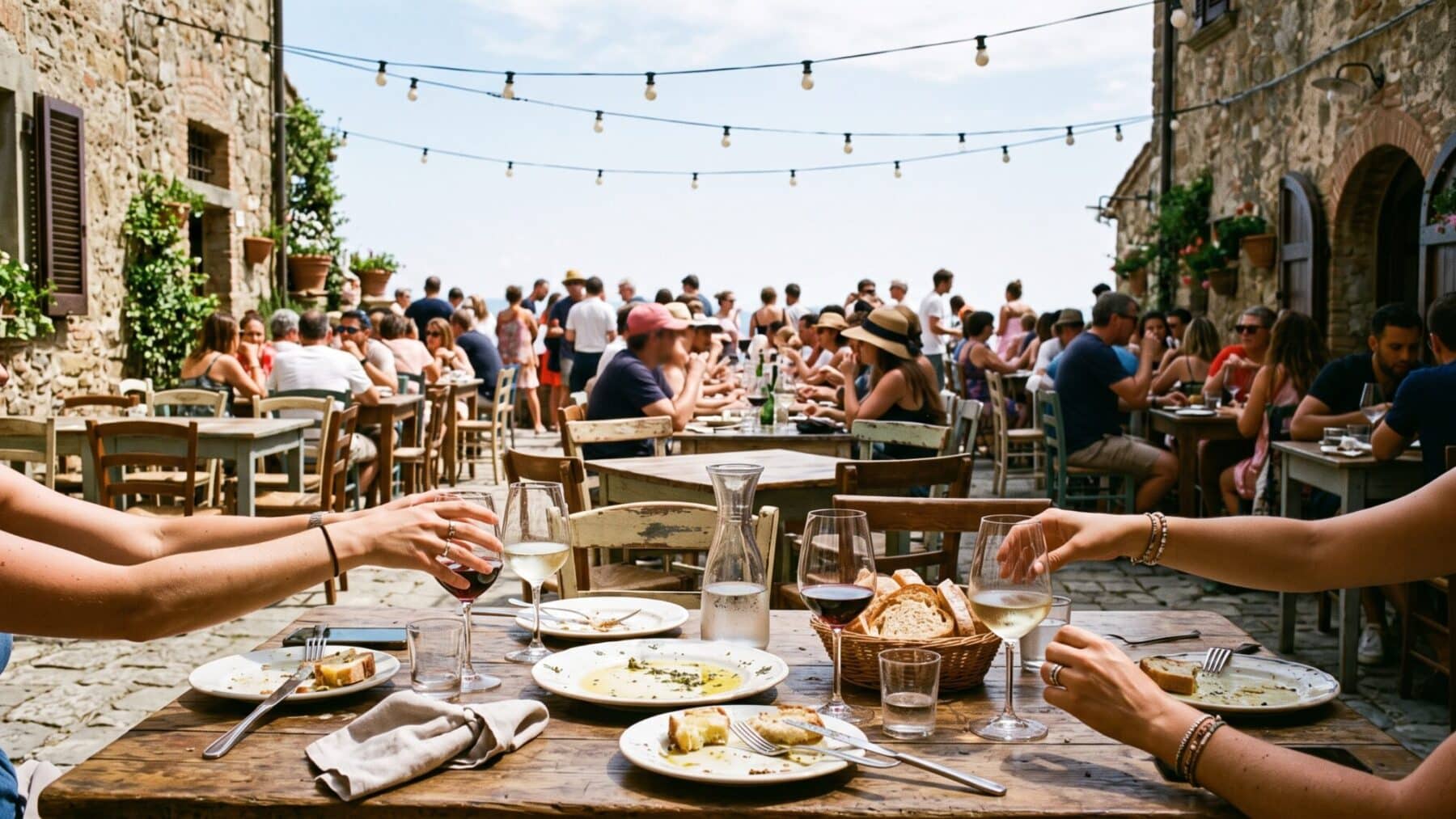
Visiting a restaurant has become the single most popular activity for Americans on the road this summer, outranking shopping, sightseeing, and trips to the beach, according to a major new survey from the National Restaurant Association.
The 2026 Summer Travel and Dining report, based on a May 2026 survey of more than 1,000 consumers, finds that 55 percent of consumers plan to take at least one overnight domestic trip this summer.
The survey found that 98 percent of those summer travelers plan to use a restaurant during their upcoming travel plans, showing that dining is not just part of the vacation but is the vacation.
Dining beats every other activity
Nearly all survey respondents, 98 percent, said they expect to visit restaurants during their trips, making dining the most popular travel activity, ahead of shopping (85%), sightseeing (83%), or visiting beaches (76%).
The finding points to a durable shift in how Americans define a good trip: the table, not the landmark, has become the destination.
Most travelers say they plan to vary their restaurant usage while on the road: 93 percent plan to dine in at a restaurant, 90 percent plan to use takeout, delivery, or drive-thru options, and 84 percent plan to stop at a coffee shop or snack spot.
That cross-channel appetite suggests the impulse to eat out is not limited to formal sit-down occasions but runs through the entire day of travel.
Local cuisine is the biggest draw
The pull of place-specific food is a defining theme of this summer’s data. Among domestic travelers, the NRA report highlights that many seek out restaurants known for the foods and flavors of their destination as a key motivation for travel dining.
In addition, 88 percent plan to visit a restaurant they have never tried before, and 87 percent say they rely on recommendations from family and friends when choosing an unfamiliar restaurant.
That last figure underscores just how much personal word-of-mouth still governs discovery, even in an era of algorithm-driven recommendations.
The NRA data reinforces that when dining is the goal of the trip itself, trusted recommendations carry even more weight than they do at home, a dynamic consistent with research on how face-to-face conversation shapes shared decision-making.
Economic headwinds haven’t cooled the appetite
The National Restaurant Association expects the operating environment to improve during the second half of 2026, after business conditions proved more challenging than expected in the first half.
The industry is navigating a mixed economic landscape: operators face uneven traffic and elevated operating expenses, while consumers, particularly those in lower-income households, are increasingly stretched. Even so, restaurants remain deeply woven into American culture, with the majority of adults continuing to prioritize dining out, takeout, and delivery, even when budgets tighten.
Yet the travel context appears to soften that restraint. Consumers’ connection to restaurants is reflected in the Association’s Summer Travel and Dining Report, which found that 98 percent of travelers plan to use restaurants during their summer trips this year.
Consumer spending is expected to push industry sales to a projected $1.55 trillion nationwide, with real (inflation-adjusted) gains of 1.3 percent projected, according to the NRA’s 2026 State of the Restaurant Industry report.
Chad Moutray, the Association’s chief economist and senior vice president of research, said: “Restaurants are central to tourism. We know that 30% of sales at a typical restaurant come from tourists, so operators understand travelers are key to their businesses and lean into this, particularly during the summer months.”
A generational and social dimension
The appetite for new dining experiences while traveling is especially pronounced among younger adults. Younger adults, urban residents, families with children, and higher-income households are the most likely to travel. The NRA report notes that Gen Z consumers prioritized meals at sit-down restaurants more than older age groups.
That preference likely reflects a tendency to treat dining out as an opportunity to socialize rather than simply to order a meal. That social framing aligns with broader findings about how shared meals anchor everyday life: earlier Gallup data highlighted in a global study of 150,000 people found that sharing a table predicts happiness about as strongly as income does.
Combined with the NRA’s travel data, the picture is one of a generation that has recast the restaurant visit as both a social ritual and a cultural experience worth planning a trip around.
The report, based on a May 2026 survey of more than 1,000 consumers, found that for most summer travelers, visiting a restaurant ranks as their most popular activity, beating shopping and sightseeing. The full report is available for free download from the National Restaurant Association.
