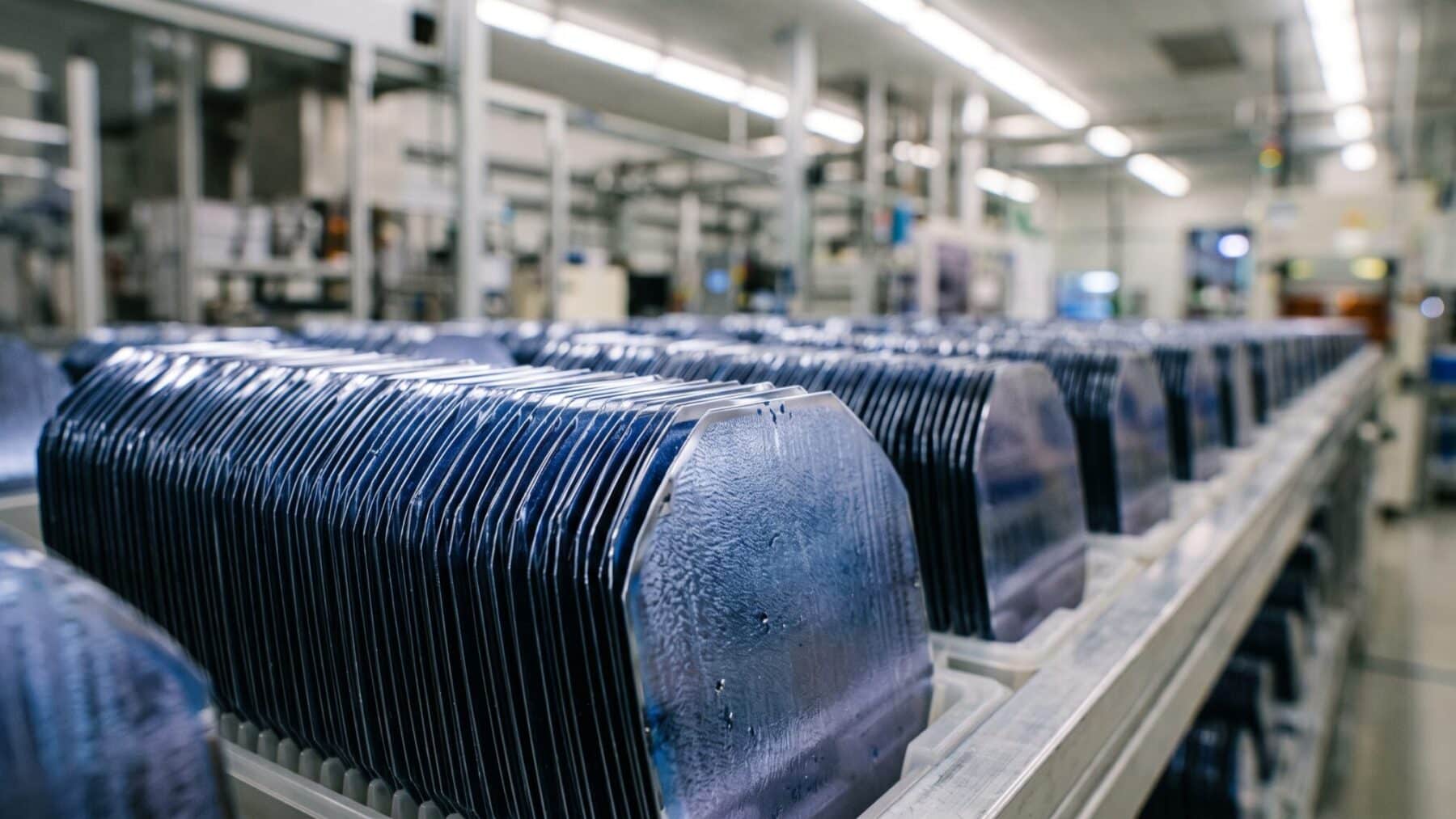
Suniva has closed an $835 million capital raise to fund the construction of a new 4.5-gigawatt solar cell manufacturing facility in Laurens County, South Carolina, the company announced on September 8, injecting fresh momentum into what would become one of the largest solar cell production sites in the United States.
A factory built to close a critical supply gap
The capital raise supports the fit-out of the 4.5 GW facility inside a 621,468-square-foot building in Laurens County, with a planned opening in late 2027 and an expected 564 manufacturing jobs at full capacity.
Suniva, which describes itself as the largest and oldest US merchant manufacturer of high-efficiency monocrystalline silicon solar cells, announced the project in April ; the second factory, coupled with Suniva’s existing facility at its headquarters in Norcross, Georgia, will bring the company’s total domestic solar cell manufacturing capacity to over 5.5 GW annually, the largest of any merchant solar cell manufacturer in the United States.
By expanding its cell capacity, Suniva provides a pathway for smaller and mid-sized US module assemblers to qualify for the 10 percent domestic content bonus investment tax credit.
The cell gap that module growth left behind
The scale of the imbalance in the domestic solar supply chain is striking. US module assembly capacity has surged to over 65 GW, but domestic cell manufacturing has historically hovered at less than 10 percent of that volume, creating a strategic bottleneck where American-made panels remain reliant on imported internal components.
That mismatch has been a persistent vulnerability for an industry that has otherwise grown at a remarkable pace. Nameplate US module capacity has surpassed 70 GW, a significant jump from just 8 GW before federal manufacturing tax credits took effect.
SEIA data suggest that without a rapid scaling of merchant cell capacity, most US manufacturers will struggle to meet the domestic content thresholds required for federal tax bonuses, especially as Foreign Entity of Concern rules tighten supply chains through 2026 and 2027.
Suniva’s South Carolina plant is specifically designed to address that problem. The company indicated the site will focus on producing advanced solar cells that allow module manufacturers to meet the stringent domestic content requirements under the Inflation Reduction Act.
As GCN has reported, US solar installations hit 11.4 GW in Q2 even as the cell supply chain failed to keep pace with module assembly expansion.
Trade policy amplifies the urgency
The fundraising announcement comes as the domestic solar manufacturing sector grapples with the effects of a recently announced Section 232 trade action. The price floor and tariffs imposed by the Trump administration have already pushed the price of finished solar modules to levels not seen since the turmoil surrounding the 2023 anti-circumvention inquiry into companies operating in Southeast Asia.
The new trade measures, which set price floors on the polysilicon supply chain and a 15 percent tariff on downstream solar derivatives, take effect December 4, 2026, replacing Section 201 safeguard tariffs that expired in February.
For domestic cell manufacturers like Suniva, the measures raise the cost of competing imports while also increasing the price of any upstream materials still sourced abroad.
In announcing its new facility, Suniva said the expansion is de-risked by a domestic supply chain already in place and by long-term product offtake agreements with leading US solar players for the majority of its planned future production.
South Carolina and the broader buildout
The company plans to lease a 621,468-square-foot building at 1200 Commerce Blvd. in Laurens to produce advanced solar cells. The facility, in conjunction with Suniva’s existing plant in Georgia, will support the company’s commitment to independent clean energy production.
The Coordinating Council for Economic Development approved job development credits related to the project. The Laurens County project has received support from the state of South Carolina, which has become an emerging hub for clean energy manufacturing following recent major investments from several global technology and automotive firms.
Suniva is not alone in the push to build US cell capacity. T1 Energy recently began construction of its G2 Austin cell factory in Rockdale, Texas, a $400, $425 million investment at which T1 expects to begin commercial operation by the end of 2026, with an annual capacity of 2.1 GW of high-efficiency TOPCon solar cells. Through a second construction phase, the company intends to scale total capacity at G2 Austin to 5.3 GW. The facility is situated over 100 acres in Milam County, Texas, and is expected to support up to 1,800 new advanced manufacturing jobs. Together, these investments represent a sustained industrial effort to close the gap between the country’s abundant module assembly lines and the upstream cell-making capacity those lines still largely import.
