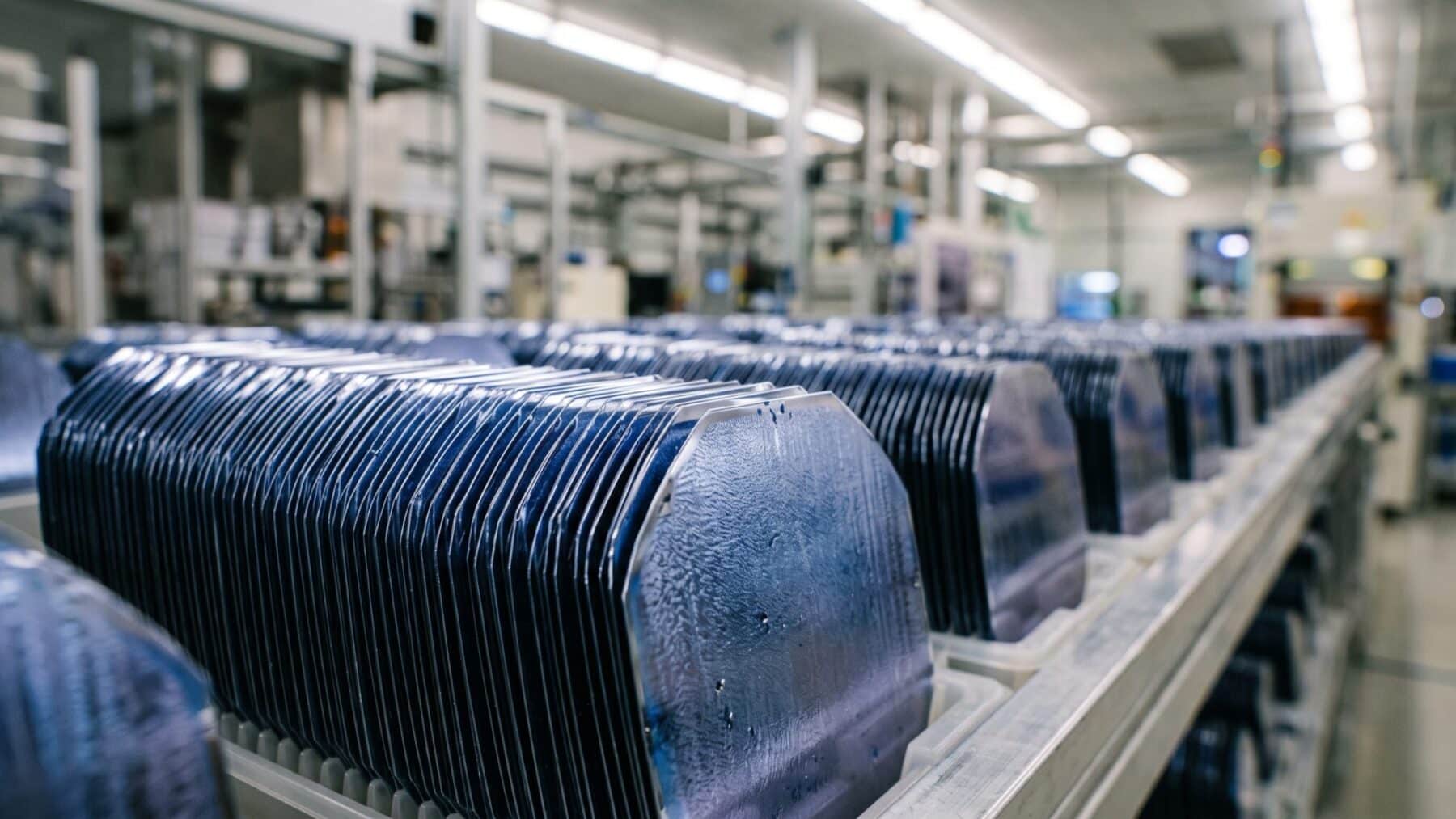
President Trump on August 6, 2026, signed Proclamation 11052, announcing the results of the Department of Commerce investigation under Section 232 of the Trade Expansion Act of 1962 into imports of polysilicon. The proclamation establishes a new minimum import price (MIP) regime for covered products and imposes additional tariffs on downstream polysilicon derivatives, covering ingots, wafers, cells and finished modules, in one of the broadest trade actions ever aimed at the solar supply chain.
The whole structure takes effect for goods entered for consumption on or after 12:01 a.m. ET on December 4, 2026, 120 days after issuance of the proclamation.
What the proclamation does
On August 6, 2026, President Trump signed a proclamation imposing a 15% ad valorem tariff and minimum import prices on polysilicon and its derivatives under Section 232 of the Trade Expansion Act of 1962, effective December 4, 2026.
Raw polysilicon is subject only to the MIP-based duty, while downstream derivatives face both the MIP floor and the 15% ad valorem tariff, incentivizing onshoring of value-added processing.
The MIP program establishes specific minimum import prices: $21 per kilogram for polysilicon, $100 per kilogram for polysilicon ingots and wafers, $0.22 per watt for solar cells, and $0.38 per watt for solar modules.
The proclamation provides special treatment for products of the European Union, Japan, South Korea, Taiwan, Switzerland and Liechtenstein. For these countries, the additional Section 232 duty is adjusted so that the combined Column 1 duty rate and Section 232 duty generally equals 15 percent. For example, if a covered product is subject to a 4 percent Column 1 duty, the applicable Section 232 duty would generally be 11 percent, resulting in a combined duty rate of 15 percent.
Products of the United Kingdom are subject to a 10 percent Section 232 tariff.
Why the White House acted
The Commerce investigation found that U.S. polysilicon production collapsed from approximately 50% of global share in 2005 to less than 2% in 2024.
Polysilicon is a critical input for semiconductor and solar product manufacturing, supporting virtually every sector of the modern economy, including defense, cybersecurity, communications, artificial intelligence, renewable energy and advanced manufacturing.
The measures replace the expired solar safeguard tariff under Section 201 of the Trade Act of 1974. The proclamation follows a year-long investigation initiated on July 1, 2025, to assess the national security implications of polysilicon and derivative product imports.
The upstream supply chain, polysilicon, ingots, wafers and cells, remains far more dependent on imports, which is precisely the gap the proclamation targets. GCN has previously reported on how earlier price floors set a $100-per-kilogram threshold against a domestic production base that barely exists, and on domestic module factories that still source critical upstream materials from abroad.
Compliance stakes and industry reaction
Importers will be required to provide documentation demonstrating compliance with the program or may face additional duties designed to account for any shortfall below the applicable threshold.
Materially inaccurate certifications risk triggering a permanent import ban. If CBP determines that an importer’s documentation was materially inaccurate or that it materially failed to comply with its certification, the importer and its affiliates may be prohibited from importing covered products into the US, along with the imposition of standard penalties for non-compliance.
If the product is being imported pursuant to fixed terms in a contract entered into before August 6, 2026, the condition regarding domestic resale price level is waived. That grandfather clause gives developers with pre-existing supply agreements a limited window of protection before the new regime fully bites.
The solar industry’s leading trade groups, including the Solar Energy Industries Association (SEIA), the American Council on Renewable Energy (ACORE) and the American Clean Power Association (ACP), formally filed opposition comments prior to the proclamation, urging Commerce to seek alternative mechanisms to support domestic polysilicon production rather than imposing broad national security tariffs. SEIA President and CEO Tim Pawlenty said: “America has made terrific progress rebuilding its solar manufacturing base, but imposing tariffs and price floors on solar materials will create new challenges for American manufacturers and raise energy costs for families and businesses. We appreciate the domestic manufacturing incentives being included in the Proclamation and hope they’ll help offset these challenges.”
What comes next
The proclamation authorizes Commerce to approve plans for companies committing to build, expand or refurbish US facilities producing polysilicon, ingots, wafers or cells. Investors weighing additional support for US capacity should assess their onshoring plans and proposals in advance of the January 20, 2029, deadline.
The Commerce Department may approve onshoring plans that waive Section 232 duties on equipment and covered imports, and may restrict imports by companies that stockpile before December 4, 2026. That incentive is designed to pull new upstream manufacturing investment into the United States before the MIP floors make imported feedstock prohibitively expensive for projects that cannot qualify for the exemption.
The new tariffs and minimum import prices are expected to have a significant impact across solar supply chains, from polysilicon producers and cell manufacturers to project developers and engineering, procurement and construction firms sourcing modules for utility-scale and distributed generation projects.
The December 4 effective date leaves importers a short window to confirm product coverage, test pricing against the new minimum import prices, update entry documentation and reassess supply contracts. Importers should also review product classifications, supplier pricing, first-sale documentation, contract terms, foreign-trade-zone usage and potential drawback eligibility before that deadline.
