Google has signed its first power purchase agreement for superhot geothermal energy, agreeing to buy 50 megawatts of electricity from a Quaise Energy project under development near Oregon’s Newberry Volcano.
The deal, announced Tuesday, marks the first commercial contract for Quaise’s superhot geothermal project and pushes a distinct, higher-temperature branch of geothermal power toward real-world deployment.
What the deal covers
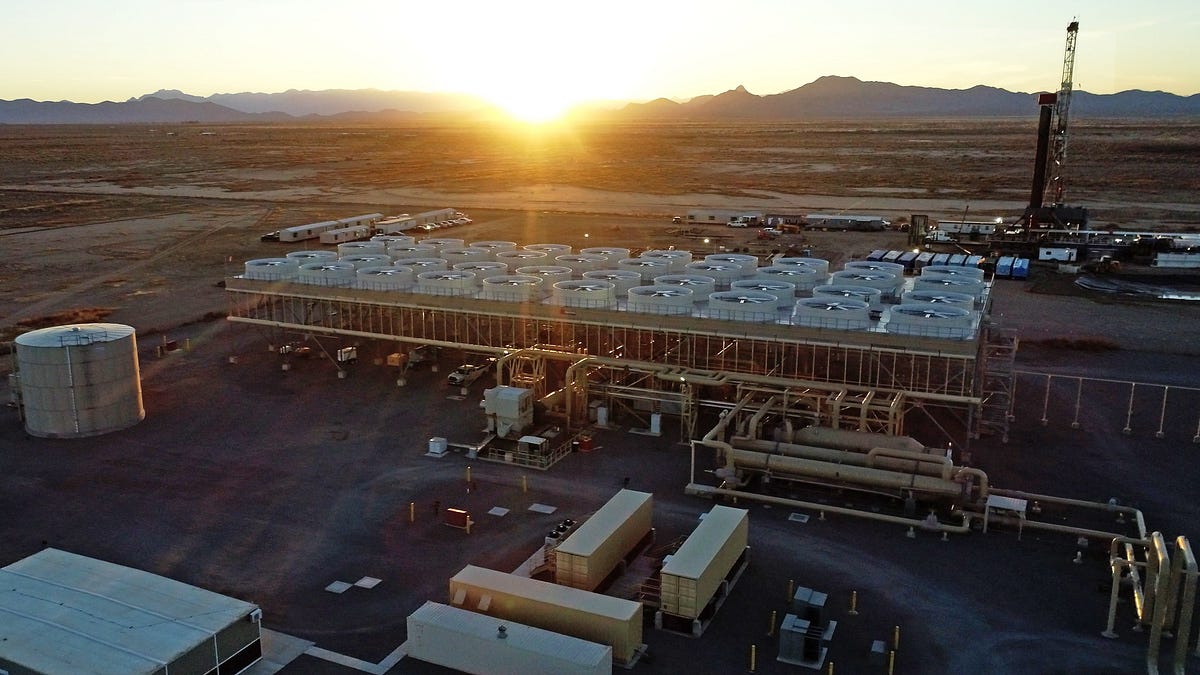
Quaise Energy, a developer of utility-scale superhot geothermal energy, announced that Google has signed a power purchase agreement (PPA) for 50 megawatts (MW) of superhot geothermal power from Project Obsidian, Quaise’s flagship project in Central Oregon.
Google will purchase the initial 50 megawatts generated by Project Obsidian for 24/7 carbon-free energy use across its existing data center operations in The Dalles, Ore. and the region’s communities.
Google has agreed to buy the power from Quaise’s first commercial project, called Project Obsidian, near the Newberry Volcano, with deliveries expected as early as 2030. The deal is worth upward of $500 million, according to The Wall Street Journal, though neither Quaise nor Google officially announced that figure; the deal is valued at more than $500 million, Quaise confirmed.
The startup is working to find offtakers for an additional 200 MW in future capacity at the Oregon site.
Quaise and Oregon Public Broadcasting both describe the deal as the first commercial-scale power-purchase agreement for superhot geothermal electricity.
How superhot geothermal differs
Traditional geothermal energy is limited to regions with naturally occurring hot-water reservoirs, which it says are limited to hot water reservoirs rarely exceeding 400°F, while superhot rock is a kind of enhanced geothermal that digs miles into the Earth to reach much higher temperatures. Breakthrough drilling technologies could transform geothermal economics, with superhot rock potentially delivering 10 times more power per well than conventional geothermal systems.
That higher output per well is the central economic argument for the technology, since drilling costs make up the bulk of geothermal project expenses.
For its first phase, however, Project Obsidian will not rely on Quaise’s signature rock-vaporizing drilling system. At the Project Obsidian site, Quaise will initially use oil-and-gas drilling technologies to develop an enhanced geothermal system, an approach that involves fracturing rocks and pumping water through them to create artificial reservoirs, as described by enhanced geothermal systems, which circulate water through engineered fractures in hot rock. Quaise says conventional drilling will be used during the initial development phase to reach superhot geothermal conditions, and the second phase of development at Project Obsidian is expected to be the first in the world to use millimeter wave drilling, a technology designed to uniquely access superhot geothermal conditions worldwide.
Quaise’s longer-term approach swaps conventional steel drill bits for a gyrotron, a machine that fires millimeter waves. Quaise’s gyrotron-powered drilling platform is designed to ablate rock using millimeter-wave energy transmitted downhole through a waveguide, reducing reliance on complex downhole equipment in extreme-temperature environments.
With its millimeter wave drilling technology, developed after more than a decade of research at the Massachusetts Institute of Technology (MIT), Quaise’s mission is to make superhot geothermal a backbone of the modern energy system.
A fast-growing geothermal sector
The Quaise contract lands amid a broader surge of corporate interest in next-generation geothermal power as technology companies look for reliable, round-the-clock electricity to run data centers. From 2010 to 2025, Google signed more than 240 agreements to purchase nearly 35 GW of new clean energy, including more than 29 GW in North America across 148 projects.
Fervo Energy, which uses a different enhanced geothermal technique involving directional drilling and hydraulic stimulation, has received federal research funding as part of a government push into superhot geothermal science, and has continued expanding its own Cape Station project in Utah.
Not all reaction to the Quaise announcement has been positive. Deschutes County Commissioner-elect Jamie Collins, a climate scientist and former environmental emergency response official, said in a statement that “transparent and deep engagement with our community” is needed. Collins issued a statement calling for greater transparency, public engagement and consultation with tribal nations regarding how the project will affect local infrastructure and community resources. “I welcome the jobs and other community benefits that Quaise and the other companies investing in this lease block have said they will bring and I look forward to working with any company that has a specific plan to help secure a better future for our county,” Collins said.
“To date, we’ve injected more than $6 million into Deschutes County businesses as part of Project Obsidian, and we expect that local impact to continue as the project advances,” Kelso said. The project is expected to support 200 to 400 construction jobs and create more than 50 permanent positions in engineering and operations, according to Quaise.
The Oregon project adds to a wave of geothermal financing activity this year. Nabors Industries announced the completion of a $35 million strategic equity investment in Quaise Energy, part of Quaise’s Series B financing round, which closed at a total of $180 million in equity financing.
As utilities and grid planners weigh how to meet rising demand, projects that pair firm power output with corporate offtake agreements, similar in spirit to the long-duration storage deals covered in GCN’s battery storage capacity forecasts, are emerging as a template for financing unproven but potentially high-value generation technology.
