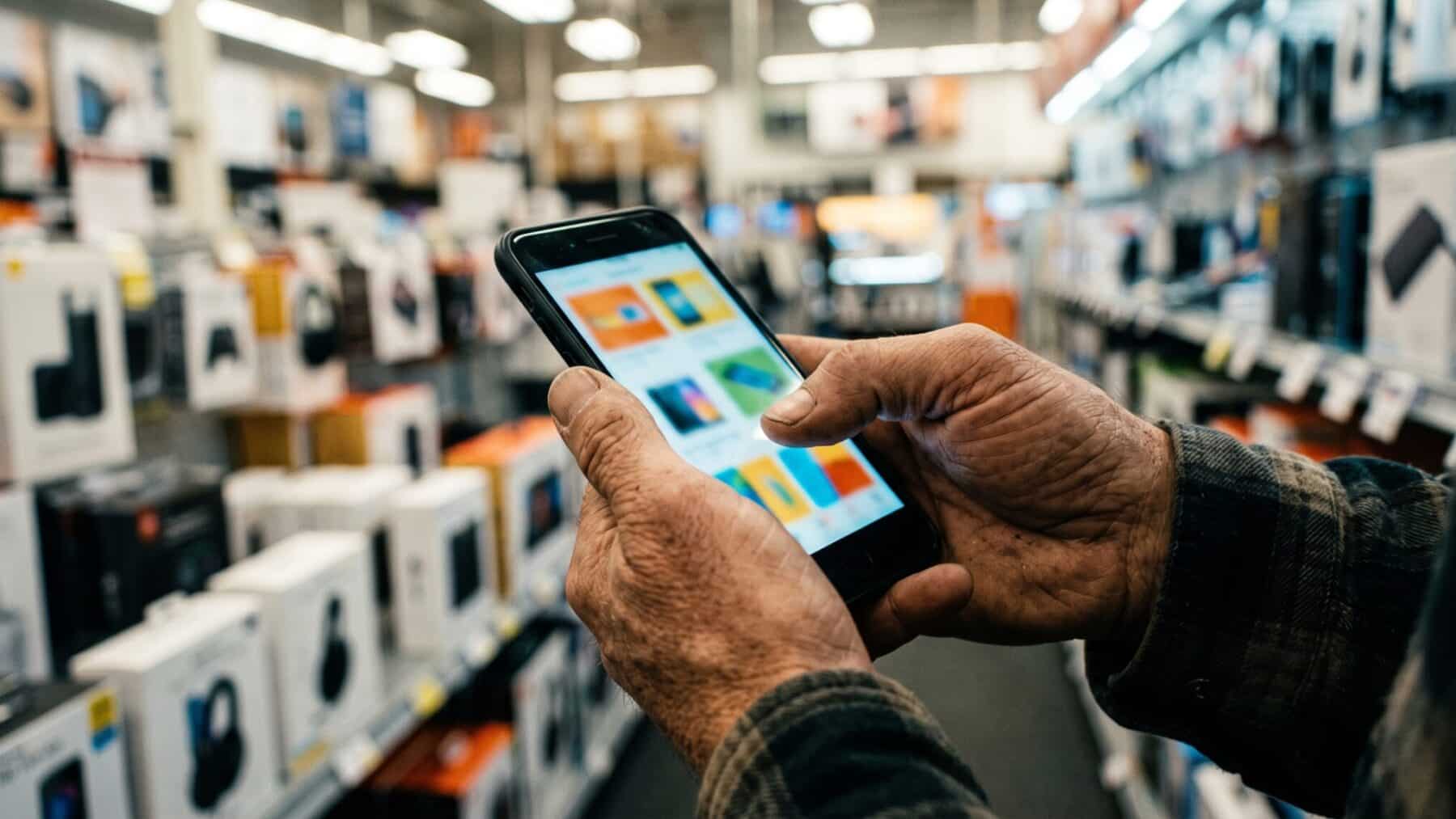
A hand rises, a phone hovers, and the terminal beeps once in under a second.
No bill counted out. No PIN typed. Nothing leaves the wallet.
And that, behavioral economists now confirm, is precisely the problem.
The checkout has been quietly re-engineered, layer by layer, to feel like nothing at all. So why does that matter for your bank balance?
How the brain’s spending brake works, and why tap-to-pay releases it
Deep inside the brain sits a structure called the anterior insula, a cortical region linked to physical pain and disgust. Research using fMRI during incentive-compatible purchase decisions shows that activity in the anterior insula, a key region in affective pain processing, correlates parametrically with price magnitude, and the stronger the insula response to a price, the less the subject spent.
The critical detail is that this discomfort is not uniform across payment methods. A 2019 exploratory fMRI study published in Frontiers in Neuroscience found greater activation of the right insula when participants watched cash payments compared with card or smartphone payments. The evidence is not entirely settled, a separate 2021 fMRI study in Scientific Reports found that insula activation did not clearly differentiate credit from cash transactions in its sample, but the weight of behavioral research consistently shows that each step away from physical cash tends to be a step away from the brain’s own guard against overspending.
That abstraction has been engineered, layer by layer, out of the modern checkout. The brain has a native cost-detection system, and it runs largely on discomfort, but that discomfort is not uniform across payment methods. Remove the discomfort, and the system goes quiet.
The four friction layers that cash created, and that digital payments removed one by one
Cash required physical removal of a finite resource from the wallet. Checks required writing, signing and conscious registration of the amount. Both formats forced the spender to watch the money leave. Debit cards introduced a PIN confirmation pause, a brief moment of deliberate attention before the transaction cleared.
Tap-to-pay removes even that, stacking onto the existing credit-card decoupling from physical cash. The more friction in a payment method, the higher the pain-of-paying signal and the lower the spending; mobile payments and one-click ordering reduce this signal to near-zero, removing the brain’s natural brakes on spending. So the terminal that beeps in under a second has, by design, stripped out successive layers of cognitive resistance.
The reward loop then flips. When transactions are instant, subtle vibrations, green check marks and cheerful tones reinforce the act of paying. Research comparing credit card and cash purchases found that credit card use triggered activation in the brain’s reward circuitry, particularly the striatum, at the moment the payment cue appeared, regardless of price. Payments become micro-victories rather than losses.
What the data shows about how much more people spend when friction disappears
In a now-famous auction study, one group bid for sporting-event tickets knowing they could pay by credit card, while another bid knowing they would pay in cash. The average bid from the credit-card group was almost twice as high as the average cash bid. That gap, confirmed across replications, is what behavioral economists call the reduction of the pain of paying.
More recent work sharpens the picture. Cornell University research, published in Management Science, found that after signing up for an online retailer’s one-click checkout service, customers over time increased their spending by an average of 28.5% from previous buying levels. Separately, half of respondents in a survey said they shop more frequently when payments feel seamless, and 48% said they spend more at checkout when the process is fast and frictionless.
The gap between what people think they spend and what they actually spend has grown alongside the rise of frictionless payments. Most Americans now budget their spending, with covering essentials cited as the top reason, yet the tools people reach for rarely address the underlying neural mechanism driving the shortfall.
Where the effect is weakest, and who it catches hardest
Research using in-depth interviews found that frictionless digital interfaces reduce emotional feedback during spending, weaken psychological ownership of money, and foster habitual rather than deliberate financial decision-making.
That shift from deliberate to habitual is the core complication: the pain-of-paying effect dims not just in the moment of purchase but over time, as digital payment becomes the default. Regular use of cashless payments can blur the distinction between card and cash, narrowing the pain-of-paying gap between them. The protection erodes with familiarity, but the habits built around reduced friction do not automatically reverse.
Younger, urban consumers feel the pull most acutely. Gen Z is the most concerned that digital payments are making it easier to overspend, with 37% saying they have spent more at checkout without realizing it, and 29% saying frictionless payments have worsened their sense of money by making spending feel less real. Even so, qualitative research drawing on dual-process theory finds that habitual digital spending reduces emotional feedback across professional backgrounds and income levels alike.
A simple friction trick that restores spending awareness, and why it works
The good news buried in all of this neuroscience is that the mechanism runs in both directions. Participants in behavioral research demonstrated adaptive agency by strategically reverting to cash in order to restore spending awareness. fMRI studies show that during cash payment a peak of activity is recorded in the anterior insula, the brain region associated with unpleasant sensations and negative emotions, and this awareness acts as a natural brake on unnecessary purchases.
Financial psychologists recommend adding friction and visibility to digital spending without giving up cashless payments entirely. Turning on instant transaction alerts, deleting saved card credentials from shopping apps, and requiring a PIN above a personal threshold each restore a layer of deliberate attention. Small design changes, not wholesale lifestyle shifts.
The one-week cash experiment, paying for everything with physical bills for seven days, is one of the most consistently reported tools in consumer psychology for resetting spending baselines. It is not about nostalgia for paper money. The same psychological reward circuitry that makes frictionless checkout feel effortless can, with a small design intervention, be redirected toward restraint. The architecture of spending was built to work against us; the research confirms it can be rebuilt to work the other way.
