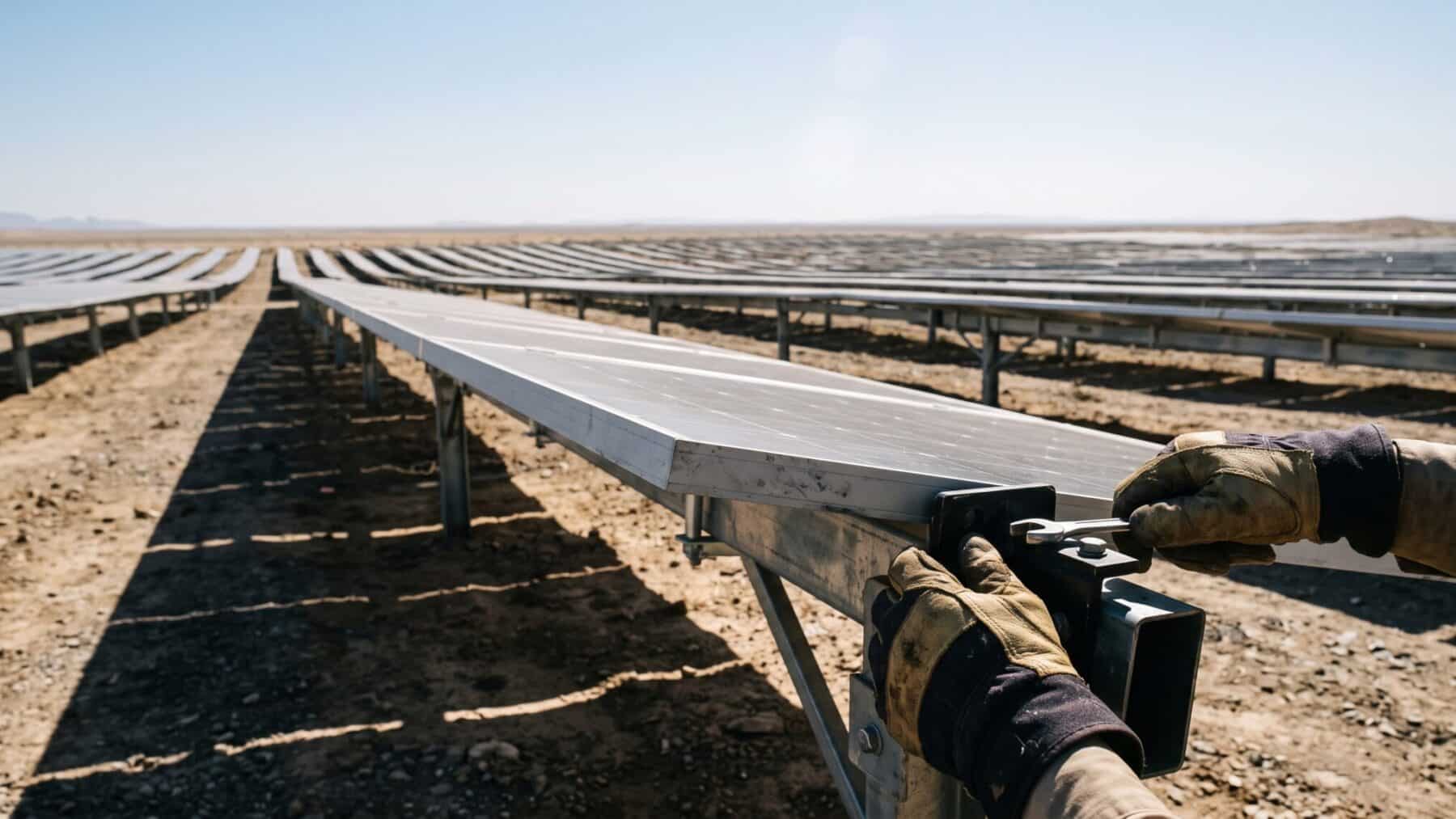
The U.S. Department of Commerce finalized steep antidumping and countervailing duty determinations on crystalline silicon photovoltaic cells and modules from India, Indonesia, and Laos on September 11, 2026. Commerce finalized AD/CVD rates on solar cells from all three countries, with India’s combined rate reaching 249.13%.
What Commerce determined
On September 11, 2026, the U.S. Department of Commerce announced its final affirmative determinations in the antidumping duty and countervailing duty investigations of crystalline silicon photovoltaic cells, whether or not assembled into modules, from India, Indonesia, and the Lao People’s Democratic Republic (Laos).
Commerce determined that solar cell and panel producers and exporters from these countries have been dumping solar products into the U.S. market at unfairly low prices and have benefited from subsidies. Whether those imports have materially injured the U.S. industry remains subject to a pending ITC ruling.
Preliminary antidumping determinations were announced on April 23, 2026. The preliminary AD margins were 123.04% for all Indian producers, 94.36% for Blue Sky Solar and 35.17% for all other Indonesian producers, and 33.57% for all Laotian producers. The final determinations set antidumping margins of 123.04% for Indian producers, 94.36% for Indonesian producers, and 65.43% for producers from Laos. For India, the final AD margin of 123.04% combined with a countervailing duty rate of 126.09% yields a 249.13% combined rate.
The International Trade Administration fact sheet details the full company-specific margin calculations. Commerce determined that countervailable subsidies are being provided to producers and exporters of solar cells from India, covering an investigation period of April 1, 2024 through March 31, 2025.
Background and petitioners
The Alliance for American Solar Manufacturing and Trade, a group of domestic solar manufacturers, petitioned the government in July 2025 for an AD/CVD investigation, alleging that solar panel manufacturers had relocated their operations to India, Indonesia, and Laos to avoid tariffs placed on imports from Cambodia, Malaysia, Thailand, and Vietnam.
The petitioner’s members are Hanwha Q CELLS USA Inc. (Dalton, GA), First Solar Inc. (Tempe, AZ), and Mission Solar Energy LLC (San Antonio, TX). The group argued that a surge of low-priced imports from these nations was undercutting the U.S. manufacturing sector at a critical period of domestic expansion.
These petitions follow similar proceedings that resulted in the imposition of AD or CVD duties on imports of solar products from China (Solar I), China and Taiwan (Solar II), and Cambodia, Malaysia, Thailand, and Vietnam (Solar III).
The domestic industry has expanded during that period. The Solar Energy Industries Association’s American Solar and Storage Manufacturing Expo on Capitol Hill highlighted billions of dollars in announced domestic manufacturing investments since 2022. For context on how domestic solar module capacity has grown in parallel, U.S. module capacity stood at roughly 66 GW as of Q2 2026.
What happens next
The determination follows the U.S. International Trade Commission final hearing held earlier this week. The proceedings now turn to the Commission for its final injury vote, scheduled for October 14, 2026, to determine whether dumped and subsidized imports from the three nations materially injure or threaten the U.S. solar manufacturing industry.
A positive ITC finding would let Commerce issue the final duty orders, presently slated for November 2, 2026. Should the ITC find no material injury or threat of it, the investigations would end and cash deposits already collected would be returned.
Industry analysts note that some major U.S. suppliers from abroad have already relocated cell manufacturing to other locations, among them Egypt, Ethiopia, and Nigeria, while also seeking to onshore module manufacturing capacity. Several petitions are already looking to investigate some of these new manufacturing locations.
With a Section 232 investigation on the horizon, future trade attention is likely to shift away from specific countries and individual AD/CVD cases toward solar imports as a whole.
Industry supply chain pressures
The solar manufacturing industry remains gripped by uncertainty around foreign entity of concern requirements as well as ongoing trade cases that have stymied new development. Crystalline silicon cell manufacturing in the U.S. stands at only 3 GW, though factories aim to reach 20.5 GW of cell capacity by 2027. That transition takes 18 to 24 months from equipment order to commercial output.
The combined tariff pressure is already reshaping sourcing strategies across the industry. Domestic cell and wafer investment, tracked in detail in the ongoing expansion of U.S. cell factories, is accelerating as module assemblers face narrowing options for imported cells that fall outside active trade investigations.
The October 14 ITC injury vote is the next key milestone in deciding whether the rates Commerce announced become enforceable orders.
