A family hauler built for seven people just outran a stopwatch nobody expected it to beat.
At a highway charging stall, its battery climbed from a near empty state toward full in under 24 minutes.
No sports car badge, no low roofline, just a tall three-row SUV meant for grocery runs and soccer practice.
Yet when testers clocked the sprint from 10 percent to 80 percent charge, the big rig beat its own maker’s promise.
What makes a vehicle this size refill that quickly is the first question worth answering.
How a full-size SUV manages a sports car’s charging speed
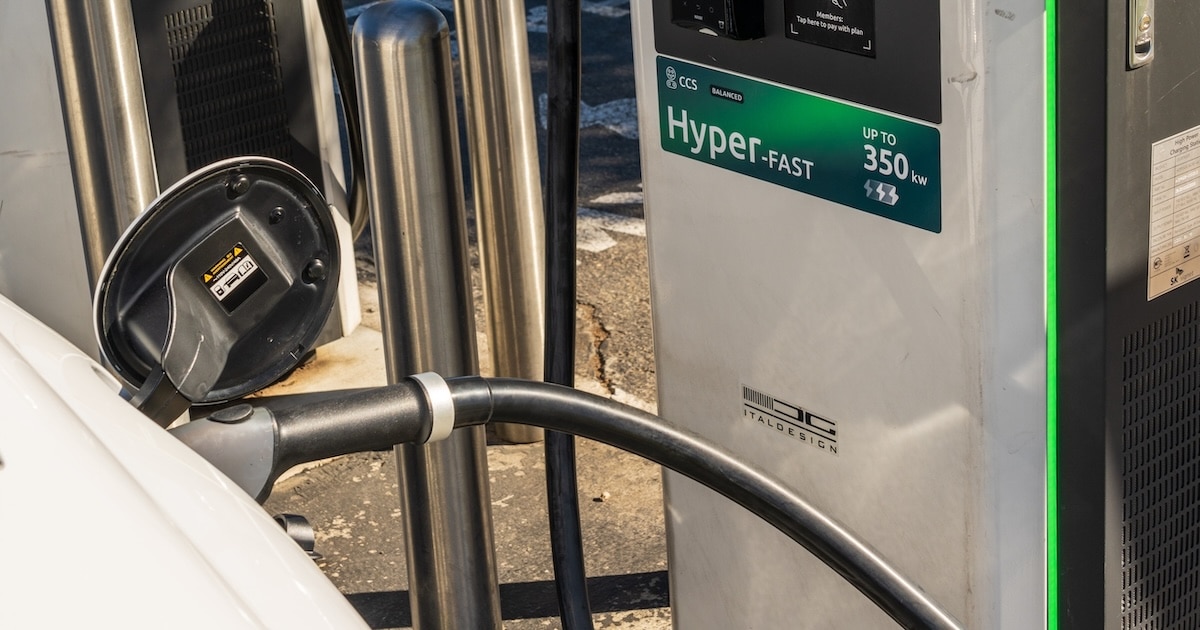
The trick sits in the electrical architecture running underneath the floor, not in the size of the battery itself. Its 800-volt system charges 10% to 80% in about 24 minutes at a 350 kW DC charger, pushing roughly double the pressure of the 400-volt setups still common in cheaper EVs, and that single difference reshapes everything about how fast the pack can fill.
Higher voltage lets the same cable deliver far more power without needing thicker, heavier wiring. That matters because charging speed is really a function of how many electrons a battery can safely accept per minute, called its charging curve.
A well designed 800-volt pack can hold a high charge rate for longer instead of tapering off early, which is where most EVs lose time. The 2026 Ioniq 9 is rated at a peak of roughly 237 kW from a suitable DC fast charger.
All versions come with the same 110.3-kilowatt-hour battery pack that can be charged from 10% to 80% in 24 minutes using a 350 kW charger, a figure the automaker lists on its own specifications for the 2026 model.
Inside the test that beat the automaker’s own number
Picture a parking lot charger, a cold battery pack, and a stopwatch running the moment the cable locks in. That is the scene behind the headline figure, and it looked nothing like a marketing video shot in ideal lab conditions.
Independent testers hooked up a 2026 Ioniq 9 and timed the session themselves rather than relying on the manufacturer’s printed brochure number. In its published charging test, the outlet found the Ioniq 9 to be the fastest charging EV it had tested yet, recording a 10 to 80 percent time of just 23 minutes and 19 seconds, beating Hyundai’s claim of 24 minutes.
That is a small margin on paper, roughly 41 seconds. But it matters because real-world tests almost always run slower than brochure claims, not faster.
Temperature swings, charger output drops and battery age typically eat into the advertised number rather than add to it. Which is why a result that beats the sticker claim stands out, even on a battery pack with a huge 110.3kWh usable battery pack , one of the largest offered in a mainstream three-row EV.
Where the record actually comes from and what backs it up
Hyundai’s own newsroom material lines up with the independent result almost exactly. The automaker states charging takes about 24 minutes for 10% to 80% on a 350 kW DC ultra-fast charger using the included CCS adapter, a figure repeated across its US pricing announcement and European press kit.
The three-row electric SUV, which shares its underpinnings with the Kia EV9, has a starting price of $60,555, including the $1,600 destination fee, and all versions deliver over 300 miles of range.
Rival three-row EVs, including Kia’s own related model, post similar numbers: claimed 10-80% times on 350 kW hardware run about 24 minutes to recharge the 99.8-kWh battery from 10 to 80% SOC at a high-power, high-voltage DC fast charger in optimum temperature conditions. In the case of the smaller 76.1-kWh battery, the time is 20 minutes, with a max DC charge rate at up to 215 kW. That puts the Ioniq 9 at the fast edge of its segment even before the independent test undercut Hyundai’s own figure, though it is not the only three-row EV to post a sub-24-minute claim.
That kind of speed shrinks what used to be a fast food break into something closer to a bathroom stop. Drivers plugging into one of the fast-growing automaker backed charging networks now spreading across the country are likelier than ever to find a plug rated to hit that number.
The limits that keep this from being a universal promise
None of that holds up everywhere, and that caveat is written into Hyundai’s own fine print. The company notes actual charging time varies based on current battery level, charger output, vehicle settings, and battery and outside temperature, meaning the 24 minute figure describes a best case session, not a guarantee.
Find a charger rated below 350 kilowatts, and the session stretches out fast. A cold battery in winter or a partially occupied stall sharing power with a neighboring car can push the real number well past half an hour.
Even the port matters. Using a Tesla Supercharger through the built-in NACS port takes about 40 minutes for the same 10 to 80 percent stretch, nearly double the headline figure, because older Supercharger hardware tops out at lower power levels than dedicated 350-kilowatt stations.
So the record depends heavily on finding the right equipment. Shoppers comparing claims across brands would do well to check which connector and charger speed a number assumes, something buyers weighing options like the growing lineup of CCS and NACS compatible charging stations are starting to factor into decisions.
What the number means for families cross-shopping big EVs
Even with those caveats, the result lands as good news for a category of buyer who rarely gets good charging news. Three-row electric SUVs carry the heaviest battery packs on the market, and heavier packs have historically meant longer waits at the plug, not shorter ones.
That assumption is now harder to defend. A seven-seat family hauler beating its own charging claim under independent testing shows that size and speed are no longer locked in the same old compromise they were just a few years ago.
Because the same 800-volt architecture also underpins related Hyundai and Kia models, the advantage is likely to spread rather than stay isolated to one SUV.
The bigger story may be what it signals for the next generation of family EVs still on the drawing board. If one of the largest battery packs in the mainstream market can outrun its own paperwork at a public charger, the gap between specs and lived experience may be closing faster than shoppers expect.
