
The retail sector has been dealt with irrevocable changes in recent years as online shopping becomes more and more prevalent. Inflation rates and a less than ideal job market have long been the cause of the decline in sales being seen by retailers in all sectors. The impact of this has caused the vast majority of companies to scale back and downsize, if not shut down entirely.
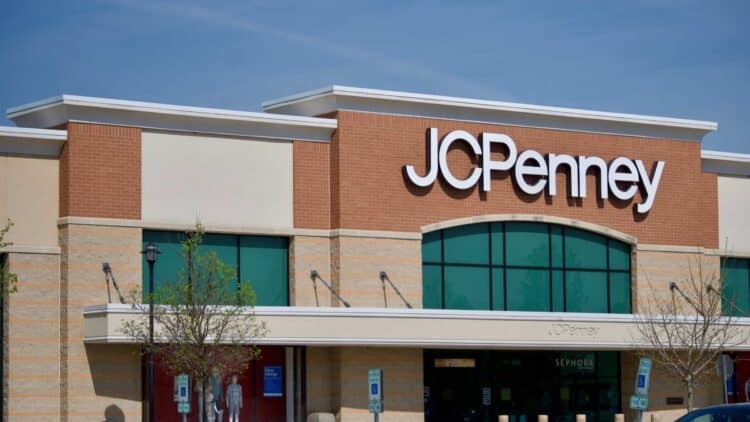
The latest in a string of closure announcements comes from popular department store chain JCPenney as it faces the struggles that just about every brick and mortar store has been facing in this predominantly digital era.
JCPenney closes some of its doors
The apparel giant, who has been in operation for well over a century now, is joining the ranks of its peers as financial struggles persist. The retailer will be shuttering eight of its locations across several states in the coming days as it attempts to minimize losses.
The locations slated for closure are as follows:
- The Shops at Tanforan in San Bruno, California
- The Shops At Northfield in Denver, Colorado
- Pine Ridge Mall in Pocatello, Idaho
- West Ridge Mall in Topeka, Kansas
- Westfield Annapolis Mall in Annapolis, Maryland
- Fox Run Mall in Newington, New Hampshire
- Asheville Mall in Asheville, North Carolina
- Charleston Town Center in Charleston, West Virginia
In a statement made previously, a spokesperson for JCPenney shared that, “While we do not have plans to significantly reduce our store count, we expect a handful of JCPenney stores to close by mid-year… The decision to close a store is never an easy one, but isolated closures do happen from time to time due to expiring lease agreements, market changes or other factors.”
The COVID-19 pandemic period and its resulting lockdown was an especially tough time for retail and JCPenney suffered its fair share of struggles during 2020. The retailer had filed for Chapter 11 bankruptcy protection in May of 2020 with the hopes of restructuring and returning the company to profitability. As such, the store count for the retailer dropped from 850 to approximately 650 — which does make the closure of eight stores seem less drastic in the grand scheme of things.
When the closures were announced, JCPenney loyalists took to social media to grieve the closures and share their opinions on the current state of retail.
One post read, “Why are so many stores really closing? Everywhere I shop, many mall stores.”
Another chimed in with, “People! We need to shop in person at our local stores! Buying online is causing stores to close! Shop in town and meet your neighbors!”
“This! Shop local!!! Not online!” another added.
“Preach it daily! Keep our local stores. They support the schools and churches! We need human connections for a better society,” yet another customer urged.
As tension-filled as things may seem for the retailer at the moment, the company remains rather hopeful for the future and its merger with Sparc. According to CEO Marc Rosen, through this merger, both entities will now be able to “leverage [their] resources and best-in-class industry talent to grow [their] brands further.”
Store closures are in a surplus
Some industry experts have dubbed the COVID-19 pandemic as the catalyst of the “retail apocalypse” plaguing the industry today and when considering the sheer volume of store closures over the past year alone, the words do indeed ring true.
Big ticket names like Kohl’s, Bargain Hunt, Big Lots, Walgreens, Macy’s, and Starbucks have all become victims of downsizing in this economy. As if that was not bad enough, beloved retailers like Joann Fabrics are shutting down entirely after operating for decades upon decades.
According to data collected by Coresight Research, 15,000 stores are predicted to close down during the course of 2025 — a figure that is double that of the previous year. Conversely, only around 5,800 new stores are projected to open for the same period.