
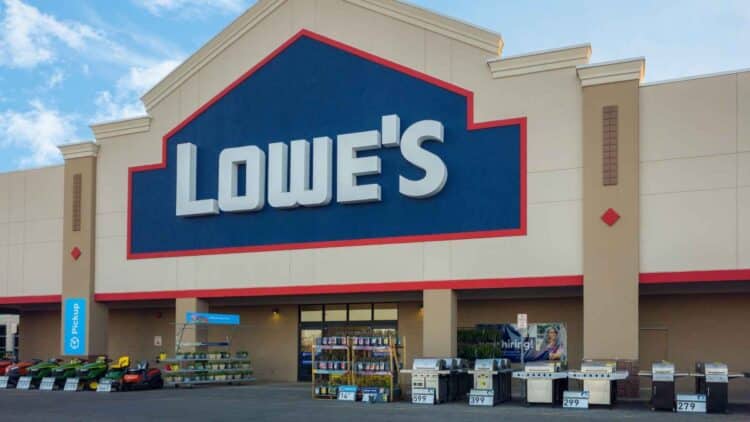
Over the past few months, many retailers, including Lowe’s, have been facing some difficulties due to high tariffs. The retailer has found it difficult to attract consumers to the stores, and this is because many consumers have become cautious about the state of the country and the impact of inflation and high tariffs. Now, the retailer has been facing a drop in consumer spending at local stores. The question now is what the retailer will do to address this situation.
High Tariff Impact on Lowe’s
Like many other American retailers, such as Home Depot and Lowe’s, they have also experienced a decline in foot traffic in their stores. Due to high tariff rates implemented by the President of the United States of America, Donald Trump, consumers are avoiding going to stores. Many of them are prioritising essential products and do not focus on home improvements. In addition, recent data from Placer.ai has shown that the overall consumer visitation to stores has decreased.
The visits to Lowe’s stores decreased by 3.8% year-over-year during the quarter. On the other hand, the retailer’s top rival, Home Depot’s visits only decreased by 2.2%. Additionally, the decrease of foot traffic came during a time when the retailer is facing a nationwide boycott from consumers. The reason for this is because of Lowe’s business practices, which started on August 1. This process will last until the end of the month. Consumers, specifically 3 in 5, indicated that the reason why they are reducing their spending is because of the concern they have about a possible recession. This was the result of a recent survey that was conducted by Harris Poll and Bloomberg News
One of the many reasons why consumers are also not visiting the retailer, is because of the current state of the housing market. Therefore, Lowe’s flagged the state of the United States housing market because it has a significant impact on the sale of the retailer. As a result, consumers delay the processes of making home renovations to the high costs of living at the moment. They instead focus on smaller projects such as repairs, remodelling, and some maintenance work.
The Chief Financial Officer (CFO) of Lowe’s Brandon Sink stated that they are still working through several short-term difficulties. These challenges include elevated mortgage rates because the consumers who are financially cautious does not want to spend their money on nonessential things. He added that affordability continues to be a pressure point that leads to the lock-in effect. This effect has been seen in the depressed housing marking said Sink.
The retailer’s drastic action
However, the home improvement retailer, Lowe’s, recently saw a piece of hope, when the retailer’s latest earnings report was revealed. It showed that the company’s comparable sales during the second quarter of this year increased by 1.1% year-over-year.
As the retailer navigates the domino effects of the uncertain United States housing market, it is also fighting the increasing threat of President Donald Trump’s tariffs on multiple countries. The tariffs are expected to result in higher product prices for daily goods, which results in consumers reducing their spending. Lowe’s CEO stated that the company is trying to manage the tariffs by diversifying where it sources its products.
The CEO, Marvin Ellison, stated that the retailer has done a good job in working through the cross-functional process, looking for the diversification. He further alluded to the fact that about 60% of the goods are coming from the United States. This is something different the company is doing because it was not like this 7 years ago, he added. The company also started to rely more on dynamic pricing to help lessen the burden of higher costs due to tariffs.