
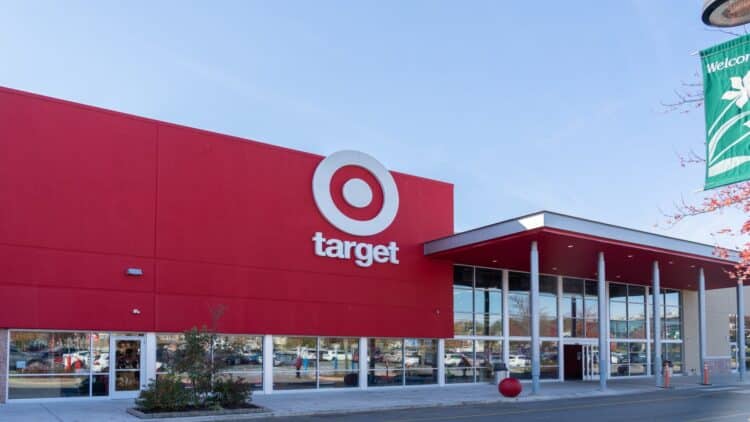
Following in the footsteps of its retail sector peers, Target has also made the risky decision to ask its Chinese suppliers for a further discount amidst troubles with gradually increasing tariffs and a decline in overall sales.
It is no hidden fact that the escalating tensions as a result of Trump’s tariff hikes on goods imported in to the United States are going to have a lasting effect on the economy and the price of goods. Not to mention that this is occurring during a time where consumers are already having to cut back and tighten their budgets much more than they usually would. Retailers are beginning to panic about the impact of these tensions and as a result, some hasty moves are being made.
Target makes a questionable decision in the wake of tariff tensions
When Donald Trump first took to office, one of his first executive decisions was to increase tariffs on goods imported from Mexico, Canada, and China. A monthlong pause was initially enacted on the tariffs for Mexico and Canada.
China was first dealt with a 10% tariffs on goods imported to the U.S. and this figure has since increased to 20% and it appears that another increase is set to happen on April 2.
In a bid to save their bottom line without increasing prices for consumers, Walmart was the first to pressure its Chinese suppliers to absorb the excess tariff related costs and this request was not well received. Costco Wholesale also made a similar demand and its suppliers did not relent either.
Now, Target has also opted to go down this seemingly unsuccessful path and it had been recently reported that Target has also been asking its Chinese suppliers to take on some of the costs spawning from Trump’s tariffs. The pressures of years of tariffs and slim margins has already been weighing down on Chinese suppliers and this latest demand is not bettering the situation in the slightest.
In the case of hairpin and claw clip supply, for example, the Chinese suppliers revealed that Target asked that they “pick up half the costs of the tariffs.” The negotiations that followed this request did not pan out as smoothly as hoped and as such, the supplier lost the business after seeing delays with their order.
Approximately $430 million worth of goods are being impacted by the current 20% tariff and whilst Target does not have any stores operating in China, it has shared that it has worked towards reducing its dependence on Chinese manufactured goods. The retailer has also shared that it has cut the share of goods imported from China down to 30% when it was previously 60%.
By comparison, Costco has 7 warehouses in operation in China, whilst Walmart has a whopping 330 locations in the country. Walmart’s request to Chinese suppliers was met was immediate criticism from Chinese authorities who stated that the demand was “unfair and irresponsible.” Things proceeded with somewhat more civility with Costco and Target on the other hand.
Other challenges faced by Target
Citing weakened consumer spending habits and inflation, the retailer had made the decision to cut its employee bonuses at the corporate level. This move came on the heels of a March earnings report that cautioned “ongoing consumer uncertainty and concerns about tariff impacts.”
This decline is sales is also in part due to the boycotts faced by the retailer as customer confidence dwindles due to Target’s decision to scale down its Diversity, Equity, and Inclusion efforts. Many other retailers made similar moves, however, in the case of Target, scaling back on DEI initiatives resulted in a 40 day boycott, along with a lawsuit from shareholders and the state of Florida. These combined pressures are weighing down significantly on the company, it seems.