
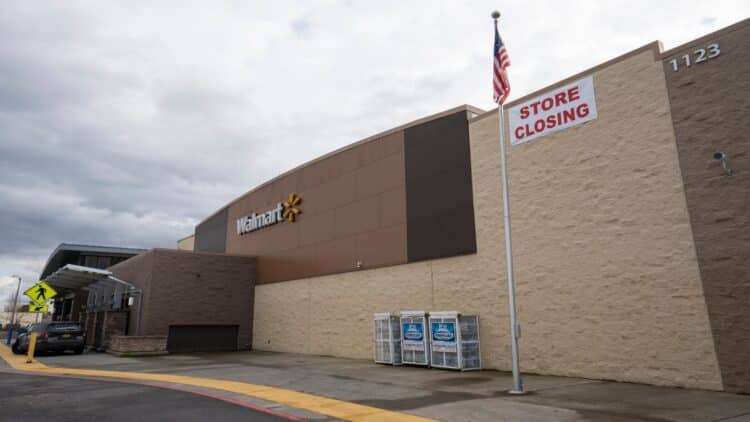
With the current tense economic landscape, many retailers are being forced to re-evaluate strategies and business models so as to keep afloat during a time where consumers are affording less and less. The case for Walmart, possibly the top supermarket retailer in the industry, is no different and the retailer has been working on restructuring since last year.
The big box giant ended last year with several store closures and the trend appears to be continuing on into the new year. This “restructuring” is a true reflection of the growing changes in consumer behavior, as well as the precarious state of the retail industry.
More closures for Walmart
Shoppers in California and Georgia will soon have to say goodbye to several branches of this retailer who appears to be losing the popularity game in recent weeks.
Whilst a detailed list of which locations will be shuttered in Georgia and California during the course of 2025 has not yet been revealed, other locations that have closed their doors in recent years includes:
- The Ashford Dunwoody Road location in the town of Dunwoody.
- The Walmart Neighborhood Market branch on Roswell Road in the city of Marietta.
- Towson, Maryland (1238 Putty Hill Ave.)
- Columbus, Ohio (3579 S. High St.)
- Milwaukee, Wisconsin (7025 W. Main St.)
- Aurora, Colorado (10400 E Colfax Ave.)
Is the company in crisis?
According to the retailer, the ongoing decision to close down is not reflective of the financial state of the company. The company is not in a financial crisis as such, but rather, the closures are meant to optimize operations. Walmart, much like many other retailers, is of the belief that a high concentration of stores in one area is counterproductive and a direct contributor to any underperformance reported by the company.
This is also the reason behind the decision to downsize real estate in the California and Georgia regions.
California is one of the states with a high concentration of branches and as such several will be closed down as part of the retailer’s long-term strategy that aims to increase sales and optimize efficiency. Through closing some a fraction of stores in one location, the retailer aims to increase foot traffic in the remaining stores by promoting the operational branches.
San Diego, El Cajon, West Covina, Fremont, and Granite Bay are all amongst the locations slated to be shuttered in California in the coming months. This seemingly counterintuitive move will actually help the retailer adapt its network of stores to the constantly shifting retail market.
Other setbacks impacting Walmart
Cutting losses and growing sales are important factors when running a business. However, in the retail industry, public perception holds a significant amount of value as well. Unfortunately, in this aspect, Walmart has not been faring too well in recent weeks and rising inflation rates and cost of living expenses are not to blame.
The big box giant recently distanced itself from any Diversity, Equity, and Inclusion policies as a result of pressures from the conservative right wing. Customers and shareholder were outraged by this decision and as such, the company has been facing ongoing boycotts.
Additionally, customers have been noticing a decline in products of Latin or Mexican origin on the shelves in store and as such, the Hispanic community has also launched a boycott campaign against the retailer who is no longer showing a sense of inclusivity as previously claimed.
Another point of contention for shoppers is the company’s decision to withhold certain benefits and services from shoppers by making them an exclusive privilege to Walmart+ subscription holders. A membership fee is $98 annually, a far costlier amount than that of competitors like Costco and Sam’s Club. Customers feel that this is too excessive, especially during this turbulent economic times.