
Tariffs, tariffs, tariffs. This has been the only thought on every retailer’s mind for weeks now since President Donald Trump made the decision to increase these fees on goods imported to the U.S. from China, Mexico, and Canada — and the repercussions are turning out to be extremely costly.
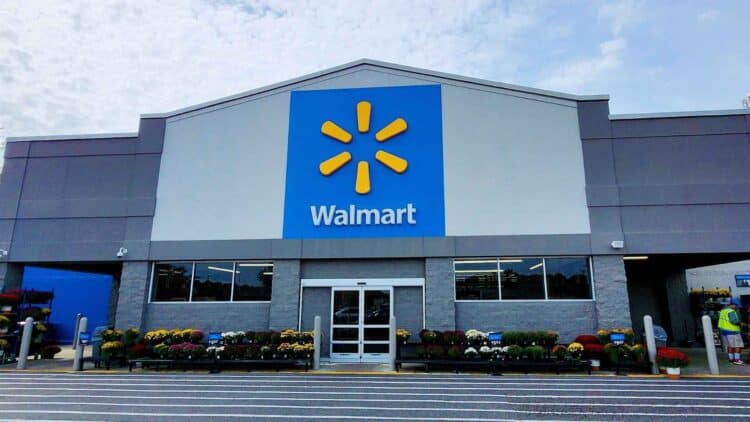
Walmart, the supermarket giant who holds the title of top retailer in America, recently made a rather risky move with the hopes of avoiding having to take on excess costs due to tariff hikes and Chinese suppliers are not pleased in the slightest. Could this demand from the retailer sour its relations with Chinese suppliers and will customers have to pay higher prices as a result of this fallout?
Walmart makes the wrong move and customers might have to pay the price
After Trump declared a 20% tariff on all goods imported from China to the States, retailers across the sector became panicked. Walmart who imports a significant amount of inventory from China felt the pressure almost immediately and made the not so well thought out decision to ask its Chinese suppliers for a discount — meaning the suppliers would absorb the additional tariff fees. According to estimates from analysts, 20% of goods sold at Walmart are sourced from China.
Chinese officials had requested to speak with Walmart executives after reports that the retailer had asked its Chinese suppliers to reduce prices by 10% for each round of tariffs imposed by the U.S. were circulated.
In a press briefing earlier this month, He Yongqian, a spokesperson for the Commerce Ministry, shared, “Our relevant departments have reached out to Walmart to further understand the situation, and the company has provided an explanation.”
A spokesperson for the retailer justified the request by explaining that the company’s “purpose is to help people save money and live better. Our conversations with suppliers are all aimed at making our purpose a reality for millions of customers, and we will continue to work closely with them to find the best way forward during these uncertain times.”
According to Thomas Hoenig, a fellow at the Mercatus Center at George Mason University and former president of the Federal Reserve Bank of Kansas City, “What this is signaling is that the Chinese government is saying, ‘We’re not going to pay for this tariff. US consumers are going to pay for it.”
These tariffs are coming at a time where consumers are already being compelled to cutback on luxuries and non-essentials. If prices are hiked further, the U.S. economy could very well be standing on the precipice of a recession.
China makes retaliatory move as trade war progresses
Thanks to its bargaining power, Walmart has been able to drive down prices for its customers. However, with the current state of things, the retailer is now vulnerable to resistance and even retaliation from Chinese suppliers if Walmart continues to pressure them.
“It’s a national statement, not a supplier statement. China is potentially saying enough is enough,” explained Joseph Jurken, founder of ABC Group, a consultancy that aids business-supply chain relations in Asia. “Trump has been saying it’s a tariff on China. China may have drawn a line in the sand.”
Consequently, China has responded to these tariffs and pressures in kind by imposing a retaliatory tariff on U.S. agriculture imports and this took effect last week.
Walmart is not the only company facing economic measure from China, it seems. Just last month, China’s State Administration for Market Regulation revealed that it would be “initiating an investigation into Google for suspected violation of its anti-monopoly laws.” The search engine offered by the tech giant is not available in China and as such, the company’s operations in the country are minimal.
Additionally, PVH, who is the parent company of Calvin Klein and Tommy Hilfiger clothing brands, has also been placed on the “unreliable entities list” by China’s Ministry of Finance. PVH was against the decision and has shared that it will work with Chinese officials to resolve the matter.