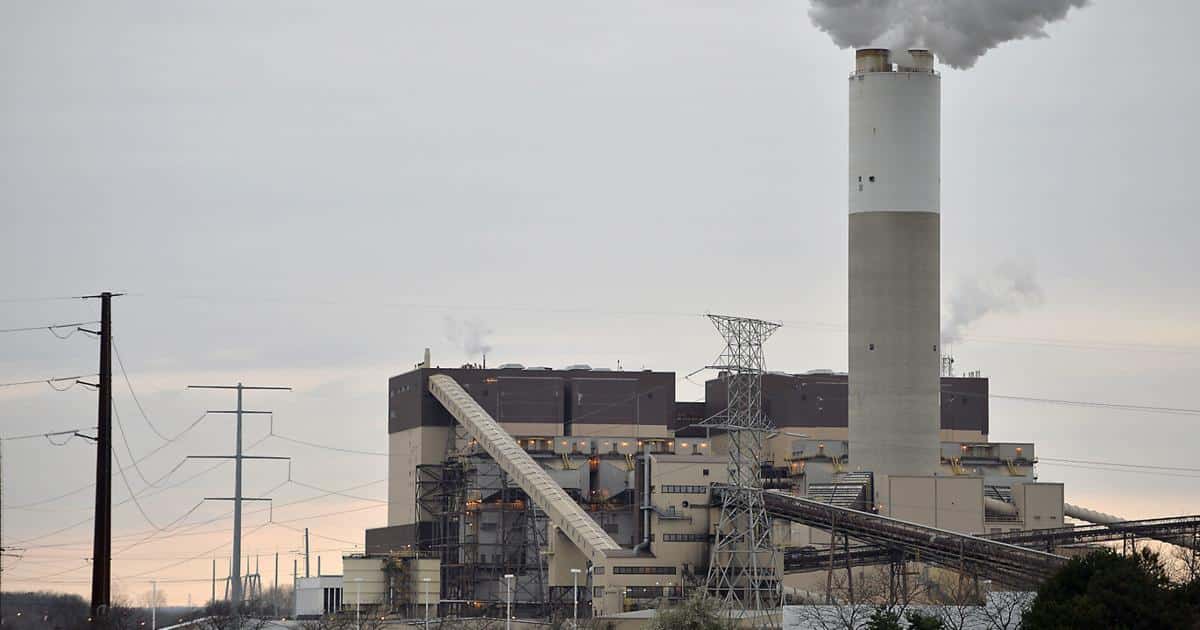
The smokestacks at Pleasant Prairie have not released a wisp of steam since 2018, the turbines silent, the coal piles long gone.
Yet every month, a line on local electric bills still quietly funds that dead building.
It will keep doing so for another thirteen years.
Nobody switched the plant back on, and nobody plans to.
So why does a cold, empty building still show up as a monthly charge on a household bill?
How a retired plant keeps billing customers
The answer sits in how state regulators let utilities build power plants in the first place. When a company gets approval for a new coal unit, regulators also approve a guaranteed rate of return on that investment, paid back over decades through customer rates, regardless of whether the plant ever becomes obsolete early.
That arrangement works fine if a plant runs its full expected life. But when a utility shuts a plant down early, as the plant became too expensive to operate, and We Energies shut it down after 38 years, in 2018 , the unpaid construction debt does not disappear with it.
Regulators call what is left a stranded asset. A recent investigation found a portion of monthly bills will continue to pay for Pleasant Prairie until 2039, 21 years after the plant stopped producing electricity .
Because the debt was approved years earlier through the ordinary rate case process, there is no mechanism to simply cancel it once the plant stops running. Customers keep paying down construction costs on a building that generates nothing anymore.
What the bill actually looks like across a state
Zoom out from one plant and the number gets bigger fast. Across Wisconsin, residential and business utility customers throughout Wisconsin owe nearly $1 billion on coal plants shut down or soon to close, including construction and upgrade debt, plus a guaranteed profit margin near 10 percent for the companies that own them.
Two companies carry most of that tab. We Energies and Wisconsin Public Service Corp. have stranded assets on the books, and both are subsidiaries of Milwaukee-based WEC Energy Group , and other coal units are still winding down.
One industry research group broke the math down to a household level for a different plant in the same WEC fleet: the Oak Creek coal unit, with individual ratepayers on the hook for these costs at a rate of nearly $30 a year for the next 17 years .
That is a recurring charge layered quietly into a bill most customers assume reflects power they are using right now, not decades old debt from a plant that stopped making electricity years ago.
Where this number actually comes from
The $1 billion figure is not an advocacy estimate. It comes from the utilities’ own regulatory filings, the same disclosures companies must submit each year detailing exactly how much undepreciated value remains on plants headed for retirement, and Wisconsin Public Service Corp.’s December 2024 report listed roughly $30 million in remaining value on recently retired units at two power plants , a fraction of the total WEC companies carry statewide.
Separate research from clean energy think tank RMI dug into the Oak Creek plant specifically.
It found a 640 MW coal-fired power plant with $645 million left on the books, 17 years early . That early exit is precisely what turns ordinary plant debt into a stranded asset, since the company can no longer spread the remaining cost over the plant’s full working life, so the bill still has to go somewhere, and state rules route it to customers rather than shareholders.
Where the arrangement runs into trouble
Utilities argue there is a reasonable version of this story. A WEC Energy Group spokesperson told Wisconsin Watch that the majority of debt tied to those units stems from “environmental controls we were required to install to meet federal and state rules” , not discretionary spending, and the company has argued that retiring the plants ultimately saves customers money on fuel and operations going forward.
There is a cheaper path available, too. RMI’s analysis found that had WEPCO securitized the Oak Creek debt, ratepayers as a whole would have saved $117.5 million, reducing the burden by 20 percent, or about $5.25 every year for the typical residential customer .
So why wasn’t that cheaper option used? Because the standard rate of return utilities earn on regular investments runs higher than bond interest, giving companies an incentive to keep the costlier method even when a cheaper one exists. Indeed, the PSC expressed “disappointment” in 2024 when We Energies “was not willing to pursue securitization” to save customers $117.5 million on its soon-to-retire Oak Creek coal plant, with the utility noting state law doesn’t require securitization . That tension is not unique to Wisconsin, as rate fights over fuel charges, demand fees and how costs land on bills are surfacing nationwide, including hidden charger fees and new overnight patterns among drivers on cheap nighttime plans.
What happens as more plants shut down
The timing could hardly be worse for a clean exit from this math. Wisconsin utilities are racing to build new generation for a wave of high-tech data centers proposed, approved or under construction statewide, and the push to generate electricity for data centers risks creating another $1 billion in “stranded assets” down the line.
Meanwhile, more coal units are scheduled to retire in coming years, so the current debt pile is a floor, not a ceiling, since each new closure adds its own undepreciated balance to the stack customers already cover.
None of that makes the arrangement illegal or even unusual; it is standard utility regulation applied the way it has worked for decades.
But it does mean a bill that looks like it pays for tonight’s electricity is, in part, still paying for a plant gone dark years ago, and regulators have not yet forced a switch to cheaper financing.
