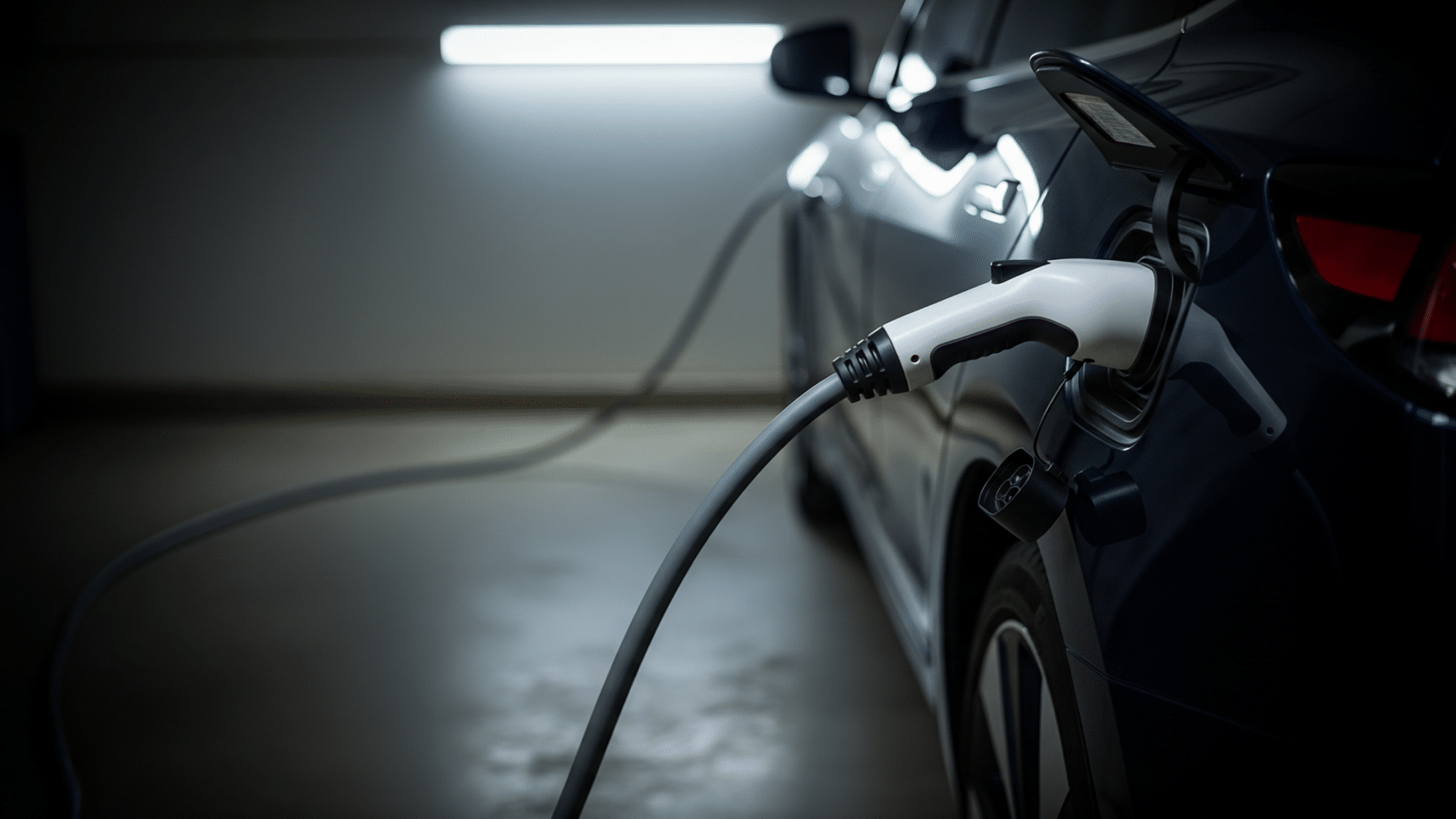
The sales pitch writes itself. Buy an EV, plug it in at home every night, wake up to a full charge, and never think about a gas station again. It sounds almost too good.
For millions of Americans it has worked exactly like that, at least at first.
But a major new study of nearly 5,400 real owners has surfaced a number that nobody in the showroom mentioned, and it is steadily rewriting what “cheap home charging” actually means in 2026.
The promise that sold a generation of drivers on going electric
When automakers market EVs, the home-charging pitch is almost always the same: skip the pump, charge while you sleep, save money.
Home charging is typically one-third the cost of DC fast charging, and it provides the ultimate convenience of charging overnight.
That comparison still holds. But “cheaper than a fast charger” is a lower bar than most buyers realize they are clearing.
Home charging accounts for 86% of typical EV charging, making it the cornerstone of the electric vehicle ownership experience.
Which means whatever happens to that monthly bill at home hits almost every EV owner, almost every month.
What owners were told and what the outlet in the garage actually delivers
Level 2 home chargers are the upgrade most dealers recommend. They add roughly 25 to 45 miles of range per hour, enough to top up an average commuter overnight with ease.
The hardware and install cost is real but manageable. Most U.S. homeowners pay roughly $1,200 to $3,000 for a professionally installed Level 2 home charger, before incentives.
Between federal tax credits, state rebates and utility programs, homeowners can often recover $1,000 to $4,000 of their installation costs.
So far, so good. The part that changes later is not the hardware. It is the electricity itself, and almost nobody warned buyers it could move this fast.
A satisfaction score falling in real time as the meter runs
Overall satisfaction among owners using Level 1 portable chargers fell to 569 on a 1,000-point scale, down 12 points year over year.
Satisfaction for Level 2 portable chargers declined 4 points to 710.
Even the best-rated Level 2 permanently mounted units, which score highest overall, are seeing more reported problems year over year.
Level 2 permanently mounted chargers recorded the most issues at 44.2 problems per 100 chargers, up 5.2 year over year, with higher issue rates tied to advanced features such as Wi-Fi connectivity, mobile apps and smart charging capabilities.
The frustration is spreading across every charger type. The cause is not broken hardware.
It is something far more familiar, and harder to fix with a software update. With EV battery concerns already nudging some owners toward anxiety about overnight charging, the last thing the market needed was the monthly bill climbing too.
The number buried in the data that changes the math for every EV owner at home
EV owner satisfaction with home charging costs has declined in the United States, with average monthly spending rising to $63, up $5 from a year ago, according to J.D. Power’s 2026 U.S. Electric Vehicle Experience Home Charging Study.
That is nearly a 9% jump in just one year.
The driver is electricity prices, not anything the car or the charger is doing wrong. On average, electricity prices rose about 6% nationwide from 2024 to 2025, but some locales saw double-digit percentage increases.
New Jersey saw some of the worst inflation, with a 17% jump in electricity costs from 2024 to 2025.
The tools to fight back exist. Only 38% of EV owners always schedule home charging, despite evidence it lowers costs and boosts satisfaction, and just 12% participate in utility smart charging programs even though 69% are aware of them.
And the reason so few owners use those tools? “Only about 20% of owners say they received any kind of education or advice on home charging from their purchasing dealer,” according to J.D. Power executive director Brent Gruber.
Buyers were handed an EV market that was already sorting itself out, and then handed a charger cable with very little else.
What owners can actually do right now before the next bill arrives
The good news is that the gap between what owners pay and what they could pay is real and closable today, without buying anything new.
Among owners who try to charge during off-peak hours, those who always schedule charging spent an average of $65 on charging in the previous 30 days, compared with $71 among those who never schedule charging.
That $6 difference compounds. Over a year it is more than $70 back in a household budget, for free, just by shifting when the car charges.
Charging costs are climbing, yet options exist for managing them through utility incentive programs and off-peak scheduling, and automakers, dealers and utility companies all have a role in helping owners understand those options.
The outlet in the garage is still the best deal in EV ownership. The electricity flowing through it just got a little more expensive, and most owners have tools sitting unused in their charging app that can claw some of it back.
