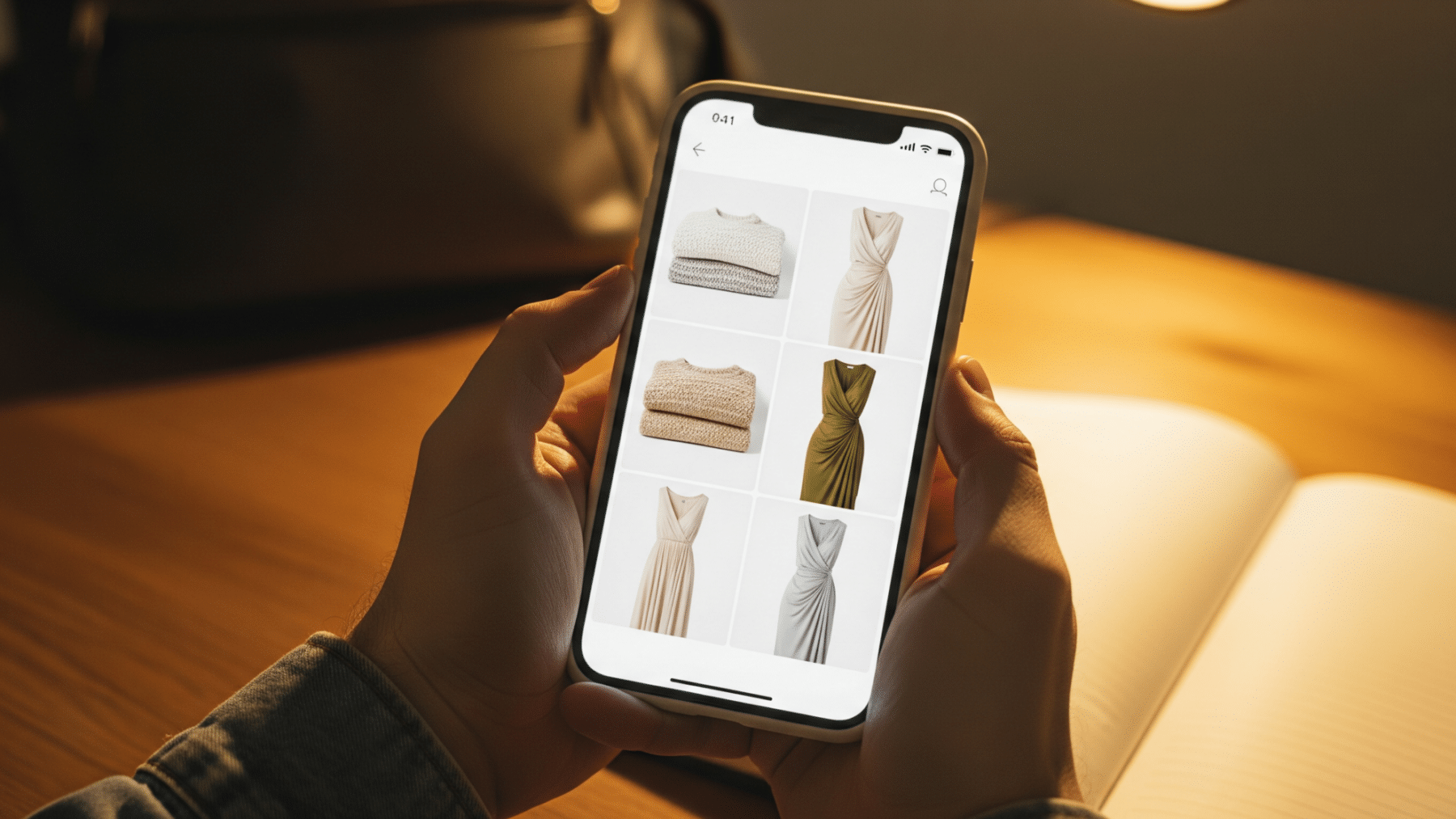
Google has published a six-point guide detailing how students can use its AI-powered shopping tools for the current back-to-school season, spotlighting features that range from conversational AI search to a virtual dressing room and upgraded price tracking.
The announcement on the Google blog draws on a Google/Ipsos Back to School Shopping Study 2025, which surveyed 1,000 U.S. college-enrolled respondents aged 18 to 24 alongside a separate panel of 1,000 U.S. parents of children in Pre-K through 12th grade, to frame the rollout.
Conversational search replaces keyword hunting
Online shopping has evolved from one- or two-keyword searches to longer, more detailed queries, and Google is directing students toward AI Mode in Search to take advantage of that shift.
Users can ask AI Mode questions as they would a friend, requesting, for example, the pros and cons of lightweight tote bags for campus or budget-conscious searches framed in plain language such as “cozy sweaters that feel like a hoodie but look like I tried for less than $80.”
Google’s Shopping Graph holds more than 50 billion product listings from retailers large and small, and the company says AI Mode can surface specific-size, specific-color results drawn from that catalog in a single query.
Personalized shopping and virtual try-on for students
Seventy-five percent of college students say they want to shop from a personalized selection of products that prioritizes their favorite brands, sizes and styles, according to the Google/Ipsos study.
Google’s Shopping tools let users build a personalized shopping experience by selecting favorite brands, sizes and styles inside AI Mode, tailoring results to individual preferences.
Separately, the virtual try-on tool, first introduced as a Search Labs experiment at Google I/O in May 2025, has since launched broadly in the U.S., letting shoppers try on styles from billions of apparel items in the Shopping Graph across Search, Google Shopping and Google Images.
Users upload a photo of themselves and the AI, powered by a custom image-generation model for fashion, analyzes how different materials fold, stretch and drape on different bodies, then fits the selected garment accordingly.
Upgraded price tracking and Google Lens round out the toolkit
Google has also upgraded its price-alert system: when U.S. shoppers tap “track price” on any listing, they can now specify their preferred size, color and target price, and the Shopping Graph will notify them when an offer matching those exact criteria appears.
That granularity is a notable step beyond the previous version, which tracked price drops without size or color filters.
For in-store moments, Google Lens lets shoppers photograph an item, a vintage chair, a friend’s shoes, to find similar products online, in different colors, or at competing retailers.
The company describes Lens as useful for capturing style inspiration spotted anywhere on or off campus.
A sixth capability, shoppable outfit and room inspiration inside AI Mode, is slated to arrive in the U.S. this fall, using vision match technology to generate visual options and link them to product listings from the Shopping Graph. That feature follows the broader dorm-decor search trends Google has already highlighted this season, where beach-themed aesthetics and removable wallpaper are leading student queries.
Broader context: AI reshaping back-to-school retail
Twenty-three percent of parents plan to use AI specifically to find deals during back-to-school shopping this season, with 73 percent planning to use AI in some form during the process, according to PwC’s 2026 Back-to-School Consumer Poll, conducted among 2,080 U.S. adults in May 2026.
Total expected back-to-school spending for K-12 students is projected at around $30.4 billion, according to the 2026 Deloitte Back-to-School Survey of 1,207 parents, flat in nominal terms but reflecting a 6% decline when adjusted for inflation. That puts competitive pricing features like Google’s upgraded alerts in sharper relief for cost-conscious students and parents.
Google says people shop on Google more than a billion times a day, and the company says agentic technology will make that experience more intelligent in the near term.
For this back-to-school season, the six tools Google has spotlighted are available now for U.S. users, with the vision-match feature in AI Mode set to follow in the coming months.
