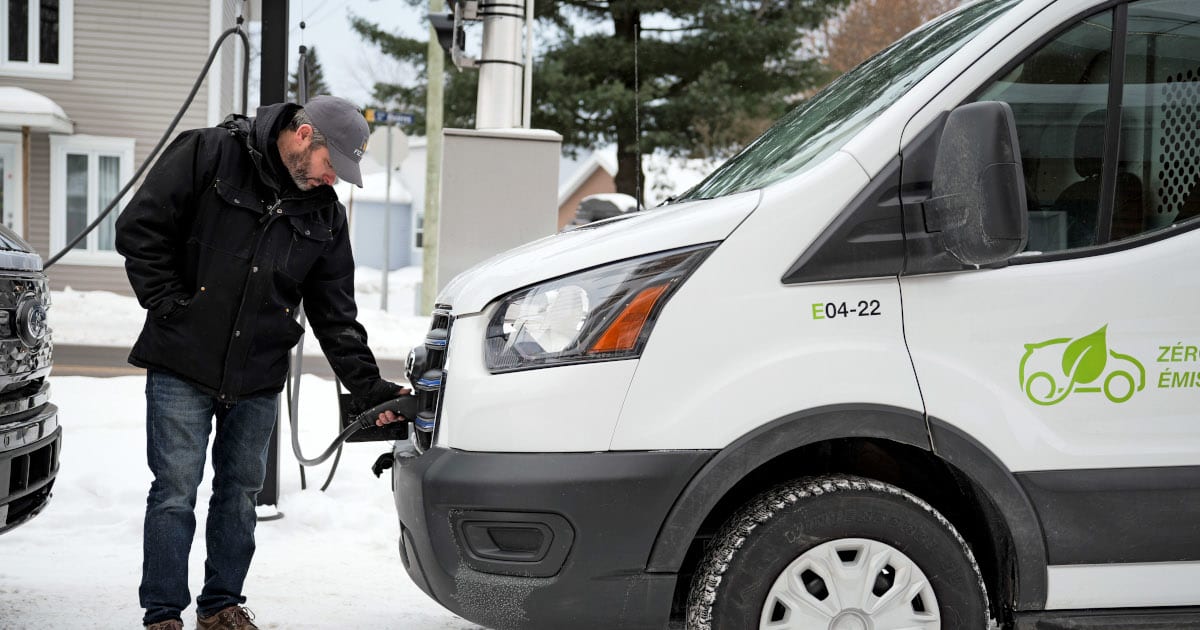
A delivery driver climbs into a cold cab before sunrise, glances at the dashboard, and watches the range number drop before the van even leaves the lot.
The cargo bay behind her is stacked with totes.
The heater is already running full blast against the windshield fog.
None of that shows up on the window sticker she saw at the dealership.
So what actually eats into that promised range once a van leaves the yard on a January morning?
Why cold air and a loaded cargo bay drain a battery faster than driving does
An electric van’s range rating comes from a controlled lab test run at a comfortable cabin temperature with an empty cargo area. Once that same van sits outside in freezing air, the battery chemistry itself slows down, and the climate system has to work far harder just to keep the windshield clear and the cab livable for the driver.
That heating draw, not the cold battery alone, is the bigger thief. The Department of Energy’s fueleconomy.gov, drawing on AAA testing, notes that roughly two thirds of the extra energy an EV burns in freezing weather goes toward warming the cabin rather than moving the vehicle, a figure also cited in fleet data.
Then there is the weight sitting in back. Fleet guidance now treats temperature and cargo load as two separate penalties that stack on top of each other instead of canceling out.
What that looks like on an actual delivery route this winter
Picture a van rated for roughly 126 miles on a full charge, the original EPA-estimated figure the EPA site lists for the low-roof Ford E-Transit cargo van when it debuted; newer and taller E-Transit configurations are now rated higher. On paper, that lower figure is still a comfortable cushion for a single urban delivery shift.
But testing has found that same class of van losing significant range once temperatures fall near 20 degrees Fahrenheit compared with mild weather, a drop large enough to turn a two loop route into one. That estimate comes from a side by side van comparison run under matched cold conditions.
Add a loaded cargo bay to that cold morning, and the math gets worse. Fleet consultants now estimate a fully loaded van can see a combined range drop of 30 to 40 percent once heavy payload and freezing temperatures hit together, per fleet planning guidance.
A dispatcher scheduling four stops based on a warm weather test can find the van flashing a low battery warning after two. The route planned around the sticker number quietly runs short before lunch.
Where this shows up in formal testing, not just driver complaints
This is not simply anecdotal grumbling from drivers. A lab study by the American Automobile Association found that overall range fell 39 percent once outside temperatures dropped to 20 degrees Fahrenheit, compared with a mild 75 degree baseline, a finding echoed in recent fleet research.
Separate real-world tracking tells a gentler story. Data from Recurrent, pulled from more than 30,000 vehicles across 34 popular EV models, found that EVs retain about 78 percent of rated range near freezing, a smaller hit than the lab number but still a meaningful bite out of a shift’s worth of stops.
Payload testing follows a similar pattern. Fleet engineers estimate every extra 100 pounds of cargo trims additional range off a van’s total, a formula published in industry range data for commercial buyers.
Where the math breaks down and the sticker number still holds up
None of this means the window sticker is dishonest. The EPA number is a standardized baseline meant for comparing vehicles against each other, not a guarantee for every climate and every loadout a fleet might run.
Even so, the gap matters more for commercial vans than personal cars, because a work van almost never drives empty in mild weather the way a lab test assumes. A plumber’s van hauling parts lives permanently in the worst case scenario the sticker never modeled.
It is a similar mismatch to what GCN found when a pickup’s towing sticker left far less real capacity than advertised once a hitch actually loaded up.
Some fleets are adjusting rather than complaining. Preheating the cabin while still plugged in, scheduling heavier routes earlier in a charge cycle, and building in a buffer stop now appear in winter readiness guidance for fleet managers.
What buyers and dispatchers can do with this information now
For a fleet manager sizing up an electric van purchase, the fix is less about distrusting the sticker and more about building a buffer into route planning. Software that factors in temperature and payload before assigning a route, rather than after a driver calls in stranded, is becoming a standard ask.
That kind of range aware dispatching already exists in several fleet platforms, pairing weather forecasts and load data with daily routing the way a seasoned dispatcher once did from memory.
So the lesson is simple. Read the sticker as a best case number, not a daily promise, and plan the shorter route January actually demands.
The technology keeps closing that gap, much like the gains seen in a Lucid sedan’s real world range beating its own sticker. Fleets building in a reasonable margin now are the ones least likely to get caught short on a cold morning.
