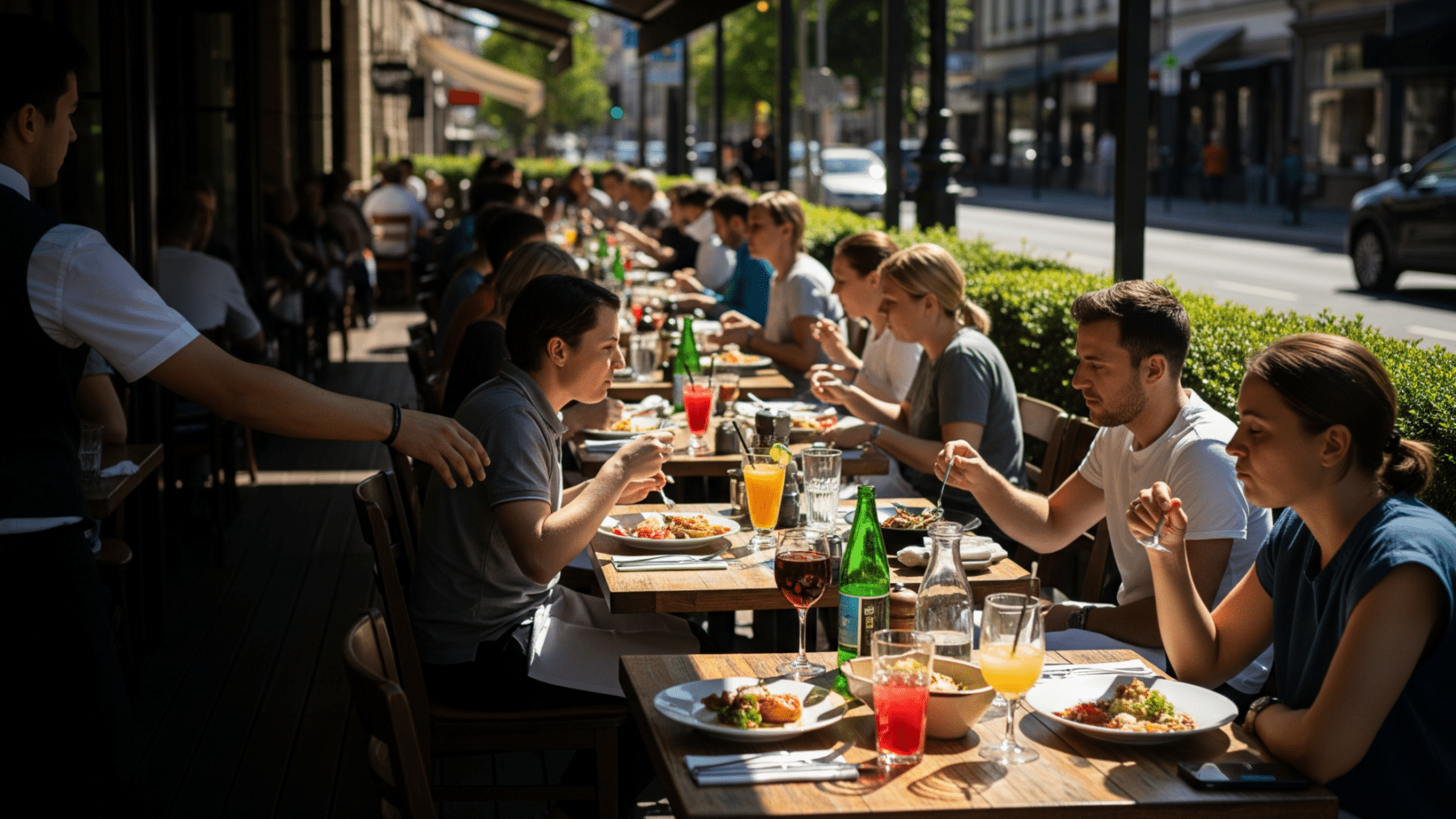
Dining out has become the defining activity of the American summer vacation. A new report from the National Restaurant Association finds that nearly all summer travelers plan to eat at a restaurant during their trips, placing it above every other leisure activity on their itinerary.
Dining tops every other vacation activity
The 2026 Summer Travel and Dining report, based on a May 2026 survey of more than 1,000 consumers, finds that 55 percent of consumers plan to take at least one overnight domestic trip this summer.
For most of these travelers, visiting a restaurant ranks as their most popular activity, beating shopping and sightseeing. Fully 98 percent of summer travelers plan to use a restaurant during their upcoming travel plans.
Dining leads all other vacation pursuits, ahead of shopping at 85 percent, sightseeing at 83 percent, and visiting beaches at 76 percent.
The gap between restaurants and the next most popular activity is notable: a full 13 percentage points separate eating out from retail browsing.
Younger adults, urban residents, families with children, and higher-income households are the most likely to travel this summer. That demographic skew suggests restaurants in destination cities and coastal markets stand to capture a disproportionate share of seasonal traffic.
How travelers plan to eat on the road
Among summer travelers, 93 percent plan to dine in at a restaurant, 90 percent plan to use takeout, delivery, or drive-thru options, and 84 percent plan to stop at a coffee shop or snack spot.
The breadth of those numbers points to something significant: travelers are not choosing between sit-down dining and convenience formats. They are using all of them.
That pattern reflects a broader shift in how Americans relate to restaurant spending when away from home. Operators across segments, from fast-casual counters to full-service dining rooms, are positioned to benefit if they can compete on affordability and experience simultaneously.
The findings arrive alongside separate data showing Americans are already primed to spend more at restaurants in 2026. OpenTable’s 2026 Dining Trends Report found that dining was up 8 percent year-over-year in 2025, and Americans are set to dine out an average of 10 times per month in 2026. That baseline appetite for eating out appears to accelerate once people leave home.
The economics of travel dining
Travel dining is a huge part of restaurants’ economic influence, totaling more than $3.7 trillion in direct and indirect impact overall. For individual operators, summer travel represents one of the highest-volume windows of the year, when foot traffic from out-of-towners supplements the regular local customer base.
Operators are entering the season amid a more complex landscape of economic uncertainties, tighter discretionary spending, and evolving travel patterns. That context matters: even as the survey shows strong intent to dine out, consumers are increasingly selective about where they spend.
The combination of high travel-dining intent but tighter everyday budgets is reshaping how restaurants compete. Value-focused formats like happy hour are gaining traction.
Sixty-one percent of Americans say dining out in 2026 will feel more like a special occasion than an everyday occurrence, and happy hour dining between 4:00 and 4:59 p.m. is up 13 percent year-over-year , according to OpenTable’s 2026 Dining Trends Report.
That squeeze on discretionary dollars is something many Americans are already navigating at home, and with leisure budgets stretched thin for a wide share of the population, the restaurant industry is counting on travel season to make up the difference.
What travelers want most from restaurants
An analysis of over two million U.S. diner reviews showed sharp increases in mentions of matcha, hand rolls, seaweed, spicy rigatoni, and Basque cheesecake. Consumer research also revealed strong demand for nostalgic classics such as chicken pot pie, meatloaf, and shrimp cocktail. Those findings come from OpenTable’s 2026 Dining Trends Report. Menus that can balance novelty with comfort appear best positioned for the summer crowd.
More than half of Americans, 55 percent, say they plan to spend even more on restaurants in 2026. Experiential dining is up 46 percent year-over-year, with restaurants offering more pop-ups, collaborations, and chef’s tables. That willingness to spend up for something memorable, combined with the sheer scale of traveler intent the National Restaurant Association documented, suggests the restaurant industry is entering the summer season with more tailwind than the headline economic data might imply.
With vacation plans at a six-year low, the trips Americans do take appear to be more food-focused than ever.
