American consumers plan to spend a record $278 billion this holiday season, but nearly one in five lower income shoppers say they will cut back on essentials like groceries and utilities to cover the cost, according to a new survey from Intuit QuickBooks.
Spending climbs for a third straight year
In spite of rising gas prices and general inflation, Americans aren’t letting financial fears put a damper on their holiday celebrations, according to the QuickBooks 2026 Holiday Shopping Survey.
According to the survey, consumers plan to spend $278 billion this holiday season, a 5.7% jump from last year’s estimated $263 billion . It’s the third consecutive year that number has risen.
The figures come from an online survey Intuit QuickBooks commissioned, fielded in August 2026 through Pollfish, of 6,000 U.S. consumers (age 18+) planning to participate in the 2026 holiday season .
Small businesses are positioned to capture a larger slice of that spending than in past years. Intuit QuickBooks’ annual holiday shopping survey found that consumers plan to spend $278 billion this holiday season, with a record $118 billion of it headed straight to small businesses.
Survey respondents say 43% of their holiday budget, on average, will go to small businesses this year, up from 41% in 2025 and 36% in 2024. Against total spending, that works out to roughly $118 billion headed to Main Street: an 8.3% increase over last year.
Essentials on the chopping block
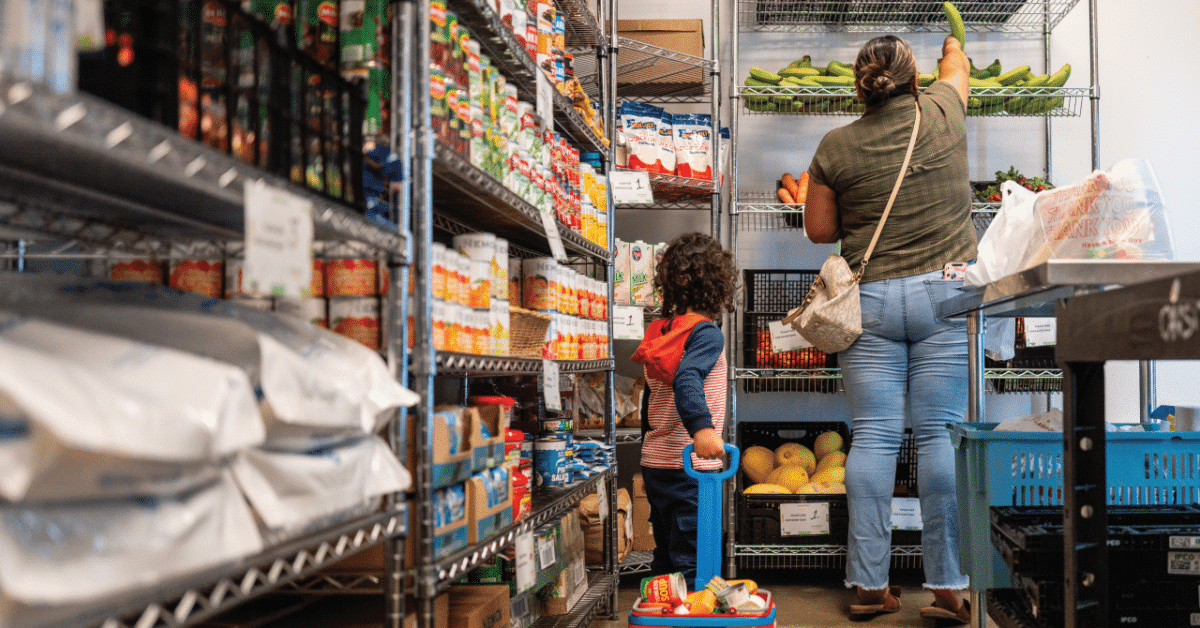
The study showed that 19% of lower-income shoppers will cut back on essentials to afford holiday splurges. Just 7% of higher income shoppers said they will do the same to fit the holidays into their budgets.
Specifically, lower-income shoppers are nearly three times as likely as upper-income shoppers to say they’ll cut back on essentials like groceries, utilities, or healthcare to afford this year’s holiday spending.
Some are also looking for extra income to bridge the gap.
Fifteen percent of lower income shoppers are also looking to pick up a side gig or seasonal work to cover rising costs this holiday, compared to 7% of higher income shoppers.
The willingness to sacrifice is not purely financial anxiety. The spirit of giving matters more to lower income households even amid financial struggles.
The spirit of giving matters more to lower-income households, even amidst financial struggles. Nearly half (46%) of lower-income shoppers said that giving matters more to them this year than in the past, compared to 38% of middle-income shoppers and 32% of upper-income shoppers.
Borrowing and budgeting strategies spread
The QuickBooks findings echo a broader pattern turning up across other recent holiday surveys. A separate ICSC 2026 Holiday Intentions Survey found that nearly half (49%) expect to borrow money to cover purchases they cannot immediately pay for in full .
Nearly one in four (23%) expect to still be paying for their 2026 holiday purchases in 2027.
That kind of financing pressure compounds the budget strain many households already report, a trend this outlet detailed in its look at how Americans cut spending on extras throughout the past year.
Buy now, pay later plans are also emerging as a common coping tool. A PayPal-commissioned survey found that 59% of consumers said they value BNPL payments as a way to stretch and control their holiday budget , according to the survey of 2,005 adults.
That pattern of leaning on short term financing to manage day to day costs mirrors other recent findings on split payment habits among everyday shoppers.
Why it matters for retailers
For small business owners, the stakes of the season remain high. Intuit QuickBooks commissioned an online survey, fielded in August 2026 through Dynata, of 1,002 U.S. small business owners, managers, and decision-makers at businesses with 0, 99 employees.
The sample included business owners (62%), self-employed or independent contractors (20%) and non-owner managers or decision-makers (18%).
Survey respondents say last holiday season mostly delivered: 40% of small businesses say holiday revenue beat their expectations, and another 51% say it landed about where they expected. Only 7% came up short.
The gap between rising projected spending and the sacrifices some households say they will make underscores how unevenly holiday budgets are being stretched this year, even as the overall market heads toward a record season.
