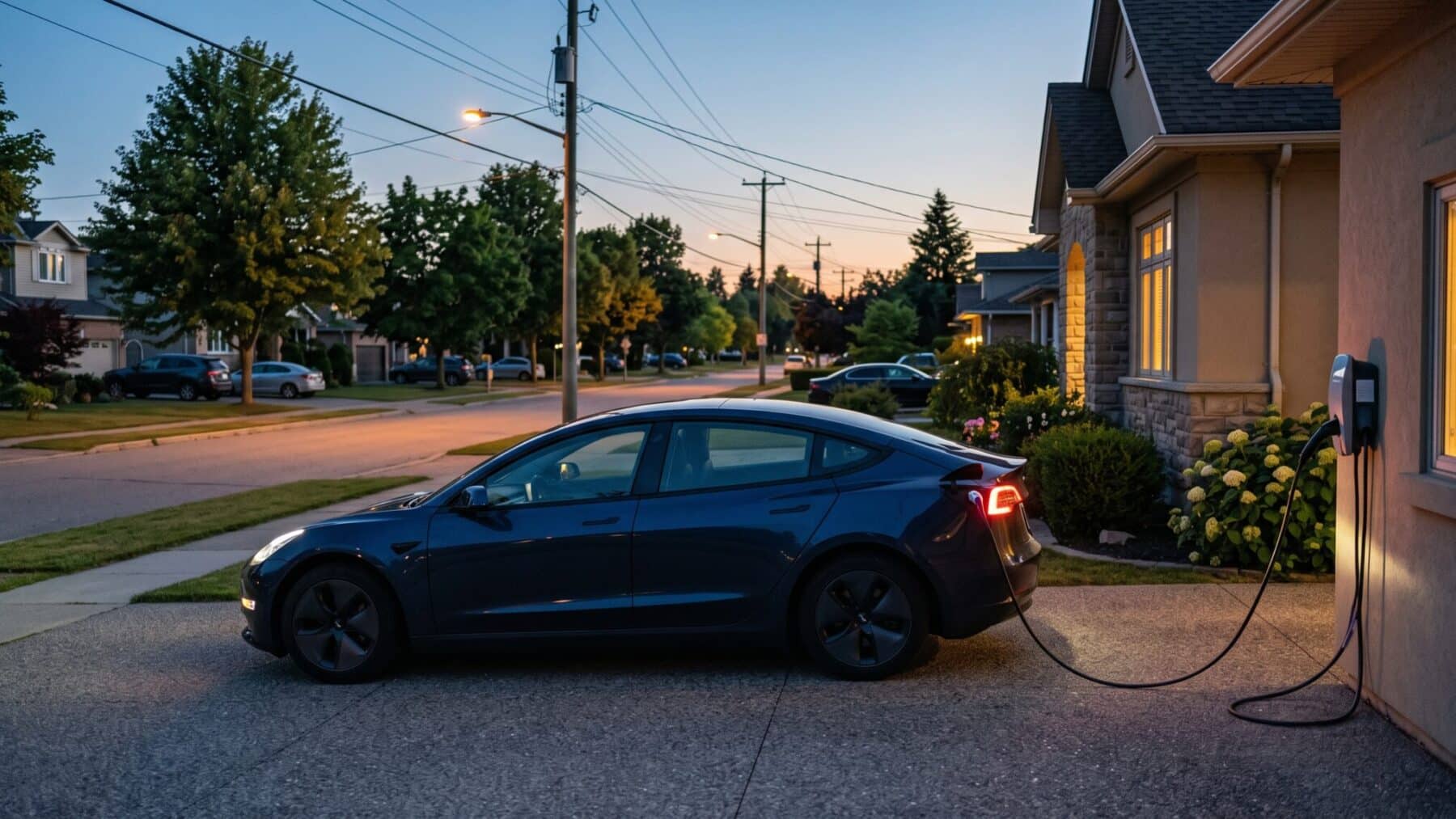
Every evening, millions of Americans plug in their electric vehicles and walk away without a second thought.
The charger hums. The battery fills. The grid absorbs the hit.
But something fundamental is changing about that transaction, and it is happening faster than most drivers realize.
Two major automakers just moved in the same calendar month to lock in platform deals that could decide who controls the largest battery reserve in America.
A number that is already rewriting utility planning desks
The more than 6.5 million electric vehicles now on U.S. roads are simultaneously driving the need for grid upgrades and providing utilities with a powerful tool to defer those very same expenses.
That is not a future projection. That is the situation utilities are operating in right now.
Residential EV charging can draw more power than any other single household load, including heating, cooling, lighting and appliances.
For grid operators, that fact is both a serious stress test and, it turns out, an unexpected opportunity.
Why the old model of just building more grid is losing ground
U.S. utilities are working with third-party software providers and automakers to develop and scale managed charging programs that can spread out the EV charging load and avoid creating peaks that stress local systems, helping to defer infrastructure upgrades that drive up rates.
That deferral matters enormously to utility customers.
Infrastructure upgrades are one of the biggest drivers pushing electric bills higher, as readers following rate increase filings across the country have seen repeatedly this year.
For utilities, adding flexible load sources is increasingly urgent at a time when electricity demand is becoming harder to forecast, with electrification, extreme weather, data center growth and aging infrastructure all increasing pressure on the grid simultaneously.
The question is no longer whether to manage EV load. It is who controls the platform that does it.
How the software in your car became more valuable than the charger in your garage
Passive managed charging programs typically use time-of-use pricing to encourage drivers to charge their vehicles at off-peak times, when grid congestion ebbs, while active managed charging programs adjust energy flows to plugged-in vehicles as grid conditions change.
The difference between those two approaches is substantial, and utilities strongly prefer the active version.
Private home charging accounts for the majority of EV miles driven in North America, making managed home charging programs a significant lever for utilities seeking to reduce peak demand without building new grid infrastructure.
That dominance of home charging is why the home charger, not the highway fast-charger, has become the critical battleground for grid managers.
And it explains why the most significant competition is not between charging hardware companies. It is between the automakers themselves, racing to wire their vehicles into utility networks.
The EIA’s own Annual Energy Outlook 2026 projects that overall electricity demand grows between 25 and 50 percent by 2050, with EV and data center demand accounting for between 50 and 80 percent of that growth.
The platform deal that just changed who is winning that race
On June 16, 2026, Rivian and ChargeScape, the vehicle-grid integration platform owned by a consortium of automakers, announced a partnership to enroll Rivian’s high-capacity EV batteries into utility managed-charging programs.
ChargeScape was initially founded by BMW, Ford and Honda, with Nissan later joining as an equal investor, and operates as a shared, industry-owned automotive infrastructure platform also utilized by Tesla, Stellantis and others.
Rivian’s addition matters because of raw battery size. Its trucks and SUVs carry some of the largest packs on any consumer vehicle, making each enrolled unit a more powerful grid asset than a typical compact EV.
ChargeScape works with multi-state utilities including Duke Energy, Xcel Energy and Eversource Energy, and offers two types of grid services: smart charging, which temporarily reduces charging demand when the grid is constrained, and vehicle-to-grid capability.
But Rivian is not the only major automaker to make a grid move this summer. Earlier in June, General Motors announced it would release a firmware update giving existing GM Energy vehicle-to-home systems full vehicle-to-grid capability with no hardware modification needed for those systems, and announced a V2G partnership with DTE Energy, a Michigan investor-owned utility, and additional plans with Pacific Gas and Electric.
Two major automakers, one shared platform, multiple utilities, all in the same month.
What drivers and ratepayers actually get out of this shift
In practice, participation can mean shifting charging to lower-demand periods, aligning charging with renewable energy availability, or reducing load during peak events, and customers may receive lower charging costs or financial incentives in return.
For Rivian owners specifically, enrollment and charging controls are handled inside ChargeScape’s in-app experience, drivers opt into a managed home charging program, and keep a familiar app-based interface while handing utilities more flexible energy to draw on.
The broader picture is a genuine market reorganization. Utilities that once had to build their way out of peak demand problems now have a software shortcut funded by the automakers’ own balance sheets.
As EV deployment and charging speeds increase, grid capacity constraints could become more pronounced in some regions, but managed charging is rapidly becoming the industry’s answer to that pressure before it arrives.
For drivers, the upside is real bill savings. For utilities, it is deferred capital spending measured in billions. And for the automakers now racing to lock in platform agreements, the winner of that enrollment battle may matter as much as the vehicles themselves.
