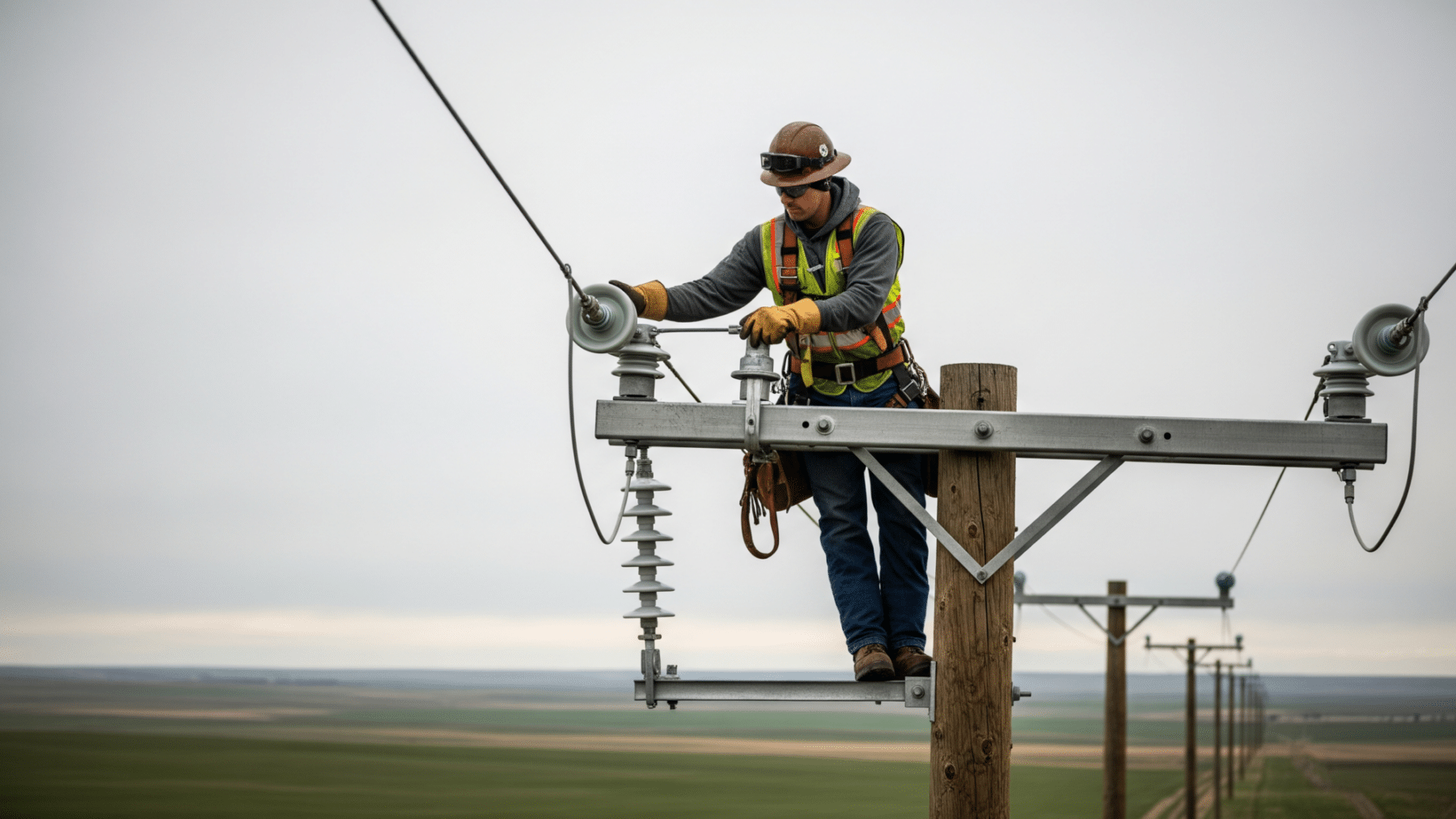
Black Hills Corp. announced on June 12, 2026 that its Colorado electric utility has filed a rate review application with the Colorado Public Utilities Commission requesting recovery of the necessary capital infrastructure and operational costs required to deliver safe, reliable electric service to over 102,000 customers in Southern Colorado.
The company is seeking approximately $26.7 million in new annual revenue for recovery of approximately $184 million of critical investments since its last rate review, including additions in 2024 to improve reliability, strengthen the electric grid, and extend the life of key generation infrastructure.
What Black Hills is asking for
Black Hills claims it has made significant capital investments in the electric utility system since calendar year 2023, totaling approximately $184 million estimated at year-end 2026.
The company also seeks to roll into base rates certain costs associated with its Peak View Wind Facility.
The rate review is based on a capital structure of 51.02% equity and 48.98% debt and a proposed 10.5% return on equity. The company is seeking to implement new rates in the first quarter of 2027. The filing was assigned Proceeding No. 26AL-0232E by the Colorado PUC and is now subject to regulatory review before any new rates can take effect.
A proposed offset softens the residential hit
Black Hills’ own cost-of-service studies show the estimated impact of the full requested rate increase on residential customers would be a monthly increase of approximately 14.7%. However, the company is proposing to blunt that figure significantly.
Black Hills proposes to mitigate the impact through a return of $29.4 million presently held in a deferred account for its Renewable Energy Standard Adjustment and $8 million previously collected through the Clean Energy Plan Rider.
Those proposed refunds would bring the estimated monthly bill increase for residential customers down to 8.8%.
Black Hills has indicated it is not proposing significant structural changes to the way it calculates bills based on the new rates. That offset mechanism will be subject to scrutiny from the PUC’s staff economists, engineers, and consumer advocates during evidentiary proceedings.
CEO statement and company context
Linn Evans, president and CEO of Black Hills Corp., said in the company’s rate review announcement: “As we deliver on our responsibility to provide safe and reliable energy to improve the lives and livelihoods of our customers and communities, this request supports our ability to make the required investments to maintain our electric system.”
The rate case follows the company’s pending merger with NorthWestern Energy. On August 18, 2025, Black Hills entered into a definitive agreement with NorthWestern Energy Group, Inc. to combine in a tax-free, all-stock merger of equals. Upon closing, the two companies will combine to form Bright Horizon Energy Corporation. Both the merger and the rate filing are adding to investor attention on the company’s capital spending trajectory and its ability to recover costs through regulated rates.
What happens next
A rate case is a formal proceeding in which an electric utility asks its state regulator for permission to change the rates it charges customers. Utilities cannot raise prices on their own and must file with their state’s Public Utility Commission, provide detailed financial justification, and go through months of review before any change takes effect.
The Colorado PUC regulates electric rates for two investor-owned utilities in Colorado, Xcel Energy and Black Hills Electric, and each of these utilities must seek the PUC’s approval for the rates charged to their customers.
The Commission set the matter for hearing in early July and will render a final decision on new rates in mid-March 2027. Black Hills customers may provide written comments throughout the case, and the Commission will schedule public comment hearings to receive oral comments before it issues its final decision.
This Black Hills filing adds a second active electric rate case to the Colorado PUC’s docket at a time when the commission is already managing the Xcel proceeding. Xcel filed its rate case proposal on Nov. 21, 2025, and is seeking a $356 million increase in annual revenue, which is an estimated 9.9% bill increase for average residential customers, roughly $9.94 more per month starting in late August 2026. A non-unanimous comprehensive settlement agreement supported by the company, PUC staff, and several other parties, but opposed by AARP, the Colorado Office of Utility Consumer Advocate, and the City of Boulder, was subsequently submitted; as proposed, the settlement would reduce the company’s request to a $225 million increase. For context on how similar cases have unfolded elsewhere, the BGE $156 million Maryland rate case and a separate $356 million proceeding show the range of outcomes regulators are weighing across the country.
