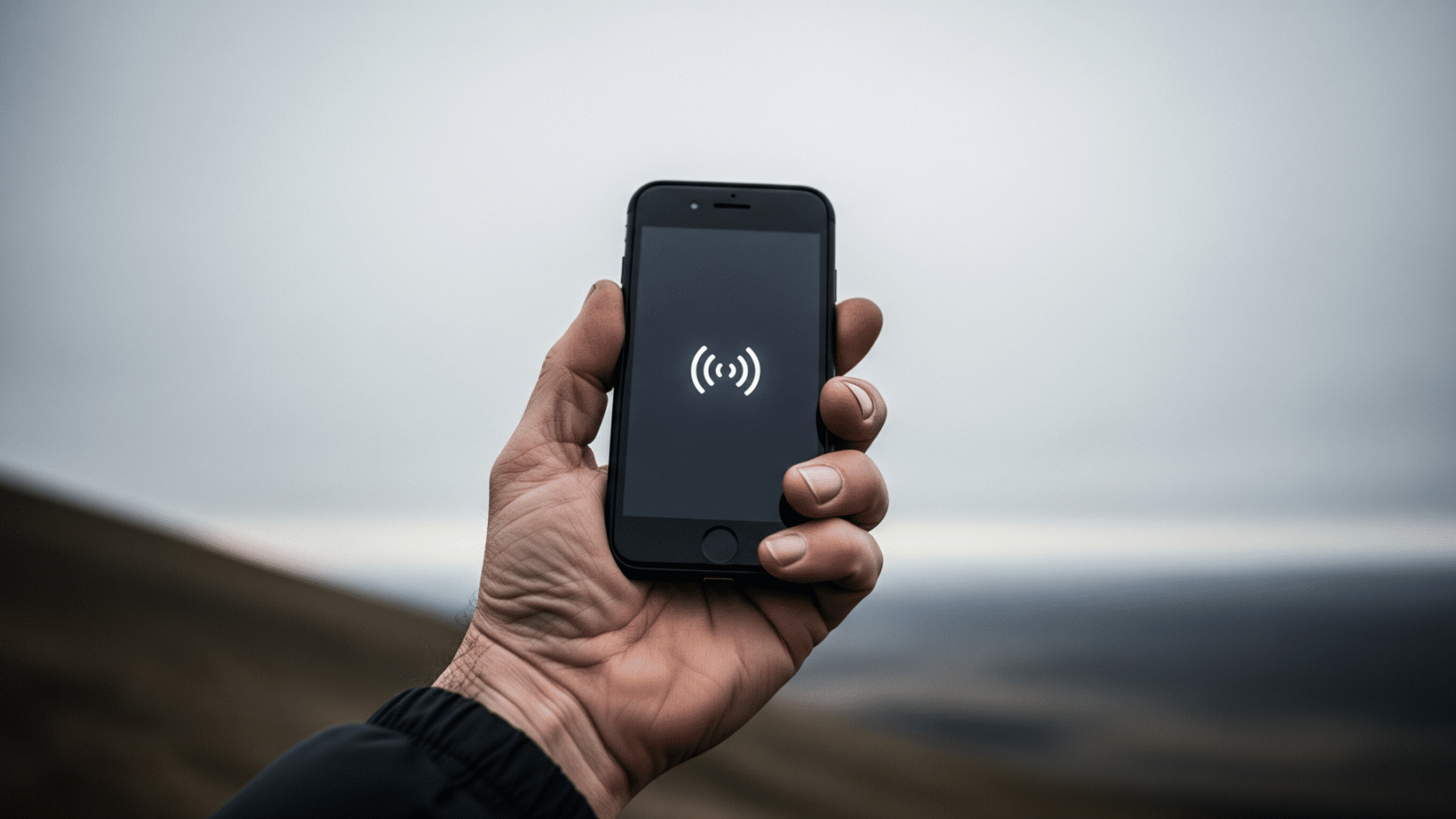
Picture the scenario: you are deep in a canyon with zero cell bars, you fire off an emergency text, and your iPhone routes it straight to space and back. It worked. It was free. You probably assumed it always would be.
That assumption is the thing worth examining.
Tens of millions of Americans now carry an iPhone with built-in satellite capability, and most of them have never once thought about what happens when the free period ends.
A safety feature that arrived with an expiration date nobody highlighted
Apple introduced Emergency SOS via satellite with the iPhone 14 in 2022.
Since then, satellite features have expanded to include more messaging options, location sharing, and even roadside assistance.
On supported iPhones, users can send emergency and regular text messages, update their location through Find My, and request roadside assistance.
It felt like a permanent perk baked into the hardware.
It is free for two years after the activation of an iPhone 14 or later. Two years. That detail was there in the fine print from day one.
Apple introduced satellite communication with the iPhone 14 series in September 2022, which was free for the first two years, meaning users would have needed to start paying around September 2024.
Instead, on November 15, 2023, Apple announced it was extending free access to Emergency SOS via satellite for an additional year for existing iPhone 14 users.
The extensions kept coming, and the clock kept ticking
Apple has now pushed the free window back multiple times, and each extension landed with little fanfare, tucked into product announcements most people never read closely.
When Apple announced in September 2025 that it was extending free satellite service for iPhone 14 and 15 users, it marked the third such extension across the program since the feature launched, the second for iPhone 14 owners, whose original free trial expired in 2024, and the first for iPhone 15 owners, whose two-year window was expiring.
Apple has extended free satellite connectivity for iPhone 14 and iPhone 15 users until at least September 2026, covering Emergency SOS, Messages, Find My, and Roadside Assistance. Users approaching the end of their free period will continue to use Emergency SOS, satellite messages, and related features at no charge through at least that point.
That sounds generous. But each extension is also a signal: the company is building toward something, and free is not the destination.
Satellite communication drains batteries quickly, and there are real constraints users rarely consider until they need the feature most.
What the feature actually does, and where it falls short in the field
The satellite connection is genuinely useful, but it comes with hard physical limits that the marketing never leads with.
Geography is not the only or biggest limitation. Visibility is.
If you do not have a clear view of the sky, your phone may not connect at all, meaning no indoor use.
Dense forests, mountains, urban canyons, and even heavy cloud cover can interfere.
Messages can take up to a minute or longer in difficult conditions to send and receive, though in clear weather the process can take as little as 15 seconds.
Satellite connectivity is not offered on iPhone models purchased in Armenia, Belarus, China mainland, Hong Kong, Macao, Kyrgyzstan, Kazakhstan, and Russia.
And crucially, SMS messaging via satellite availability depends on the carrier, and carrier fees may apply.
None of this is hidden exactly. But none of it is what the ads show either.
The $1.5 billion reason this will almost certainly become a paid product
Here is the reveal that changes the math on everything above.
Apple committed about $1.5 billion to satellite communications company Globalstar to fund the expansion of iPhone services, as the companies disclosed in a securities filing.
The tech giant had already spent hundreds of millions on services that facilitated the 2022 launch of the iPhone emergency satellite texting feature.
The deal includes a $1.1 billion cash investment and a $400 million allocation for a 20% equity stake in the business.
Globalstar, which has been providing emergency connectivity for iPhone models 14, 15, and 16 since 2022, will allocate 85% of its network capacity to Apple as part of the new deal.
Companies do not commit $1.5 billion to infrastructure they plan to give away indefinitely.
The recent investment proves this is not a temporary promotional feature; it is the foundation for a new product category.
You do not take a 20% stake in a satellite company and invest that kind of capital for something you plan to abandon.
Industry analysts have pointed to satellite connectivity becoming a premium differentiator across the whole industry, not a free afterthought. Google, for instance, collaborated with Skylo and Garmin for the Satellite SOS feature on the Pixel 9 series, and chips supporting direct-to-device satellite capability are increasingly standard across flagship lines, including those arriving in Google’s Pixel 11.
Apple could roll satellite services into an Apple One subscription tier or tie it to iCloud+ plans, or the company might offer a standalone subscription, perhaps something like $4.99 or $9.99 per month, for people who want satellite messaging beyond the free period.
What iPhone owners can do right now before anything changes
The feature is still free today, and using it costs nothing at the moment. That makes right now the best time to actually set it up properly.
Apple’s satellite features include Emergency SOS via satellite, Messages via satellite, Find My via satellite, and Roadside Assistance via satellite, with availability varying by country.
When you are off the grid, satellite features are accessible through the Connection Assistant: in Control Center, tap the Cellular button, then tap Satellite and choose Messages via satellite or another satellite feature.
In the Settings app, open Settings, then tap Satellite.
The honest read on all of this: the most likely scenario keeps emergency services free forever while monetizing premium features.
All iPhone 14 and newer variants have satellite communication functionality that is free for two years after activation. Apple could introduce paid tiers for enhanced messaging, location sharing, and data services once that window closes.
The safety net is almost certainly staying. The full feature set you are using for free today is the part that probably will not.
