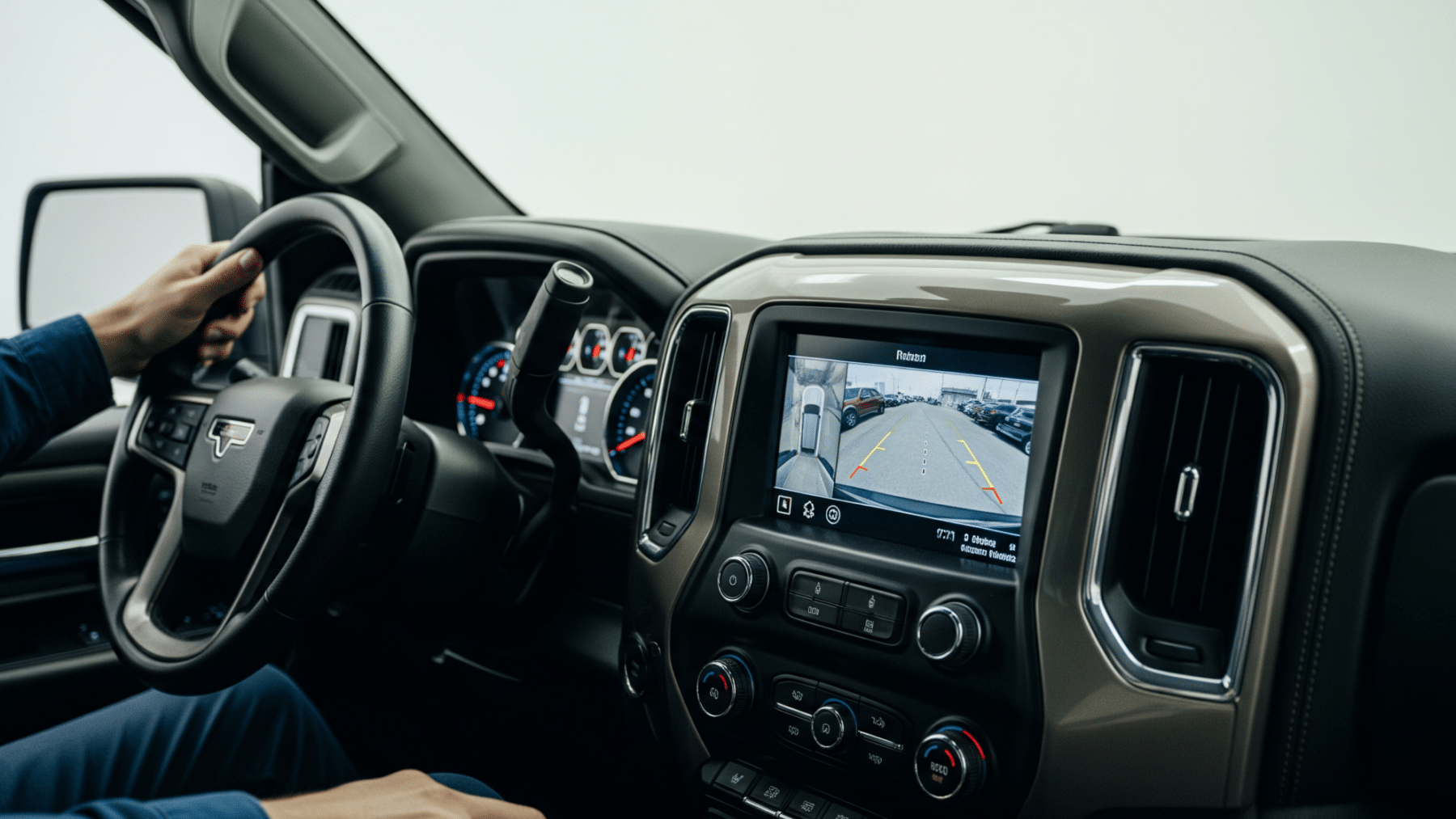
Ford Motor Company is recalling certain 2021, 2023 F-150 and 2023, 2026 F-250 Super Duty vehicles equipped with 8-inch SYNC infotainment screens, 47,587 vehicles in total, after a software error was found to block the rearview camera image when the truck is shifted into reverse.
The recall carries Ford recall number 26C37 and NHTSA campaign number 26V489000. It represents a compliance failure under federal safety law.
What the defect does
Affected vehicles are equipped with Accessory Protocol Interface Module (APIM) software prior to version 2.4.12, which in certain conditions may display the camera view menu over the rearview image. A software error may cause the rearview camera image to be obstructed by the infotainment home screen menu when the vehicle is placed in reverse.
Engineers identified two specific vehicle configurations, model year 2021, 2023 F-150 and model year 2023, 2026 Super Duty equipped with 8-inch landscape displays and the 360-degree view camera system, where the persistent menu overlay obscured one of the required test objects specified in the NHTSA laboratory test procedure.
The condition means these trucks fail to comply with the requirements of Federal Motor Vehicle Safety Standard (FMVSS) number 111, “Rear Visibility.” An obstructed rearview camera image can reduce the driver’s rear visibility, increasing the risk of a crash.
The vehicle’s onboard software architecture, which governs how screen layers are rendered and prioritized when driving modes change, is central to why a menu layer can persist incorrectly during a reverse maneuver.
How the problem was found
During late May and June 2026, Ford’s Critical Concern Review Group (CCRG) and ADAS engineering teams conducted a read-across of all SYNC 4 vehicle lines, considering every build configuration for display size, screen orientation, and available camera views, then evaluated the rearview image against the field-of-view requirements of FMVSS 111.
On July 8, 2026, Ford’s Automotive Safety Office reviewed the technical findings with the NHTSA Office of Vehicle Safety Compliance. On July 21, 2026, Ford’s Field Review Committee approved a field action for the affected vehicle populations.
Ford says it is not aware of any reports of accident or injury related to this condition.
On F-250 trucks, the recalled APIM part was introduced into production on March 16, 2022, and was taken out of production on June 1, 2026. On F-150 trucks, the part entered production on January 30, 2020, and was taken out of production on December 22, 2023.
The fix and what owners should do
The remedy is an APIM software update, which will be provided by a dealer or through an over-the-air (OTA) update, free of charge. Ford anticipates that the software update will be available sometime in September 2026.
For owners whose trucks are not set up for OTA delivery, a dealer visit will be required once the final software package is certified.
Interim letters notifying owners of the safety risk are expected to be mailed August 17, 2026, with additional letters to follow once the remedy is available, anticipated in September 2026. Vehicle identification numbers involved in the recall became searchable on NHTSA.gov on July 31, 2026.
Broader context
The F-150 is America’s best-selling vehicle, and a software-based recall that can be resolved over the air limits the logistical burden on dealers. Still, trucks without wireless update capability will require a shop appointment.
Owners can confirm whether their specific vehicle is affected by entering their VIN at NHTSA.gov. Those with further questions can contact Ford customer service at 866-436-7332 or call the NHTSA vehicle safety hotline at 888-327-4236.
The recall adds to an ongoing pattern of infotainment-related safety actions across the industry as automakers push more vehicle functions through centralized screen-based interfaces. The growing reliance on software-defined systems in trucks means that a single code version, deployed across a wide production window, can create compliance failures in tens of thousands of vehicles simultaneously, even when no driver has filed a complaint.
