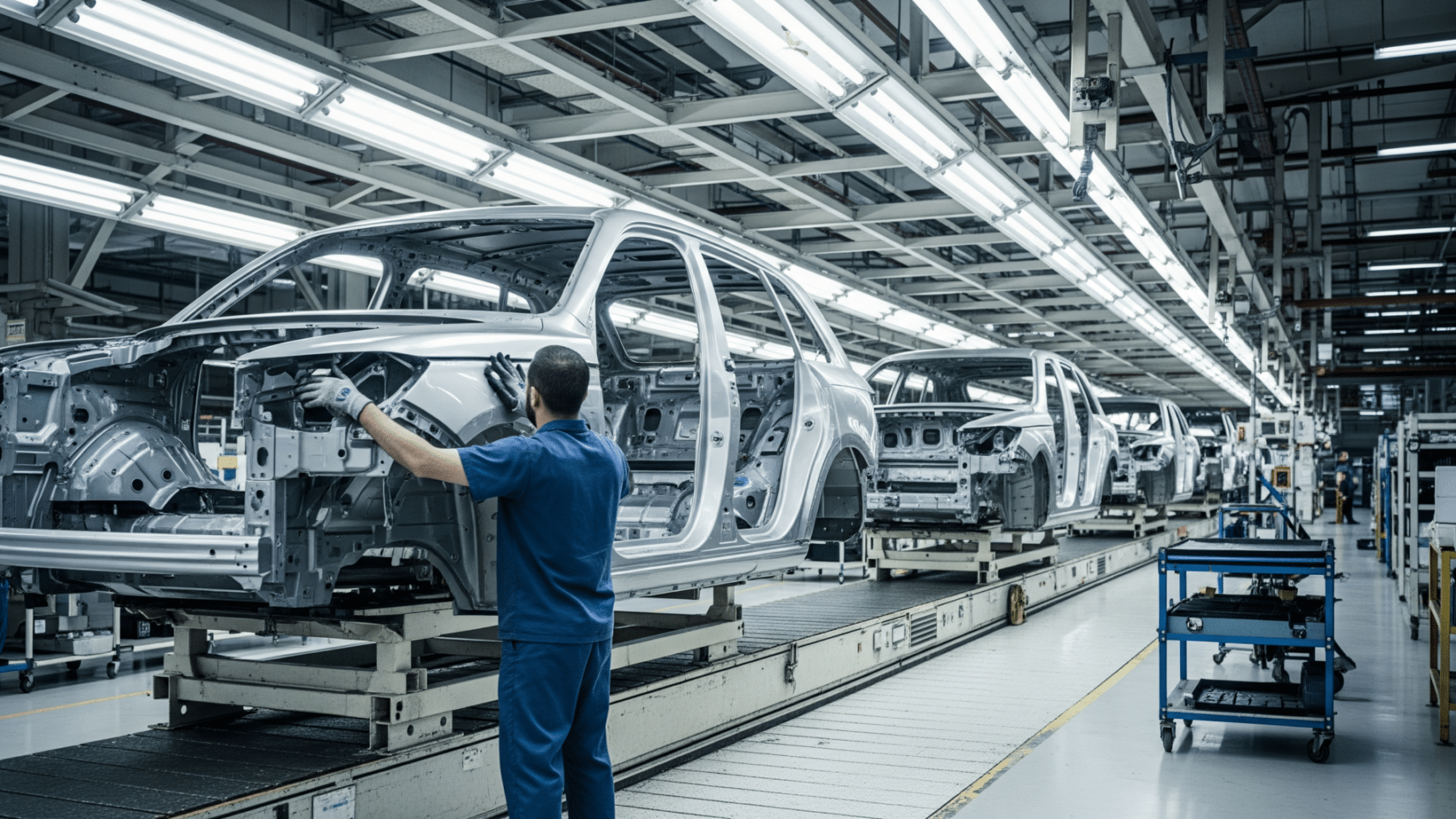
Ford Motor plans to move Lincoln model production from China to the United States beginning in 2030, CEO Jim Farley announced Wednesday, calling the shift difficult but necessary to strengthen the domestic manufacturing base. The decision centers on the Lincoln Nautilus, the primary Lincoln vehicle Ford currently imports from China, which faces a 52.5% US tariff.
Tariffs force a manufacturing rethink
The US tariff on the Lincoln Nautilus, the primary vehicle Ford imports from China, stands at 52.5%, Ford confirmed. That figure made continued China-based production for American buyers commercially unsustainable.
“We made this decision as soon as the policy of the administration was set,” Farley said. US Commerce Secretary Howard Lutnick, who also spoke to Reuters in connection with the announcement, commented that Ford had an edge through domestic manufacturing.
The Nautilus is the headline model because it is currently exported from Changan Ford’s plant in Hangzhou to US buyers. The previous generation was produced at Ford’s Oakville Assembly Plant in Ontario, Canada. The decision directly impacts the Lincoln Nautilus SUV, which has been built in China since 2024 following a production move to a joint venture with China Changan Automobile Group. Wednesday’s announcement effectively reverses that commitment.
The broader tariff burden on Ford has already been severe. Ford’s estimate for tariff costs for the full year rose $500 million to $3 billion gross adverse adjusted EBIT impact, up from $2.5 billion predicted last spring. Ford said it now expects a net tariff-related headwind of about $2 billion for full-year 2025, which reflects the $3 billion gross adverse adjusted EBIT impact, partially offset by $1 billion of mitigation efforts.
Those figures gave Dearborn little room to absorb an ongoing 52.5% levy on one of its luxury nameplates. The challenges facing the industry are explored in GCN’s earlier coverage of billions in tariff costs hitting Detroit’s Big Three in 2026.
Connected vehicle rules add pressure
Tariffs were not the only regulatory pressure behind the move. Imports of China-built vehicles for the US market are under heavier scrutiny, with both steep tariffs and federal restrictions on Chinese-connected vehicle software and hardware making it harder to pencil out a business case for shipping a premium SUV across the Pacific.
Ford had sought government authorization to continue selling the Nautilus under the federal Connected Vehicle Rule, which restricts certain Chinese technology and hardware in US-sold vehicles, but after discussions with the Commerce Department determined the vehicle no longer required one, the company said.
Last year, Ford sold approximately 34,000 Nautilus vehicles in the US. The combination of a punishing import tariff and pending connectivity restrictions left the automaker with few viable alternatives to domestic manufacturing for the model’s next cycle.
Jobs and plant locations still undisclosed
Ford declined to name which US facilities would take on the additional production, though it said the move is anticipated to support thousands of jobs, both direct and indirect.
Ford currently assembles the Lincoln Navigator at Kentucky Truck Plant in Louisville and the Lincoln Aviator at Chicago Assembly Plant, and both models will continue to be exported to Canada, Mexico, and the Middle East.
Ford has not specifically confirmed that the Nautilus itself will move to US production, or listed any other Lincoln nameplates that will definitely shift. Ford declined to say which plants might be affected by the 2030 plan.
Ford announced it will expand Lincoln production in the US beginning in 2030 and phase out imports of Lincoln vehicles from China for the American market. The announcement puts Ford ahead of several rivals still manufacturing vehicles in China for American consumers, a distinction Farley leaned into publicly.
Industry context and supply chain shift
The decision is one of the more concrete manufacturing commitments made by a Detroit automaker in response to the current trade environment. Farley indicated the timing was directly tied to the Trump administration’s trade policy settling into a predictable shape.
General Motors is already taking a similar path by moving production of the Buick Envision SUV from China to its Fairfax Assembly plant in Kansas City, Kan., beginning in 2028, underscoring that this is a broader industry shift, not a one-off move.
Ford’s Lincoln reshoring follows a similar manufacturing pivot announced earlier this year by Daimler Truck North America, which committed to a new US plant by the end of 2026. For Ford, the clock now runs to 2030, when the first US-assembled Lincolns for domestic buyers are scheduled to roll off a production line whose location has yet to be named.
