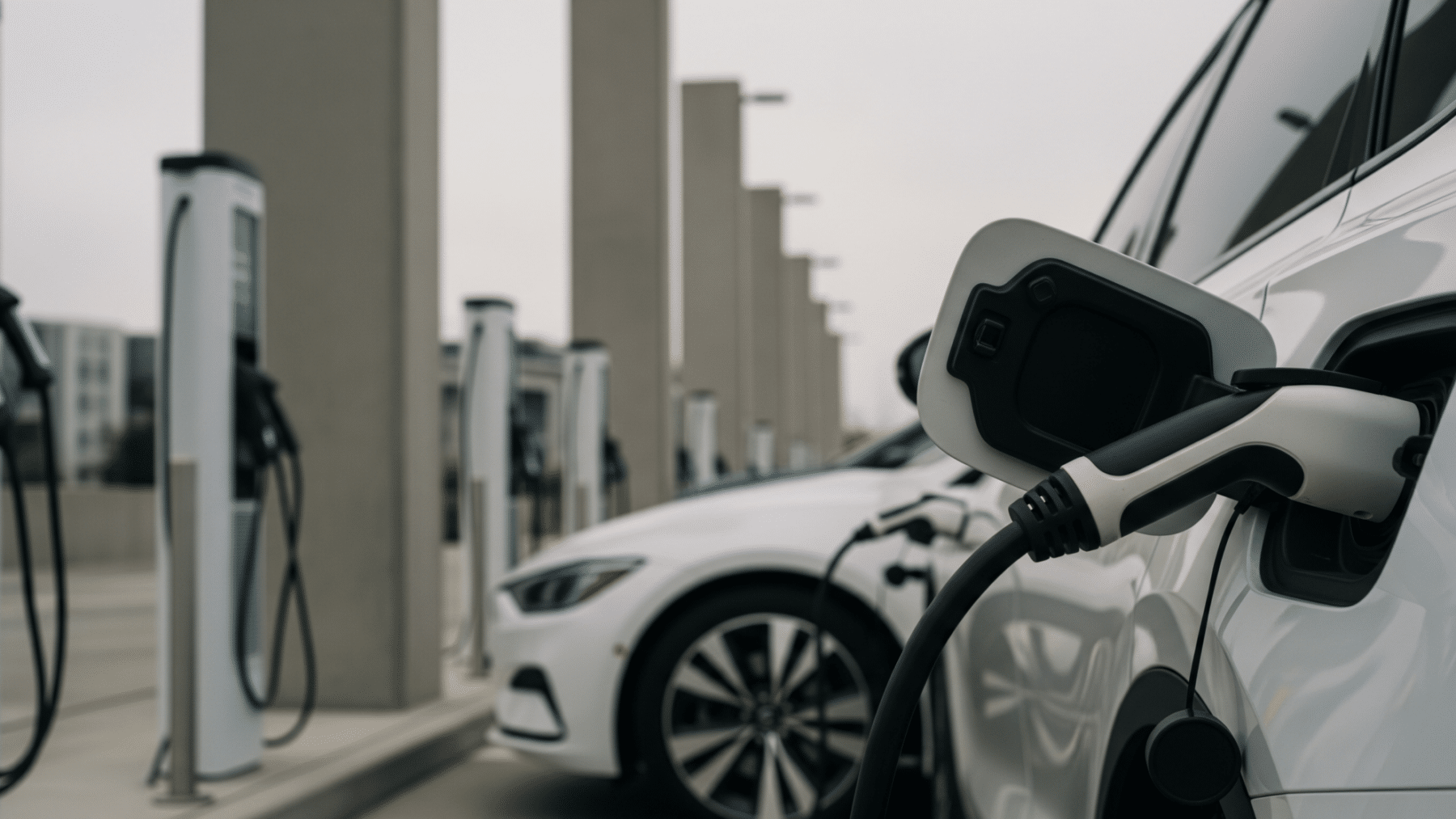
Every evening, millions of American electric vehicles plug in within the same two-hour window.
That overlap creates a demand spike that lands precisely when the rest of the grid is still strained from the afternoon peak, and utilities are running out of cheap ways to absorb it.
A major shift is now underway in how the industry handles that problem, and it does not involve building new power plants.
Why the evening charging rush is becoming the grid’s biggest new headache
When large numbers of EVs charge simultaneously, particularly during evening peak hours between 4 PM and 10 PM, they can severely strain distribution transformers and grid infrastructure.
The pressure is compounding fast.
According to NERC’s 2025 Summer Reliability Assessment, total peak electricity demand for the areas NERC assesses had risen by over 10 gigawatts since the prior summer, more than double the previous year-over-year increase.
EVs have been claiming a growing share of new vehicle sales, meaning that evening demand wall keeps growing taller every quarter.
The old fix was time-of-use rates, but utilities want direct control now
For years, utilities leaned on a passive strategy: charge customers less if they plugged in after midnight and hope they listened.
Many utilities already offer passive managed charging programs that use time-of-use rates to encourage customers to charge during off-peak hours, but the utilities still rely on customers to manage their own charging schedules.
That model is losing ground to something far more powerful for the grid operator.
The industry is now moving from passive to active managed charging.
In 2025, legislative or regulatory efforts in 32 states and Puerto Rico addressed improving residential access to managed charging, according to the North Carolina Clean Energy Technology Center’s annual state electric vehicle policy review.
One utility proved active programs can move serious megawatts
Austin Energy showed what active control actually delivers at scale.
The utility continues to offer rebates, add providers, and manage charging for certain EVs as part of its Power Partner EV Program, enabling electric vehicle owners to earn bill credits by supporting grid stability during peak times.
During designated Power Partner events, Austin Energy will temporarily pause or reduce charging speed on a participant’s Level 2 EV charger or qualifying vehicle.
In 2025, Austin Energy achieved an estimated average peak load drop of 57 megawatts during high-demand periods, enough to power more than 14,000 homes.
Commercial customer participation surged by 30 percent, with improved event performance averaging 6 percent across approximately 900 locations.
That is a real, dispatchable resource carved out of cars that would otherwise just be sitting in driveways.
Now the country’s largest municipal utility just made the biggest bet yet on this model
On October 30, 2025, the Los Angeles Board of Water and Power Commissioners approved a $195 million investment to expand LADWP’s Demand Response portfolio and create new programs that aim to increase the department’s current performance-based capacity by more than 400 percent, from 80 MW to 340 MW.
The investment runs through 2031 and is the clearest signal yet that utilities are treating EV loads not as a cost to manage, but as a flexible grid asset to dispatch.
EV charging sits at the center of the plan.
A new commercial EV managed charging program will add 5 MW of capacity and help commercial EV operators charge their vehicles more efficiently through advanced technology.
A parallel residential program targets additional capacity from homeowners charging in off-peak windows.
LADWP is also investing in a centralized Demand Response Management System that will give operators better tools to coordinate resources during peak periods, improving reliability, responsiveness, and overall grid efficiency.
The winners here are utilities that move quickly and the companies that aggregate EV fleets as grid resources.
ChargeScape, which operates as a shared, industry-owned automotive infrastructure platform backed by BMW, Ford, Honda, and Nissan and utilized by Tesla, Stellantis, and others, manages EV charging programs across dozens of utility partners, reaching millions of households nationwide. The platform has noted that utilities across the United States are increasingly tapping into the flexible capacity offered by EVs on American roads as data center demand places growing strain on their systems.
The losers are passive-program vendors and any utility that delays, because the grid load projections show the window for cheap solutions is narrowing fast.
The broader public fast-charging buildout is adding load every month, tightening the timeline.
Active managed charging is becoming a new infrastructure class, not just a rate program
Beyond avoiding demand peaks, EVs can be integrated into the grid as bidirectional assets that not only store power for driving but also provide backup power to homes and export energy to the distribution system.
That capability turns every enrolled car into a miniature power plant.
That future is still maturing, but the money is moving now.
LADWP’s commissioners approved the $195 million to deliver 340 MW of grid load flexibility , a figure that, if replicated across the 32 states actively legislating managed charging, would represent one of the largest distributed grid resources in American history.
The grid does not need every EV to charge at midnight. It just needs the right software, the right incentive, and a utility willing to spend the money to wire it all together, and the biggest municipal power company in the country just showed it is willing to do exactly that.
