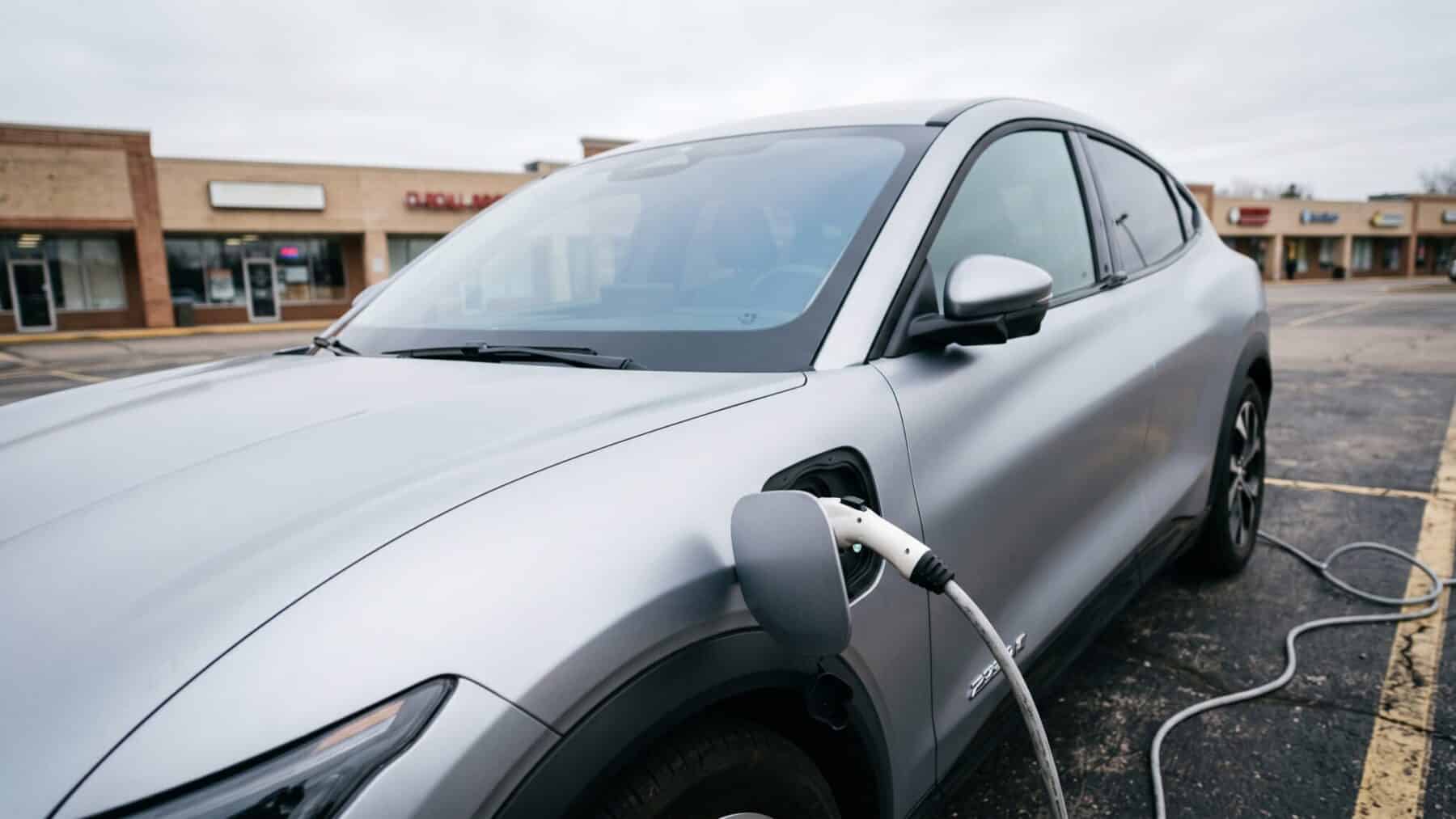
Park one of the newest mass-market electric cars and open the window sticker.
What was once a figure reserved for six-figure luxury sedans has become the floor of the mainstream market. The mechanism behind that cost collapse is worth understanding before you buy.
How the cost of range fell so fast, and what actually changed inside the pack
The physics of battery range have not changed. Energy density is everything: the more kilowatt-hours a pack can store per kilogram of weight, the farther a car travels on a single charge. For years, hitting 300 miles demanded enormous, heavy packs that drove vehicle prices into the stratosphere.
What changed was manufacturing scale. As factories grew and chemistry matured, the cost of a kilowatt-hour of battery capacity fell sharply, letting engineers fit larger, denser packs into vehicles without adding thousands of dollars to the sticker.
Cell-to-pack architecture, installing cells directly into the pack casing and using it as part of the vehicle floor, cut both weight and component count, pushing range figures higher still. The result is a structural shift in the market, not a marginal improvement. Range is now a commodity, and the race has moved on to who can sell the most of it for the least money.
What the numbers look like across the 2026 model lineup right now
The range number now sits above 300 miles. The price now sits below $30,000. A decade ago, those two facts could not occupy the same sentence.
At the affordable end, the overhauled 2026 Nissan Leaf recently hit the market at $29,990 for the S+ trim, rated by the EPA at 303 miles of combined range. That is a car a household earning the US median income can reach without a federal subsidy.
At the upper end, the 2026 Chevrolet Equinox EV offers 319 miles starting at $34,995, and the Lucid Gravity Grand Touring is EPA-rated at 450 miles. That broader spread, from a sub-$30,000 crossover to a 450-mile luxury SUV, signals that 300 miles is now the entry ticket, not the destination.
The hard evidence behind the price collapse
The clearest proof of the shift is what 300 miles of range used to cost. Accounting for inflation, the entry price for a 300-mile EV has been roughly cut in half since a pioneering long-range sedan arrived at nearly $60,000 in today’s dollars about a decade ago. That is not a gradual drift; it is a halving of the real price of long-range electric travel inside a single decade.
Recurrent, which tracks real-world range data across the US fleet, reports that model-year improvements are genuine rather than rating inflation: real-world miles have tracked upward alongside EPA figures.
Sedans lead the efficiency charts because aerodynamic shape and lower ride height reduce drag. One luxury maker’s flagship sedan achieves an extraordinary 512-mile EPA-estimated rating largely through a 0.197 drag coefficient, among the lowest ever measured for a production car. That aerodynamic lesson is now reaching mass-market models, and the real-world data is bearing it out.
Where the 300-mile floor creates new pressure, and where it does not hold
The democratization of long range does not benefit every segment equally. Electric trucks remain the most complicated corner of this market. One full-size electric pickup’s top EPA rating carries a significant asterisk: that figure is achieved with fleet-optimized settings and rear-wheel drive only.
Loaded to capacity and towing 10,000 pounds, real range drops to roughly 150 to 175 miles. No current electric truck maintains its EPA figure under heavy tow conditions.
That gap matters for buyers whose daily reality includes a trailer. But for the vast majority of US drivers, whose commutes sit well under 100 miles a day, the new 300-mile baseline removes range anxiety as a rational objection. The pressure now falls on price, not miles. The same dynamic is reshaping charging: as fast-charger competition has intensified, the old argument that only one network could reliably support a long trip has lost its force.
Overall EV efficiency has also declined since 2018 as the market shifts toward larger vehicles. A 325-mile rating in a boxy crossover costs more electricity per mile than the same number in a low-drag sedan, and that difference shows up on every utility bill.
What this means for shoppers and where the market heads next
For anyone shopping today, most 2026 electric cars are rated between roughly 250 and 375 miles. Real-world range runs 10 to 25 percent lower in cold weather or at sustained highway speeds.
So a 300-mile EPA rating delivers around 225 to 270 real-world miles in winter, which still covers the overwhelming majority of American trips without a stop. The next frontier is the 400-mile mark at mainstream prices, and the trajectory of the last decade suggests it is coming.
Cell-to-pack design, higher-voltage 800-volt architectures and improved thermal management are each cutting the cost of extra miles. What is already settled is the reversal of the old hierarchy. Range used to buy prestige. Now it buys entry. The winner in this shift is the buyer who three years ago could not afford an electric car with genuine road-trip capability, and the loser is any model still priced as though 300 miles is rare.
