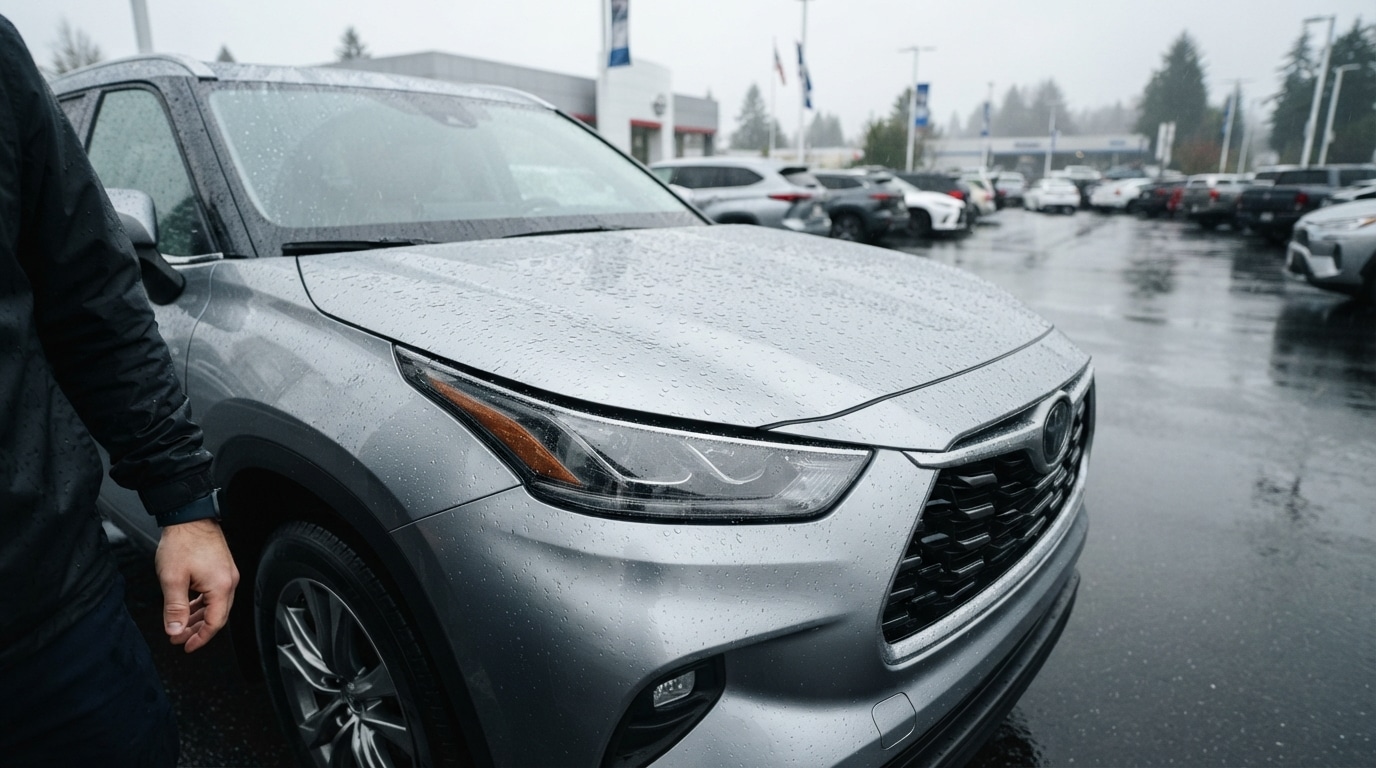
Walk any US dealership lot this summer and the hybrid badge is everywhere.
Gas-electric models are crowding out the sticker sheets, the end caps, the window displays. Buyers are circling them in numbers that didn’t exist two years ago. One number explains it all, and it belongs to the world’s biggest hybrid seller. So what is actually driving the surge?
How the gas-electric powertrain keeps both engines doing exactly what they do best
A hybrid car carries two entirely separate drivetrains that hand power back and forth dozens of times every mile. At low speeds and light loads, the electric motor runs alone, drawing from a compact battery pack under the floor or rear seat. The gasoline engine stays off entirely, burning nothing.
The moment the driver asks for more, a computer fires the gasoline engine in milliseconds and both sources push the wheels together. Because the electric motor delivers full torque instantly, the gas engine never has to work from a standing start, which is exactly the condition it handles least efficiently. The engine spends almost all of its time in the narrow rpm band where it burns fuel most cleanly.
Every time the driver lifts off or touches the brakes, the electric motor flips into reverse and becomes a generator. Regenerative braking converts kinetic energy back into stored electricity instead of bleeding it off as heat. The battery tops itself up continuously, without a plug.
What record hybrid demand looks like on a US forecourt right now
In the first half of this year, hybrid car sales rose nearly 20 percent year over year to a record market share of more than 15 percent of new US light-duty vehicles, almost three times the share of pure battery electrics. That is not a trend line still forming. It is a structural shift already visible at the register.
The world’s dominant hybrid brand sold approximately 585,000 vehicles across its two US retail nameplates in the first half of the year. In the first quarter, electrified vehicles made up more than half of the brand’s total US volume.
Three Asian automakers together hold the majority of the US hybrid market, according to automotive analysis firm Baum & Associates. “The only growth we’re seeing is in hybrid market share,” said Elizabeth Krear, CEO of the Center for Automotive Research. Most of that volume is still waiting to be claimed by rivals scrambling to catch up.
The number, where it came from, and why it has never been hit before
Toyota confirmed in its quarterly financial results, covering the period ending June 30 of this year, that it plans to sell more than 5 million hybrid electric vehicles for the first time in a single calendar year. The figure appeared in the company’s own financial release, published August 4, not in a marketing announcement. Chief Accounting Officer Takanori Azuma confirmed the expectation directly.
The company helped pioneer the segment commercially in the late 1990s, and the pace of consumer retreat from pure EVs pulled this milestone forward faster than most analysts expected.
Hybrid electric vehicles reached a record 16 percent share of new US light-duty vehicle sales in the second quarter of this year. Battery electric vehicle sales meanwhile declined to about 6 percent of new sales, down from 7 percent a year earlier, following the expiration of federal tax credits in September 2025. The direction of travel is unambiguous.
Where the 5 million figure runs into real limits
Hitting 5 million hybrids is a global total, and the US contribution still depends on tight inventory. Strong demand and limited supply gives manufacturers less reason to rely on incentives, but it is also capping how fast the record can grow.
Hybrid versions of cars have historically cost more up front than their gas equivalents, owing to more complex powertrains. That premium still exists. For buyers already stretched by used-car prices up 38 percent since 2019, even a modest sticker gap can push a decision back toward a base gas trim.
“Consumers want the vehicles,” said analyst Alan Baum of Baum & Associates. “The problem is there are relatively few automakers that offer those vehicles.” That supply gap is the single biggest constraint on how far this record can run.
What 5 million opens up for the model year ahead
Automakers are expanding US hybrid lineups fast. The revived Jeep Cherokee launched exclusively as a hybrid for the 2026 model year, and that same powertrain approach is expected to spread to further Stellantis nameplates within a few years. Several European and American brands have confirmed new hybrid models for the coming model year.
The race to fill the supply gap is now a corporate priority across every price segment. Drivers comparing hybrid SUVs should also note that a federal safety benchmark expanded its driver-assist tests to eight pass-fail criteria, and only one electric SUV has cleared every single one. The bar for what counts as a safe new vehicle keeps moving upward.
Toyota’s multi-pathway strategy, keeping hybrids, plug-in hybrids and battery electrics all on the table simultaneously, now has its clearest proof point yet. The brands that dismissed hybrids as a transitional footnote are now urgently building the drivetrains they skipped.
