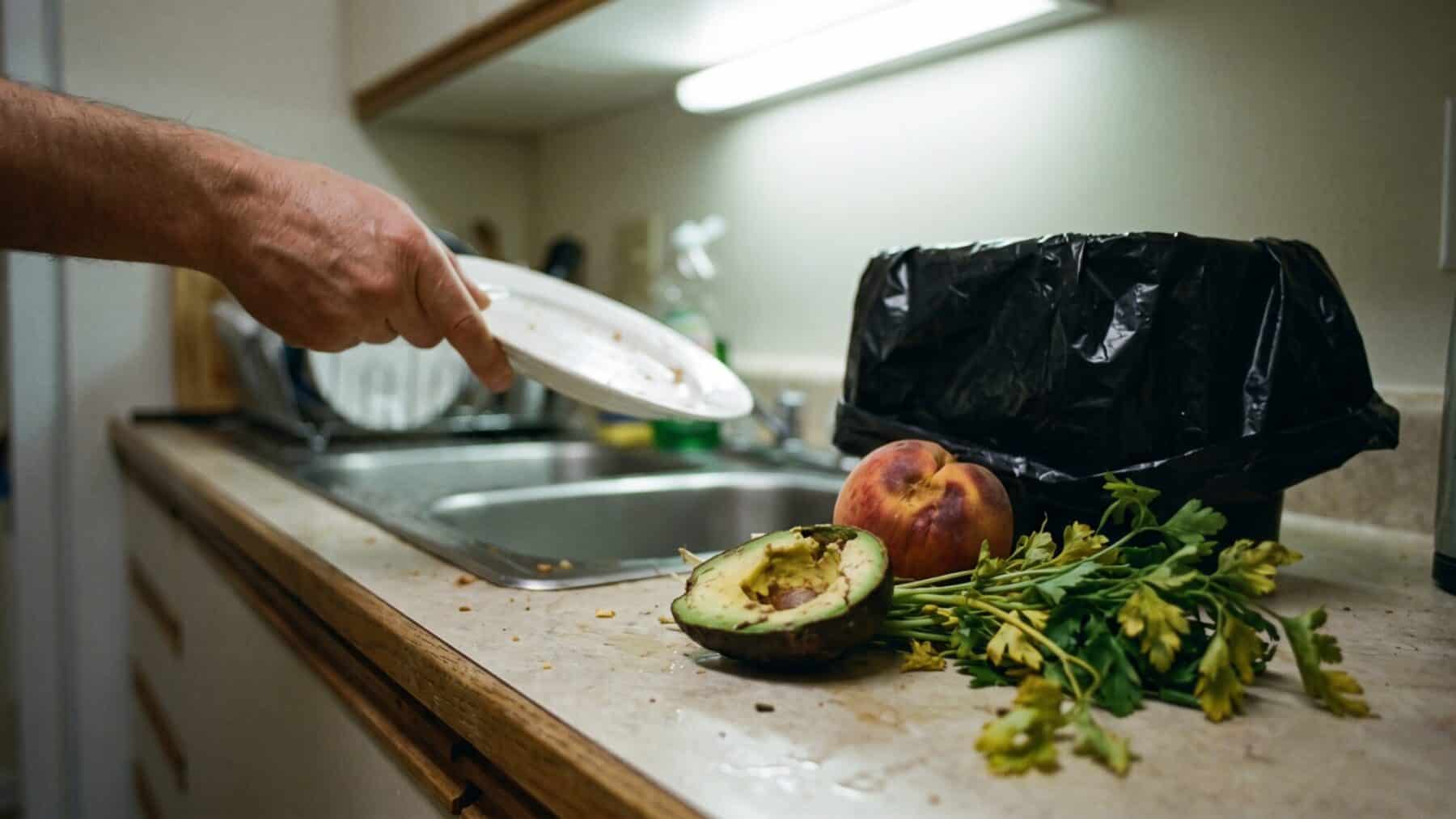
A bag of spinach goes soft before Thursday.
A lemon rolls to the back of the crisper and is found three weeks later. A rotisserie chicken gets portioned, covered and never touched again. None of it feels expensive in the moment. But a federal agency just added it all up, and the number landed somewhere most families never expected.
What does that number actually mean for a household budget, and why did the old figure run so far behind reality?
How $14 a week quietly becomes a car payment by December
The mechanism is almost invisible because it happens in small increments. A household does not throw away $728 at once; it throws away $14 a week in food that was bought, stored, forgotten and eventually scraped into the bin. No single act feels significant.
Over 52 weeks those losses compound into a figure that rivals a month of rent in many parts of the country. The math follows the same pattern researchers have documented with subscription spending: people anchor to vivid one-time purchases and systematically undercount small recurring leaks. Americans already underestimate monthly subscription spending by more than $130, and the psychology of invisible drains applies just as cleanly to the refrigerator.
Fresh produce, dairy and bread top every wasted category because they carry the shortest shelf lives and the most optimistic purchase intentions. People buy kale because they plan to eat kale. Then the week accelerates.
What the dollar signs look like when attached to a real family’s trash
Picture a standard family of four. The total annual cost of consumer food waste for that household runs to $2,913, or $56 every single week. That is not a rounding error or a worst-case projection.
Put alongside other household line items, the number lands with force. At roughly $3,000 a year, food waste exceeds what many families spend on streaming services, gym memberships and clothing combined. Unlike those expenses, nothing is received in return. The food was purchased, handled, refrigerated and discarded without ever performing its one function.
Even a partial fix carries real weight. Cutting the figure by a third would save a family of four roughly $1,000 annually with no subscription to cancel and no habit to replace.
Where the official count comes from and why the prior figure was so outdated
The figures come from the EPA’s April 2025 report, which finds that individual consumers lose $728 annually to food waste, covering uneaten food both at home and in food service establishments. The report was prepared specifically to estimate the savings available if waste rates fell, making it the most direct federal accounting of the problem to date.
That figure nearly doubles the previous federal estimate of $1,500 for a family of four, a number cited for over a decade but based on grocery prices from 2010. Food prices have risen more than 50 percent since that original calculation. The prior estimate had been repeated so often that it simply became the accepted background figure, even as real prices moved sharply higher.
The $728 figure represents approximately 11 percent of a consumer’s total food expenditures, covering both grocery spending and money spent eating outside the home. That framing matters, because food waste is not a side note to the household budget. It is a double-digit share of everything spent on eating.
Where losses are hardest to stop and how dining habits deepen them
The home kitchen carries the largest share of consumer-level losses, but the restaurant visit is woven into the same spending pattern. When a household eats out, they often buy groceries with ambitious plans for the week ahead, then shift toward restaurants when evenings get busy. The fresh items bought for those unmade meals are the ones most likely to be wasted.
Dining out is the top activity for 98 percent of American summer travelers, and the behavior is not limited to vacation weeks. More spontaneous dining out means more groceries bought on optimistic schedules that never fully materialize into home-cooked meals.
Residential food discards have edged lower in recent years, but that shift is happening slowly against a very large baseline. Even a reduced rate still totals billions of pounds reaching landfills annually.
What a visible number does to an invisible habit
The federal count creates a concrete benchmark that simply did not exist before at this level of precision. Research on household spending consistently finds that making an invisible cost visible is the first effective step toward reducing it.
In the United States, over one-third of food is never eaten, and more food reaches landfills than any other material in the municipal solid waste stream. The environmental ledger can feel abstract. But $728 per person per year does not.
Smaller households face a structural disadvantage, since most packaging is sized for families of four and bulk deals reward larger purchases. A single-person household spending at the national average still absorbs the full $728 annual loss before a single restaurant bill is counted.
The opportunity is just as real for someone cooking for one as it is for a full household trying to stretch a tighter grocery budget through the rest of the year.
