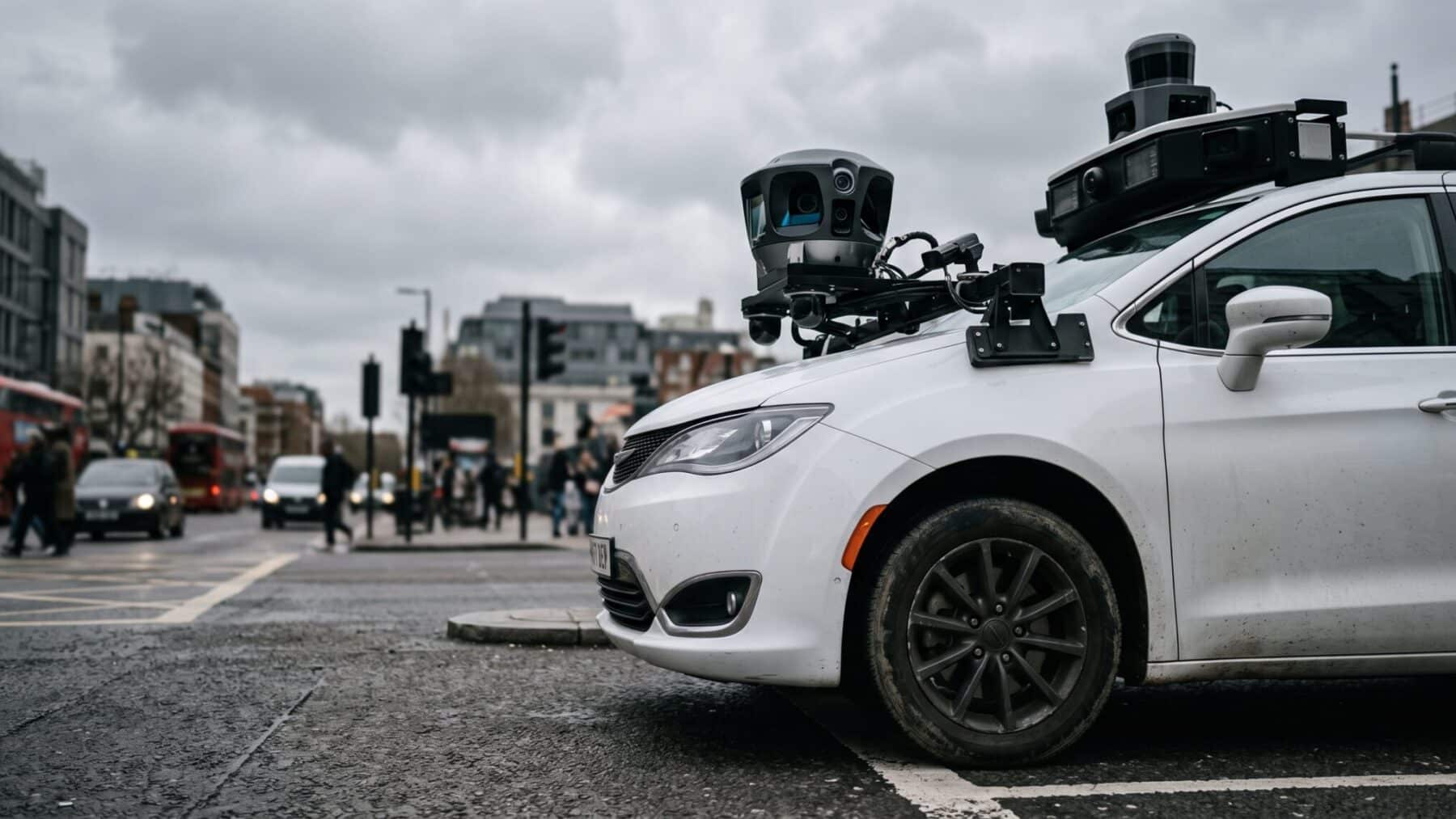
Waymo’s driverless cars are involved in fewer crashes than human drivers, a new study from the Insurance Institute for Highway Safety published July 23 shows. Per vehicle mile traveled, Waymo’s driverless vehicles deployed in San Francisco, Phoenix, Los Angeles and Austin were involved in 68 percent fewer crashes than human drivers.
The study is the most comprehensive comparison of autonomous and human driving safety to date, but researchers say the federal system used to track autonomous vehicle safety needs significant reform before it can reliably monitor a broader rollout.
What the numbers show
Waymo vehicles were involved in 85 percent fewer single-vehicle crashes and 81 percent fewer injury crashes per vehicle mile traveled than human drivers.
City-by-city results showed crash rates 76 percent lower in Phoenix, 71 percent lower in Los Angeles and 35 percent lower in San Francisco. Austin was an exception at 4 percent higher, attributed to small sample sizes.
Waymo vehicles traveled about 50 million miles in driverless operation over the study period, compared with about 222 billion miles by human drivers over the same period and in the same locations.
IIHS President David Harkey said the results show that “on a limited scale, these driverless cars are safer than human drivers, who can be impaired or drowsy or suffer lapses in attention.”
Data quality problems cloud the picture
Federal reporting rules under NHTSA’s Standing General Order required, until a 2025 amendment, self-driving vehicle companies to log minor incidents as crashes, for example, a vehicle scraping its undercarriage as it turned into a parking lot would count as a crash.
Researchers also found redundant reports, and ones where a car might not have been operating in autonomous mode. After removing these, researchers narrowed the data to incidents that a typical human driver would likely report to police, finding that Waymo resulted in 68 percent fewer crashes severe enough that the average person would report them to the police, over a sample of 50 million miles driven autonomously during the study period.
Waymo is the only major robotaxi operator that voluntarily releases driverless mileage data, allowing IIHS to estimate its safety performance. Other operators do not, making an equivalent comparison for any other company impossible.
Researchers say the current US reporting system needs major improvements before it can accurately monitor self-driving vehicles on a larger scale.
The IIHS study, titled Rise of the Machines: Crash Experiences of Highly Automated Vehicles and Human Drivers, covered crashes from 2021 through 2024, a period that predates Waymo’s most recent geographic expansion.
The findings arrive as federal regulators are separately updating their own guidance frameworks. On July 30, on the last day of the SAE International Automated Transportation Symposium, NHTSA released several rulemakings and announcements focused on automated driving systems.
NHTSA Administrator Jonathan Morrison indicated the agency’s approach “is one of balance, combining policy choices that enable innovation with an unapologetic exercise of our oversight and enforcement authorities.”
Context: a broader regulatory push
The IIHS results land as Washington moves to sharpen its autonomous vehicle framework on multiple fronts. A July 8 letter from NHTSA Administrator Jonathan Morrison to driverless automated driving system developers warned that NHTSA had “identified a clear pattern of driverless AVs interfering with law enforcement and other first responders,” with the agency documenting multiple instances in which AVs drove directly into active emergency scenes, blocked the paths of ambulances and firefighters, or failed to recognize and respond to basic safety conditions like flashing lights, flares, smoke, fire, and traffic cones.
Administrator Morrison’s letter calls the inability to detect and respond to emergency scenes “a functional insufficiency” rather than a rare edge case, though the letter names no specific company. It cites no federal motor vehicle safety standard, and what NHTSA commits to doing is scheduling meetings with driverless developers by month’s end to hear their solutions.
Safety advocates note that even a 68 percent crash-rate reduction, if it holds up at scale, would represent tens of thousands of prevented crashes annually given the volume of US driving.
The Governors Highway Safety Association called on state highway safety offices to help communities understand the technology and ensure that first responders are prepared for interactions with autonomous vehicles. GHSA issued a statement responding to the report.
What comes next
The IIHS noted that only Waymo publishes the mileage denominator used for per-mile calculations, supplied voluntarily, so no other operator can be measured the same way.
Even with the mileage data that Waymo provides, a direct comparison with the crash rates of human drivers is impossible without time-consuming operations to account for the differences between the reports required by the Standing General Order and what humans report. Researchers are calling on NHTSA to redesign the Standing General Order reporting requirements so that crash records submitted by autonomous vehicle companies can be compared directly with human-driver data without years of manual data cleaning.
The findings add a layer of independent safety evidence to a technology that remains under intense scrutiny. Earlier this year, driver-monitoring failures that triggered a recall of nearly 80,000 SUVs illustrated how even Level 2 driver-assist systems carry real-world safety stakes, while policymakers wrestling with fully driverless deployment face an even higher bar for public confidence.
The full IIHS study is available on the institute’s website.
