More than half of American adults have started cooking at home more often, nearly half are combining errands into fewer trips, and the share who report feeling financially independent has reached 70 percent, according to a new quarterly study that researchers say captures a measurable shift in how the country relates to daily spending.
What the data show
The State of Personal Finance in America is a quarterly research study conducted by Ramsey Solutions. The Q2 edition surveyed a nationally representative sample of 1,004 U.S. adults fielded June 10, 16, 2026, using a third-party research panel, with a margin of error of ±3.08 percent.
The study tracked 26 specific behaviors across four categories: food, shopping, budgeting and resourcefulness. Respondents indicated whether they were doing each behavior more or less than they were three months ago.
Cooking meals at home is the most widespread behavior change in the study, with 55 percent of Americans doing it more often than three months ago. Almost half, 48 percent, are combining errands into fewer trips. Researchers link that pattern to persistent pressure at the gas pump and a broader preference for deliberate, pre-planned outings over spontaneous ones.
The shift is happening across income levels and generations, driven by necessity for some and intentionality for others. Lower-income households are embracing Brown Bag Economy habits out of necessity, while higher-income households are adopting intentional spending by choice.
The “Brown Bag Economy” label
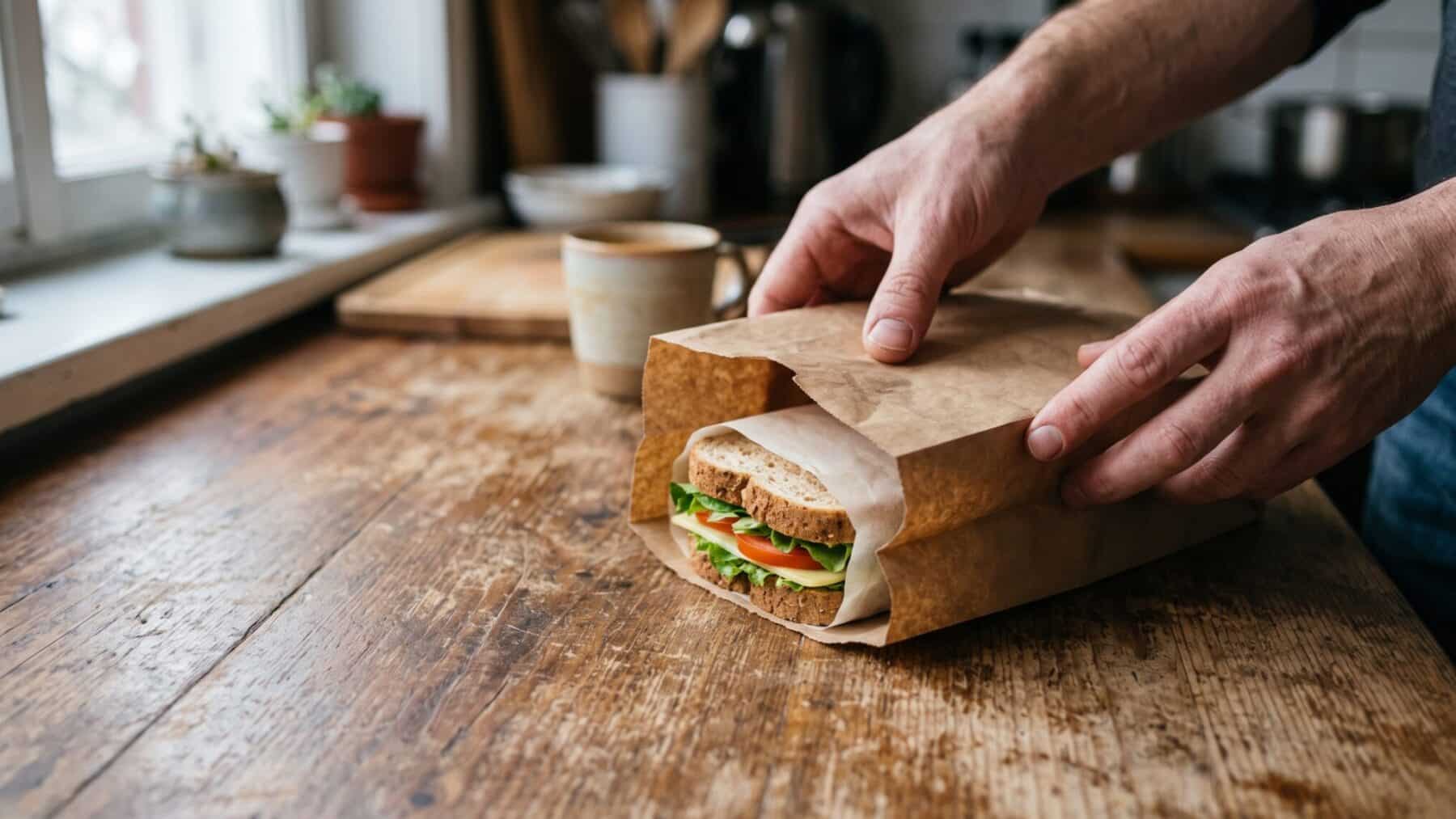
Ramsey Solutions coined the term “Brown Bag Economy” to capture a cultural moment: rather than overhauling their finances all at once, Americans are reclaiming control through compounding daily choices. The phrase is a reference to choices such as packing lunches in a brown bag instead of eating out, substitutions that individually seem minor but accumulate into meaningful budget relief over weeks and months.
The study also found that 70 percent of Americans feel financially independent. That figure coexists with persistent concern: a separate NerdWallet survey conducted online by The Harris Poll found that more than four in five Americans, 83 percent, say rising prices and the cost of living has contributed to them tracking their spending more closely in 2026.
The gap between feeling financially independent and closely monitoring every purchase reflects a nuanced picture of consumer psychology. Households appear to be building a sense of agency through small, controllable decisions even while acknowledging that broader cost pressures have not gone away.
That pattern mirrors what researchers studying subscription spending have repeatedly found: the gap between perceived and actual outlays narrows only when people begin itemizing at a granular level.
How behavior is shifting across categories
The Q2 study tracked 26 everyday money behaviors across four categories: food, shopping, budgeting and resourcefulness, and found sweeping changes compared to just three months earlier. Beyond the kitchen and the car, the study captures movements in shopping and resourcefulness, categories that include buying secondhand, skipping impulse purchases and doing minor home repairs without outside help.
Ramsey Solutions describes the Brown Bag Economy as a moment when Americans are reclaiming control through compounding daily choices rather than through large, one-time financial decisions such as refinancing or changing jobs. The framing resonates partly because it requires no access to credit or capital, a meaningful constraint for many households.
The behavioral convergence has implications for sectors that depend on discretionary foot traffic. Households cutting restaurant visits and combining shopping trips make fewer impulse purchases in physical stores, which affects small-format retail and fast-casual dining alike.
Homeowners are also pulling back: renovation budgets for 2026 are down roughly $5,000 from a year earlier, another sign that Americans are choosing targeted, small-scale spending over large commitments.
What comes next
Personal finance expert George Kamel, co-host of “The Ramsey Show,” said: “Most people didn’t plan to change their spending habits. Life got more expensive and the decision got made for them. But here’s the thing: Small decisions compound into real financial movement.”
The shift is happening across income levels and generations, driven by necessity for some and intentionality for others, a distinction that matters for forecasting whether the pattern holds once price pressures ease.
Researchers have noted that habits formed under financial stress can persist well beyond the conditions that created them, suggesting the Brown Bag Economy may outlast the inflation cycle that sparked it. Ramsey Solutions released the Q2 study results on August 13, 2026 , and plans to release its Q3 State of Personal Finance results later this year.
