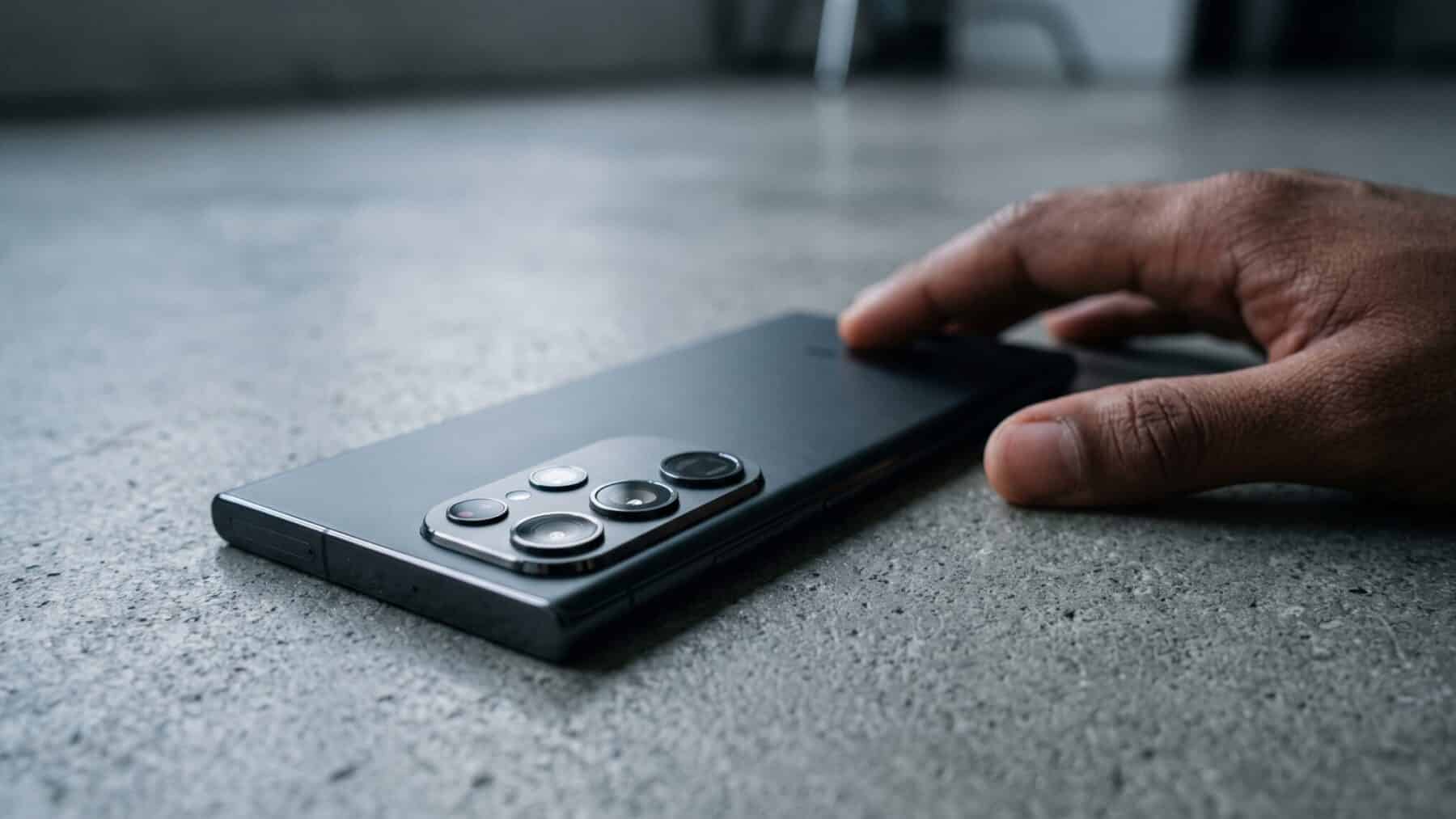
Pick up a new flagship phone fresh out of the box and feel the weight of it.
The glass back catches the same light as last year’s model. But something inside is fundamentally different. A phone can now hold a full terabyte of storage without a memory card slot, and the processor beneath it was designed to think locally.
The chip and the storage are built as a pair. What does that pairing actually unlock?
How a chip built for local AI makes the new storage tiers worth having
The reason a terabyte matters on a phone is not photos. It is what the phone now does with large language models stored entirely on the device. When a model lives on the chip rather than on a distant server, the phone can answer questions, rewrite text and process images in real time with far fewer round trips to the cloud.
The Tensor G6 chip at the heart of the Pixel 11 Pro family is our fastest, most powerful chip to date. It is Google’s fastest and most powerful chip to date. Packing 50% more TPU compute and paired with the latest Gemini Nano model, it processes on-device AI tasks up to 3.5 times faster while using up to 3.5 times less energy than its predecessor. A significant portion of Gemini’s most prominent AI features still draw on the cloud for some tasks, but the expanded tensor processing unit gives the phone far more headroom to handle demanding workloads locally. The combination of that silicon with a full terabyte of flash storage gives models room to operate at a scale that 128GB phones simply cannot match.
So the terabyte is not a vanity spec. It is the physical prerequisite for running the heaviest on-device workloads at speed.
What the Pixel 11 Pro actually looks like in the hand
Google launched the Pixel 11 series on August 12, 2026, during its Made by Google event in New York City. The lineup includes the Pixel 11, Pixel 11 Pro, Pixel 11 Pro XL, and the foldable Pixel 11 Pro Fold.
The trademark camera bar is now 40% thinner and features an all-glass surface rather than a mix of metal and glass. The base Pixel 11 supports Qi2.2 wireless charging at up to 25W, up from 15W, a meaningful upgrade for everyday users.
The Pro models also carry a new HiLight, a ring of ambient LEDs built around the flash on the camera bar. The rear-facing temperature sensor is gone, dropped from the Pixel 11 Pro and Pro XL models. Google is expected to add one major new hardware feature to the Pixel 11 Pro models and it’s called “HiLight.” It is designed to keep you connected when the Pixel 11 Pro is face down, providing visual feedback that Gemini heard you with different patterns for listening, thinking and responding. Small, but heavy users notice it within the first hour.
The numbers behind the launch: storage, price and the 128GB exit
The Pixel 11 costs $899, the Pixel 11 Pro runs $1,099, the Pixel 11 Pro XL is $1,299, and the Pixel 11 Pro Fold starts at $1,899. All of those base prices are $100 more than last time around, and Google has been open about it.
There is also a structural change underneath the pricing. The Pixel 11 and Pixel 11 Pro finally ditched 128GB of base storage. The floor is now 256GB across the whole lineup. The Pixel 11 Pro, Pro XL, and Pro Fold all start at 256GB but go up to 512GB and 1TB, the first time every model in the Pro family has launched simultaneously with that full storage ladder.
Google has noted that the expanded storage tiers are designed to give on-device AI models room to grow rather than simply to expand photo libraries.
A phone carrying a full terabyte alongside a chip purpose-built for local inference is a fundamentally different class of device from what the same brand sold two years ago.
Where the on-device AI approach runs into real limits
Running AI models on a phone solves latency and privacy but creates pressure on the battery. On-device inference draws continuous power from the tensor processing unit during active tasks. A phone translating live audio or editing video locally is doing real compute work, not simply streaming a result from a server.
There is also the software update problem. A model stored on-device is a snapshot. Cloud-based assistants can improve overnight; an on-device model improves only when the user installs an update and the new weights fit within available storage.
The smartwatch market faces a version of the same constraint, as a wearable platform that jumped 4 points in global share in a single year is discovering: on-device AI tasks demand chips never designed for them. Phones have the thermal headroom that wrist devices do not, but even phone-class hardware is feeling the weight of the workload. A 1TB phone has more room to grow, yet it is still a finite ceiling in a way that a server rack is not.
What a 256GB floor and a 1TB ceiling signal for the next wave of smartphone AI
Once a flagship line ships with 256GB as its minimum and a terabyte at its peak, and a chip optimized for local inference underneath, the pressure on the rest of the industry to match it within two product cycles becomes intense. Storage prices drop, chip architectures improve, and what is a top-tier spec today tends to be a mid-range expectation within three years.
The more interesting question is what developers build once they can assume the storage exists. On-device voice models, real-time translation that works underground, medical reference tools that never send patient data to a server: none of those require the cloud if the phone has the room and the silicon to run them.
That shift toward local processing is already visible across the industry, as 1.5 billion iPhones now run a gyroscope-aware Liquid Glass design layer that uses real-time GPU rendering and bends light across app buttons entirely on the device. Two major mobile platforms are committed to the same direction.
Mid-range phones will lag, older devices will miss updates, and the most demanding features will stay exclusive to flagships for at least another cycle. But the floor has moved, the hardware exists, and the baseline just changed.
