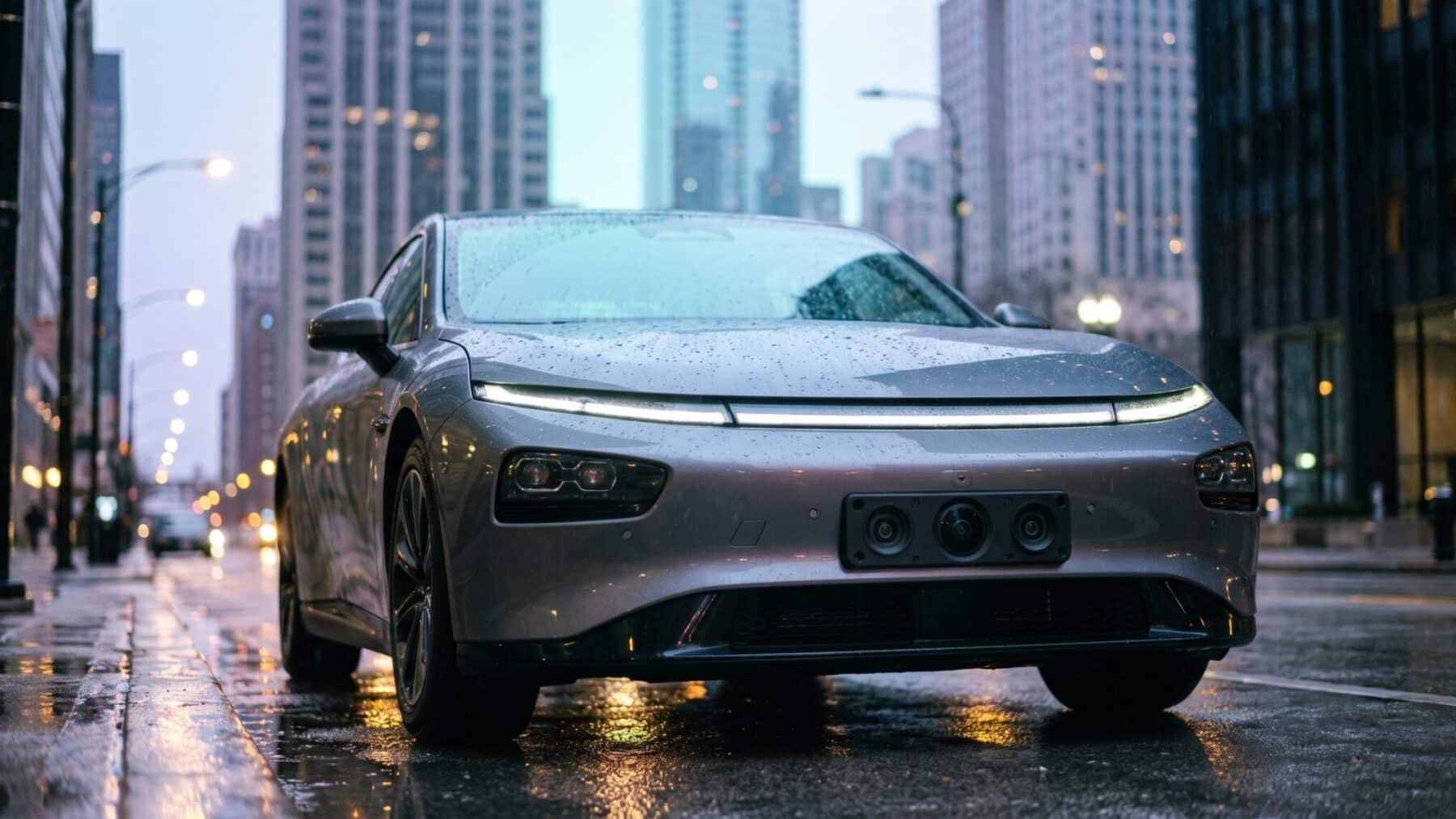
Picture the front fascia of a brand-new electric SUV.
An array of cameras stares outward. Multiple radar units sweep the road ahead, behind, and to both sides. A single central chip ties every feed together before the driver even notices a hazard. How does a chip that started life inside a smartphone end up making those split-second calls on a public road?
How a chip built for a pocket now steers a car: the sensor-fusion architecture explained
The driver-assist system is built on automotive-grade compute chips designed for centralized sensor data processing and advanced computer vision. In plain terms, every image from every camera arrives at one processor, which runs neural-network models to label every object, pedestrian, cyclist, and traffic cone within milliseconds.
The system achieves 360-degree perception by combining rules and AI models to predict other drivers’ behavior. A bird’s-eye-view architecture synthesizes a top-down map of the car’s entire surroundings, and that overhead picture is what lets the system thread the car through a merge lane without any human input.
The Snapdragon Ride Pilot system interprets signals from an array of high-definition cameras and radar sensors. BMW has branded the technology the “Superbrain of Automated Driving,” citing computing power 20 times greater than its predecessor. That gap is not incremental: it is the difference between a system that handles a highway on-ramp and one that manages a city intersection at rush hour.
What the partnership actually covers, and why it stretches across the full decade
Qualcomm Technologies and BMW Group announced a major agreement for the provision of compute silicon for BMW Group’s next-generation digital cockpit and advanced driver assistance and automated driving systems through the next decade. The announcement came on July 29, 2026 and named Qualcomm as BMW’s lead compute silicon provider, a title that carries real weight in an industry where chip deals typically run two or three model cycles at most.
Spanning Qualcomm Technologies’ Snapdragon Digital Chassis solutions, including its most powerful system-on-chips, the Snapdragon Elite automotive platform, and dedicated AI accelerators, the agreement establishes the hardware basis for BMW Group to deliver the next generation AI-powered experiences. So the same supplier handles the touchscreen menus, the radar-fusion processor, and the dedicated AI accelerator that runs object-detection models: three separate compute jobs on one integrated platform.
The Snapdragon Ride Pilot system marks the result of a three-year collaboration between Qualcomm and BMW. Qualcomm has moved steadily from infotainment into the more strategically valuable driver-assist space.
The evidence already on the road: validation numbers and a five-star crash result
The deal did not emerge from a lab concept. It builds directly on the November 2025 commercial launch of Snapdragon Ride Pilot in the BMW iX3, the first vehicle in BMW Group’s Neue Klasse program. That car is already on sale, which means the camera-and-radar array described in the announcement is shipping hardware, not a roadmap item.
The Ride platform helped power the BMW iX3 to the top five-star rating in the first Euro NCAP test since the introduction of its new, more stringent 2026 assessment standard. Both the new BMW iX3 and the Zeekr 7GT earned Euro NCAP’s highest five-star safety score under the new protocols, becoming the first vehicles to achieve this top rating. For a driver-assist system to earn that result on its first attempt, under tougher rules, is a meaningful data point.
The system had initially been validated for use in more than 60 countries, with expected expansion to over 100 countries in 2026. It supports over-the-air updates, and automakers can use Qualcomm’s development kit to customize features for specific vehicles.
That last point matters beyond one brand. Snapdragon Ride Pilot is now available to all global automakers and Tier-1 suppliers through Qualcomm Technologies, quietly reshaping supplier economics across the whole industry.
Where the system hits limits and what the architecture still cannot do
The system is rated for Level 2+ operation, allowing hands-free driving while the driver must remain engaged and ready to take over. Level 3, in which the car legally owns the driving task for defined stretches, is not yet part of the production offering.
Even at Level 2+, edge cases remain hard. Lower-trim vehicles in the same family carry a stripped-down version of the same platform, which means sensor count and capability vary significantly by price point, something a buyer comparing feature lists may not immediately see.
Meanwhile, automotive semiconductor supply chains remain tight. A decade-long supply commitment helps BMW lock in allocation before those queues lengthen, but it also means the car company is relying on a single silicon partner for its most safety-critical systems. That concentration risk is real, and competitors are aware of it.
What this deal signals for every car buyer shopping in the next few years
Ten-year chip agreements are almost unheard of in automotive. The typical supplier contract covers one or two model generations, roughly four to six years, and is renegotiated as platforms refresh. A commitment of this length signals that BMW expects the underlying compute architecture to stay competitive well into the next decade.
For buyers, the practical effect will arrive gradually. The first production vehicle already carries the full camera-and-radar stack, but the same platform is expected to underpin a wider family of models as BMW’s Neue Klasse lineup expands. Shoppers considering an EV in the next two or three years may find this chip architecture across several trim levels and body styles, not just the flagship electric SUV where it debuted. Those interested in the broader shift toward safer automated driving will find the technology moving faster than most industry timelines suggested even two years ago.
The open question is software, not silicon. The hardware is locked in for a decade. What the system can actually do depends on how quickly BMW and Qualcomm can train, validate, and certify new AI models for real-world conditions. That software pipeline will determine whether the 20-times computing leap translates into capabilities drivers can actually use.
