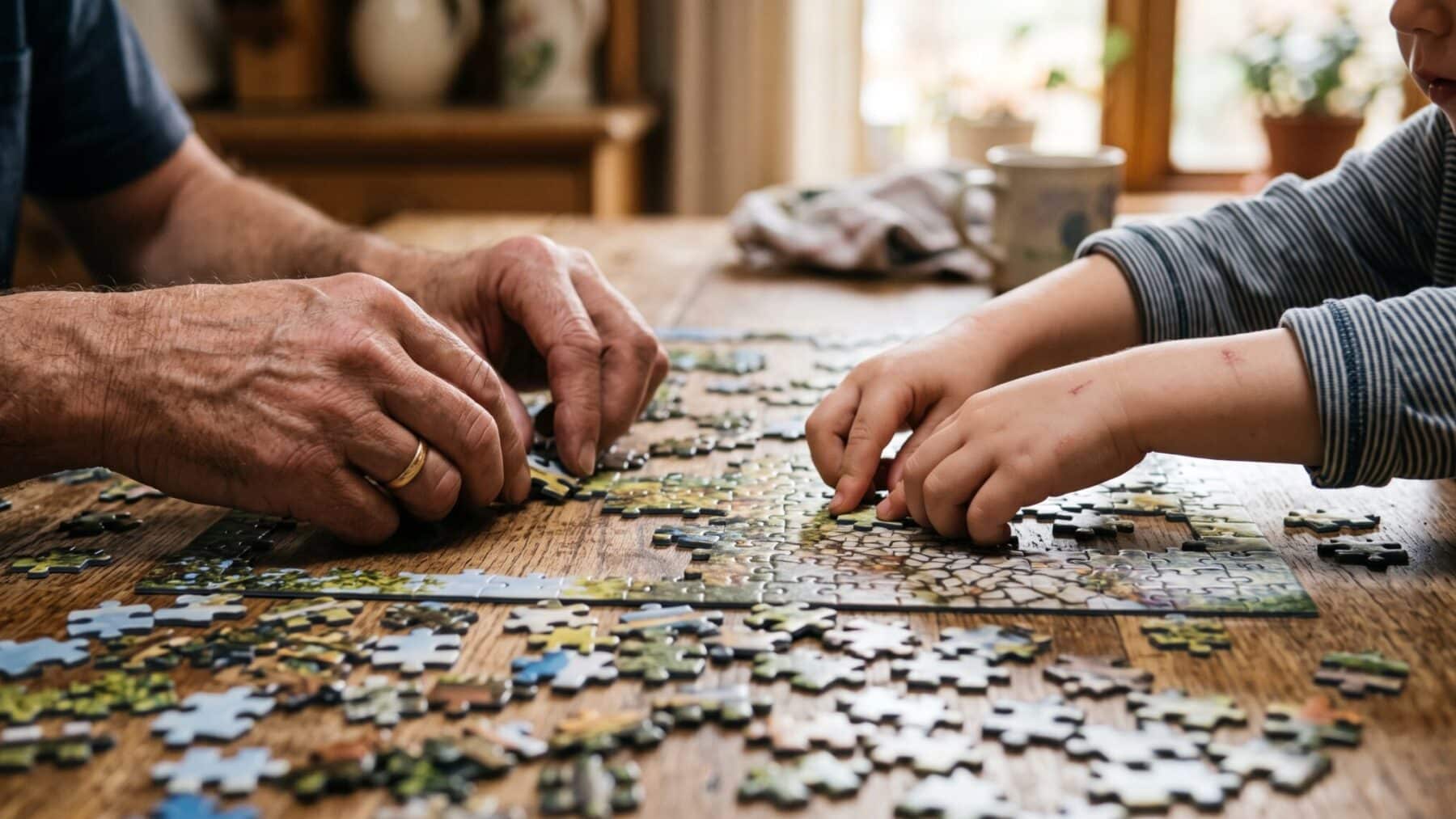
Seven in ten grandparents ages 65 and older in the United States say they are in touch with their grandchildren at least a few times a month, including 41% who connect at least a few times a week and 15% who do so daily or more often. The figures come from a Pew Research Center analysis released ahead of Grandparents Day that offers one of the most detailed snapshots in years of how older Americans engage with the grandchildren in their lives.
Two-thirds of older adults are grandparents
Two-thirds of US adults ages 65 and older were grandparents in 2024, according to the US Census Bureau’s 2025 Survey of Income and Program Participation. Less than 1% of adults in their 30s were grandparents, compared with 27% of those in their 50s and 51% of those in their 60s.
Among adults ages 80 to 90, 74% were grandparents, and the average US grandparent was 68 years old.
Grandparents had six grandchildren on average in the University of Michigan’s 2022, 23 Health and Retirement Study, which primarily surveys people ages 50 and older. About 24% had one or two grandchildren, 43% had three to six, 19% had seven to ten, and 14% had more than ten.
How contact is defined and measured
Pew’s survey question on contact included seeing grandchildren in person, talking on the phone, or texting as qualifying examples. The underlying data came from a survey of US adults conducted September 2, 8, 2025. The broader analysis drew on Pew Research Center surveys, the Health and Retirement Study, and US Census Bureau surveys.
The frequency data add texture to what has long been understood about multigenerational households. Overall, 8% of children lived with a grandparent who was the head of household in 2024, according to the Census Bureau’s American Community Survey.
Of those children, 48% lived with two married grandparents, 43% with a grandmother who had no spouse present, and 9% with a grandfather who had no spouse present.
Even households that are not physically multigenerational show high levels of ongoing involvement. Research on grandparents who are emotionally engaged in their grandchildren’s lives suggests they experience greater emotional, physical, and cognitive well-being, with social and emotional engagement linked to benefits regardless of the amount of direct care provided.
That dynamic helps explain why so many grandparents invest sustained effort in keeping contact regular. It also mirrors findings from AARP research on cross-generational friendship, which found that strong bonds spanning age groups are far less common outside of family settings.
Caregiving remains a significant share
Twenty-one percent of grandparents said they or a spouse spent at least 100 hours caring for a grandchild or great-grandchild during the prior two years, averaging roughly one hour a week.
The Health and Retirement Study’s caregiving data covered the 2022, 23 survey period, so the results may not fully represent current caregiving levels.
Pew found no statistically significant differences by gender, age, or household income in the share of adults reporting an extremely or very close relationship with a grandparent. That consistency across income lines is notable given how sharply spending patterns diverge elsewhere in family life. It echoes the well-documented financial support that many parents extend to adult children well into those children’s own young adulthood.
A role that grows with age
The data show that becoming a grandparent is increasingly common as Americans move through their 50s and 60s, while the role grandparents play can range from occasional family contact to substantial caregiving and shared households.
Pew’s report drew on several major data sources, including Census Bureau surveys, Pew’s own national surveys, and the Health and Retirement Study, which is sponsored by the National Institute on Aging and conducted by the University of Michigan.
Together they document a generation of older adults who, far from withdrawing from daily family life after reaching 65, remain embedded in it through calls, texts, visits, and hands-on care, with grandparents reporting an average of six grandchildren.
The full analysis is available at the Pew Research Center.
